

Committee to examine impact of 1983 anti-Tamil pogrom and recommend measures for relief and national coexistence
More than four decades after the anti-Tamil violence of July 1983, widely regarded as one of the darkest chapters in Sri Lanka’s post-independence history, Parliament has appointed a Special Parliamentary Select Committee to study the events of Black July, assess their long-term impact, and recommend measures aimed at reconciliation and relief for survivors and affected communities.
Speaker Dr. Jagath Wickramaratne announced the appointment of the committee in Parliament on 28 November. The 11-member committee, chaired by Minister of Women and Child Affairs Saroja Paulraj, has been tasked with conducting a comprehensive study of the 1983 violence and submitting a report to Parliament. It will also formulate proposals aimed at strengthening national coexistence and addressing the needs of those affected by the violence.
The committee includes representatives from both the government and opposition, including Ministers Harshana Nanayakkara and Saroja Paulraj, Deputy Ministers Eranga Gunasekara and Muneer Mulaffer, and MPs Mano Ganesan, Selvam Adaikalanathan, Gnanamuttu Srinesan, Krishnan Kalaichelvi, Thanura Dissanayake, Sena Nanayakkara, Suranga Ratnayake and Hiruni Wijesinghe.
Long-delayed examination of a national trauma
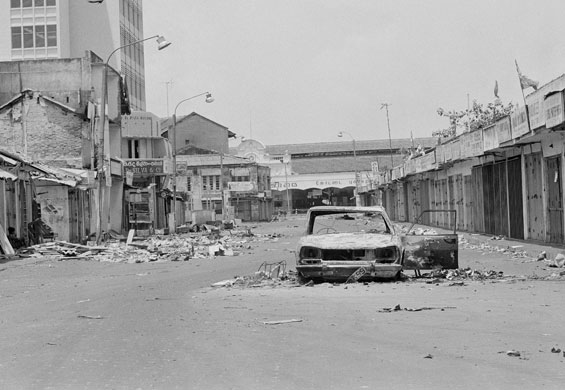
The appointment of the committee comes 43 years after anti-Tamil attacks swept across Sri Lanka in late July 1983 following the killing of 13 soldiers by the Liberation Tigers of Tamil Eelam (LTTE) in Jaffna. What followed was days of organised violence in Colombo and other parts of the country, during which Tamil civilians were killed, assaulted, displaced and stripped of homes and businesses.
While official figures placed the death toll in the hundreds, human rights organisations, researchers and later studies estimated that the number of people killed ranged from several hundred to as many as 3,000. Approximately 150,000 people were displaced, while thousands of Tamil-owned homes and businesses were destroyed.
Numerous scholars, journalists and human rights organisations have challenged the long-standing narrative that the violence was a spontaneous outburst of anger. Investigations and analyses over the years have pointed to evidence suggesting that attackers used electoral lists to identify Tamil homes and businesses and that the violence occurred amid allegations of state complicity or organised political involvement.
The Parliamentary Select Committee is not the first official effort to examine Black July. In 2001, President Chandrika Kumaratunga appointed a Presidential Truth Commission on Ethnic Violence (1981-1984), chaired by former Chief Justice S. Sharvananda. The Commission’s 2002 report concluded that the anti-Tamil violence of July 1983 was not a spontaneous eruption of communal anger but had been orchestrated and manipulated by political authorities and state actors. Human rights advocates note that many of the Commission’s findings and recommendations remain unimplemented more than two decades later.
Sri Lanka Brief: Full report of the Presidential Truth Commission on Ethnic Violence (1981-1984), with a focus on Black July 83.
The violence extended beyond attacks on homes and businesses. Among the most notorious incidents were the killings of Tamil detainees held at Welikada Prison, where more than 50 prisoners were killed during separate attacks inside the prison.
Turning point in Sri Lanka’s conflict
Black July is widely regarded as the watershed moment that transformed an escalating ethnic conflict into a full-scale civil war. Analysts have long argued that the violence accelerated the radicalisation of Tamil youth, strengthened support for armed militant groups and triggered a mass exodus of Tamils from Sri Lanka, leading to the formation of large diaspora communities around the world.
The riots also deepened mistrust between communities and left lasting social, economic and political scars that continue to shape debates on accountability, reconciliation and minority rights today.
Origins of the parliamentary initiative
The move to establish the committee follows a political initiative launched earlier this year. According to reports, 51 government MPs submitted a proposal seeking a parliamentary inquiry into Black July after Tamil parliamentarian Selvam Adaikalanathan called for a presidential commission of inquiry. Rather than appointing a commission, the government opted for a parliamentary mechanism that would include participation from both government and opposition representatives.
The committee is expected to receive evidence, examine records and hear from individuals affected by the violence as part of its inquiry. Supporters of the initiative have argued that the human, social and economic costs of the 1983 pogrom have never been comprehensively documented and that victims have yet to receive adequate recognition or redress.
Questions of accountability remain
The announcement has already renewed discussion around Sri Lanka’s unresolved legacy of impunity. Human rights groups have repeatedly noted that despite the scale of the violence, accountability for those responsible for organising and enabling the attacks remains limited. Four decades after the events, victims’ organisations continue to call for truth-seeking measures, acknowledgement of responsibility, reparations and institutional reforms aimed at preventing a recurrence.
The committee’s work will therefore be closely watched not only by survivors and families of victims, but also by civil society organisations and the Tamil diaspora, many of whom have long sought a fuller accounting of one of the most consequential episodes in Sri Lanka’s modern history. Whether the parliamentary process will go beyond historical documentation and produce meaningful recommendations on justice, reparations and reconciliation remains an open question.