

The Supreme Court has ruled that the Secretary to the Ministry of Transport, Highways, Ports and Civil Aviation violated the fundamental rights of a senior Sri Lanka Administrative Service (SLAS) officer by unlawfully preventing him from assuming duties in a position to which he had been formally appointed by the Public Service Commission (PSC).
In a judgment delivered on 19 May 2026, the Court held that the then Ministry Secretary, Professor Kapila Perera, had acted arbitrarily and outside the scope of his authority by interfering with powers that are constitutionally vested in the Public Service Commission. The Court found that these actions amounted to a violation of the petitioner’s fundamental rights guaranteed under Article 12(1) of the Constitution, which ensures equality before the law and equal protection of the law.
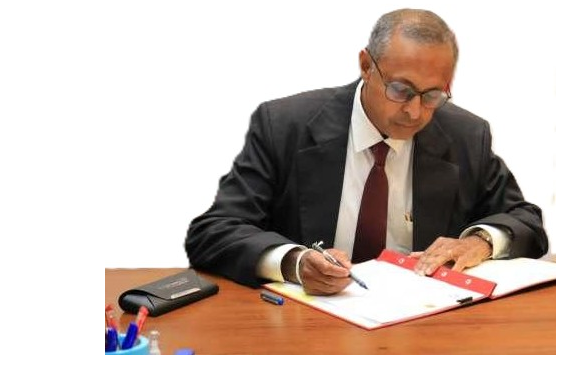
The petitioner, W.S. Sathyananda, is a Special Grade SLAS officer with nearly three decades of experience in the public service. In December 2024, he received an official appointment as Additional Secretary to the Ministry of Transport. Acting on that appointment, Sathyananda reported to the Ministry to assume duties. However, according to the petition filed before the Court, he was informed through a message from the Ministry Secretary that another officer had already been selected for the same position.
The petition further stated that when Sathyananda later returned to the Ministry seeking to formally assume duties, he was allegedly informed that his services were not required and was effectively turned away. Following the incident, he returned to the “Officers Pool” at the Ministry of Public Administration until he was later assigned to another position.
Delivering its ruling, the Supreme Court emphasized that the appointment, transfer and control of public officers are matters exclusively governed by the constitutional authority of the Public Service Commission. The Court observed that ministry secretaries do not possess the legal authority to disregard, override or obstruct appointments made by the PSC.
The judgment stressed that any attempt by administrative officials to interfere with powers constitutionally assigned to independent institutions undermines the rule of law, weakens public confidence in the public administration system and threatens the integrity of the state service.
The Court also noted that the incident went beyond a mere procedural dispute and had serious personal and professional consequences for the petitioner. It observed that Sathyananda had suffered humiliation, embarrassment and a loss of dignity as a senior public officer after being denied the opportunity to assume duties in a post to which he had been lawfully appointed.
Although the Supreme Court declined to award compensation or legal costs, it acknowledged the gravity of the treatment faced by the petitioner, stating that no monetary compensation could adequately restore the dignity and reputation affected by the actions complained of.
The ruling is being viewed as a significant reaffirmation of the constitutional independence of the Public Service Commission and a reminder that public officials must act strictly within the powers granted to them under the law.