
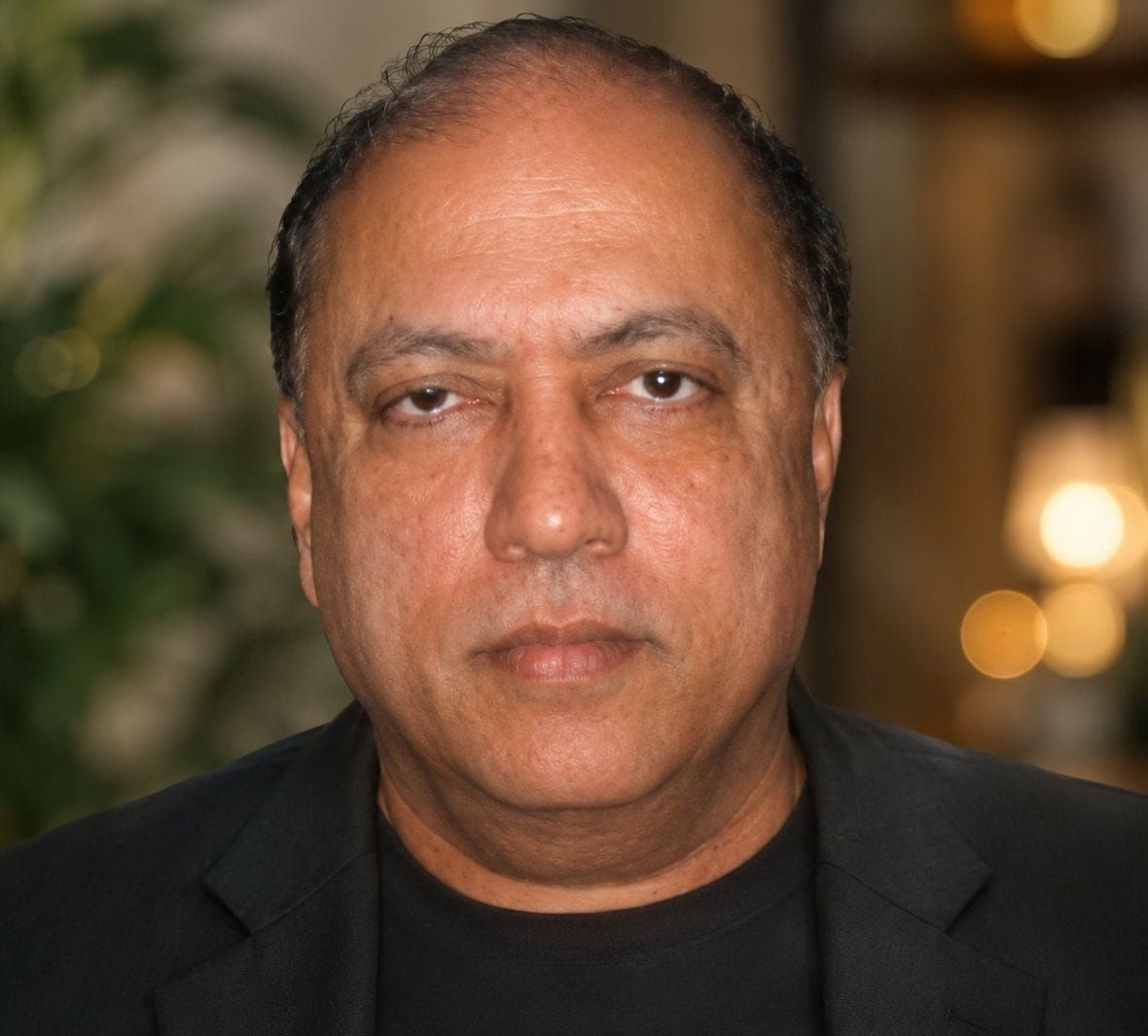

By M.R. Narayan Swamy
The world of Sri Lankan journalism will never see another D.B.S. Jeyaraj.
Forced into exile by extremists among Tamil nationalists, Jeyaraj braved death threats and persistent danger to keep the world informed about the twists and turns during the long years a horrific separatist war raged in Sri Lanka.
There were many journalists at work during those turbulent years, but few enjoyed the kind of access he had to virtually all the Tamil actors, and fewer still earned the wide credibility that his voice and writings commanded.
Although he lived in Canada, thousands of miles away from the country where he was born and which he left 37 years ago, his heart always beat for Sri Lanka, particularly the Tamil community.
A friend who called on him at his home in Toronto just two weeks before Jeyaraj breathed his last on May 17, 2026, said he spoke only about Sri Lanka as well as the unending suffering of the ordinary Tamil people.
What got Jeyaraj into trouble was that he had a mind of his own, an ability to think differently from most others, and the capacity not to be swayed by ethnic emotions, notwithstanding the fact that he was Tamil to the core.
Like thousands of Tamils, his family too suffered at the hands of Sinhalese thugs during the terrible anti-Tamil violence which engulfed Colombo in 1983 after the Tamil Tigers ambushed and killed 13 soldiers in Jaffna.
By then, he had six years of experience in Tamil journalism, having begun his career at the Virakesari newspaper before transitioning to English journalism in Colombo in 1981.
He later became the deputy editor of the Saturday Review, a brave Jaffna-based weekly that championed the Tamil voice until it was forced to shut down, and served as the Colombo correspondent for The Hindu, the Indian newspaper widely regarded as an important window into Sri Lanka.
When the Liberation Tigers of Tamil Eelam (LTTE) launched its war against the Indian military in Sri Lanka’s northeast, Jeyaraj made waves by interviewing Gopalasamy Mahendraraja alias Mahattaya, then the de facto number two in the Tigers, who vowed to teach the Indian army a lesson it would remember.
Predictably, that interview got Jeyaraj into the bad books of Jyotindra Nath Dixit, the then Indian High Commissioner to Sri Lanka, a man who thought the Indian military would easily put the LTTE in its place.
This was when senior Indian diplomat Hardeep Singh Puri, now a minister in the government of Prime Minister Narendra Modi, would address Jeyaraj as a “revolutionary” during the evening media briefings at the Indian mission in Colombo.
Unfortunately, the LTTE, which had no respect for democracy, could not accommodate Jeyaraj’s independent views. Initial warnings to tone down soon turned into death threats.
This was why Jeyaraj shifted to Canada in 1989, a year after he had left Sri Lanka for the United States to attend Harvard University. It became clear that returning to Sri Lanka would be unsafe – indeed very dangerous.
In Canada or Sri Lanka, no one could kill the journalism in Jeyaraj. He kept his writings – and independence – in full flow. LTTE supporters in the West who hated his writings brutally set upon him at a car park in Toronto, leaving him seriously injured. They tried – at times successfully – to kill the Tamil journals he brought out or to which he contributed in Canada.
The physical battering was painful, but it did not curb his free spirit. If anything, he became a much better journalist. The relative safety of Canada and his ability to reach out to people all across Sri Lanka, including the war theatre north and east, helped him to chronicle a story that had no witnesses, barring those who killed and got killed.
This is how Jeyaraj – six months older to Velupillai Prabhakaran – became the most authentic Tamil voice for that one media outlet the world listened to know the goings on Sri Lanka: the BBC.
“He not only provided information others could not but he was a rich source of information,” a former BBC Tamil journalist told Jaffna Monitor. “Day in and day out, irrespective of the distance between Canada and Sri Lanka, he had all the information the world needed on his fingertips. Very often, whatever he said or predicted turned out to be correct.”
A key reason for Jeyaraj’s success as a journalist from war-torn Sri Lanka was his command of both Tamil and English. Even as he criticized the LTTE for its haughtiness and inability to accommodate other viewpoints, many Tamil Tiger supporters held a grudging respect for him and took his writings seriously. No other Sri Lankan journalist could write the way he did in Tamil and English – and have the same access to all and sundry in Sri Lanka, the VIPs and ordinary political activists across the ethnic divide.
It would not be an exaggeration to say that it was Jeyaraj’s writings that brought the Tamil armed struggle, Tamil nationalist politics, and the terrible consequences of the long war to the attention of English-speaking Sinhalese society as well as the wider world. His writings in Sri Lankan English newspapers were eagerly awaited.
“He wrote about the Tigers and other militants when it was a very risky thing to do,” the former BBC journalist went on. “He wrote fearlessly when so many were scared to write.”
Both during and after the war, Jeyaraj remained a Tamil nationalist but one who had no hatred for the other. He warned both friends and, in his writings, that the LTTE had embraced a path that would ruin the Tamil society. When his prediction proved correct, he did not exult; if anything, he was shattered by the way the war ended, virtually destroying a once vibrant Tamil society.
Among other things, Jeyaraj had a great passion for Indian Tamil movies, particularly of an earlier era. Some friends considered him an encyclopedia on the Tamil movie industry.
David Buell Sabapathy Jeyaraj was indeed a complete journalist. There will never be another Jeyaraj.
M. R. Narayan Swamy is a renowned Indian journalist and author known for his multi-dimensional reporting—from politics to insurgencies. Best known for his definitive works on the LTTE, he brings depth to South Asian affairs and conflict journalism.