
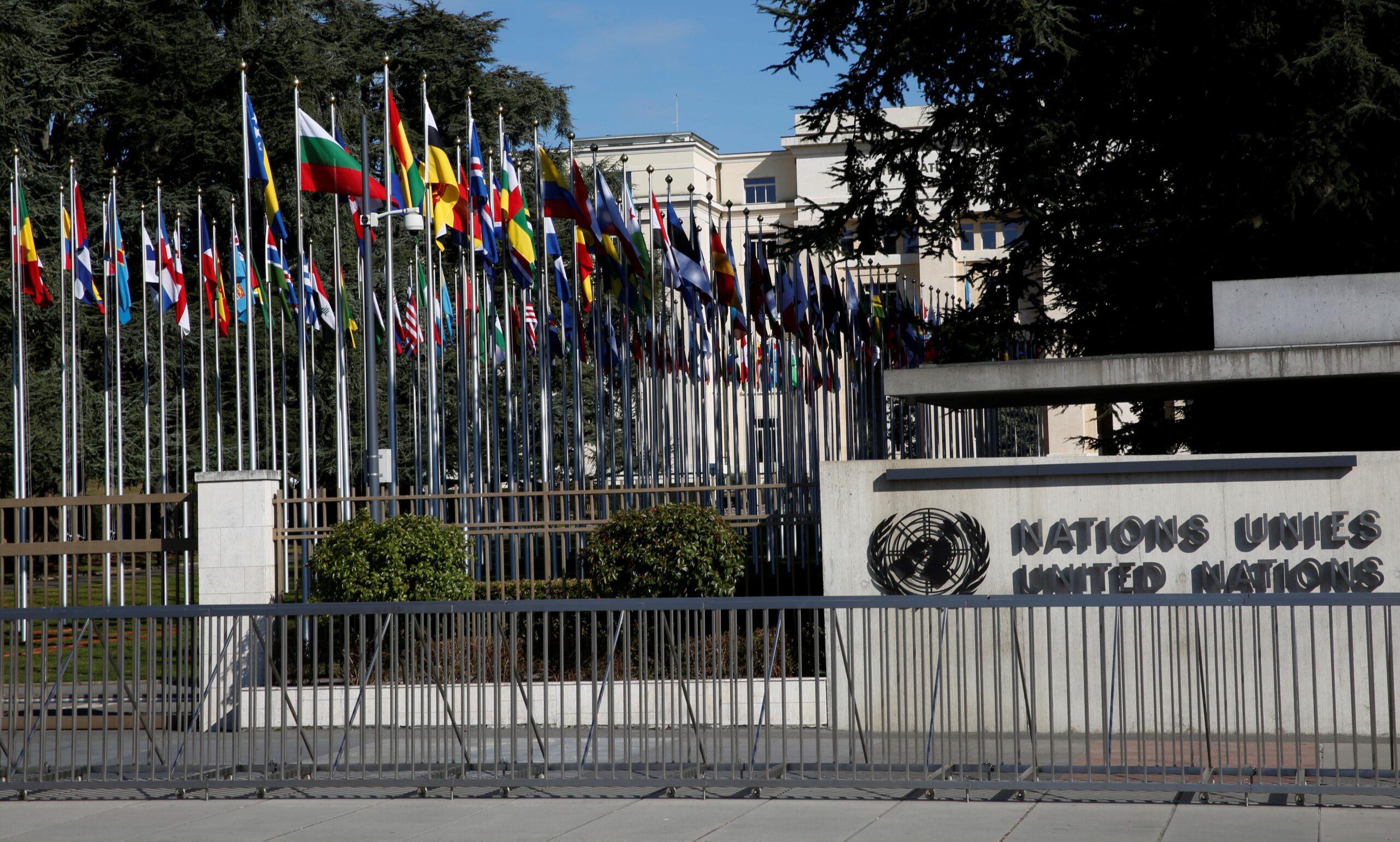

GENEVA — A new advance report from the Office of the United Nations High Commissioner for Human Rights (OHCHR) reveals that while Sri Lanka’s current administration entered office with a strong mandate for institutional reform, transformative changes risk grinding to a halt.
The report, tracking events from October 2025 to July 2026, details a complex landscape where progressive government pledges are being undermined by persistent state surveillance, the continued use of repressive anti-terror laws, and severe economic strain exacerbated by natural disasters.
A Reform Agenda Under Strain
When the National People’s Power (NPP) government took office in late 2024, it pledged to dismantle oppressive security structures, combat corruption, and deliver justice for historic human rights violations. The UN notes positive initial steps, including anti-corruption investigations and renewed progress on high-profile investigations like the 2019 Easter Sunday bombings.
However, external forces have heavily disrupted this momentum. In November 2025, Cyclone Ditwah devastated the country, affecting 2.2 million people and inflicting $3.3 billion in damages and economic losses. Compounded by ongoing armed conflict in West Asia, which triggered severe food and energy inflation, the government’s attention and financial resources have been significantly diverted away from its planned legal and institutional overhauls.
Persistent Restraints on Civic Space
The UN expresses deep concern over the discrepancy between government rhetoric and the reality on the ground. Despite promises to repeal the notorious Prevention of Terrorism Act (PTA), the state continues to use it to execute arbitrary arrests and prolonged detentions. Furthermore, draft replacement legislation tightly replicates the overbroad criminalization and executive powers of the old law.
The report also highlights an ongoing pattern of intimidation against civil society. Activists, journalists, and families of the disappeared continue to face aggressive surveillance, harassment, and threats from state intelligence services—particularly in the Northern and Eastern provinces.
The Path Forward
To prevent a complete stagnation of justice, the High Commissioner has urged Sri Lanka to implement an immediate moratorium on the PTA, end the surveillance of human rights defenders, and create a truly independent public prosecutor’s office. Simultaneously, the UN has called on international member states to consider targeted sanctions against individuals credibly tied to gross violations, maintaining that international pressure remains vital to achieving long-term peace in the region.
Key Points Made in the Report
Government Commitments vs. Implementation
- Stalled Momentum: The NPP government’s promises to deliver truth, justice, and sweeping institutional reforms risk stalling entirely.
- Failed Legislative Relief: Despite campaign pledges to abolish oppressive frameworks, the government continues to enforce the PTA and has introduced new draft legislation (PSTA) that preserves overbroad executive powers.
- Uneven Legal Actions: While investigations have progressed against certain political killings and corruption cases, comprehensive accountability for international crimes committed during the civil war remains completely absent.
Economic Vulnerability & Exogenous Shocks
- Cyclone Ditwah Disaster: The November 2025 cyclone resulted in 687 confirmed deaths, displaced millions, and created a $3.4 billion recovery burden.
- Compounded Financial Strain: Spillovers from armed conflict in West Asia have caused major energy, food, and fertilizer price shocks, raising Sri Lanka’s poverty rate to an estimated 22.1%.
- Crippling Debt: Nearly half of the government’s revenue is consumed purely by servicing public debt interest, leaving minimal fiscal space for health, education, and social protections.
Ongoing Violations & Shrinking Civic Space
- State Surveillance: Human rights defenders, journalists, and victims’ families are routinely subjected to unauthorized questioning, threats, and disruptions of peaceful memorials by intelligence services.
- Custodial Abuse & Violations: The UN documented continuing patterns of arbitrary arrests, torture, and deaths inside overcrowded prisons and police custody.
- Suppression of Expression: Laws like the Online Safety Act (OSA) continue to be weaponized by law enforcement to stifle online speech and initiate defamation investigations.
Institutional & Land Disagreements
- Piecemeal Land Return: Despite presidential directives stating military-occupied land should be rightfully restored to civilians, actual land restitution has been minimal and slow.
- Religious Tensions: Unauthorized construction of Buddhist structures in minority Hindu areas has continued to fuel regional ethno-religious friction.
- Marginalized Labor Demands: Plantation-estate workers from the Malaiyahar Tamil community face a prolonged crisis; lacking formal land titles, many were entirely cut off from state disaster compensation after their homes were swept away.
The UN High Commissioner for Human Rights urged the Government of Sri Lanka to take the following specific actions:
Reconciliation & Land Restitution
- Foster a safe environment: Implement confidence-building measures, including the release of military-occupied lands and halting further state land acquisitions.
- Expedite land rights: Fast-track land titling processes in the North and East, and ensure time-bound, transparent, and publicly recorded pledges on land return.
- Protect marginalized communities: Guarantee equitable housing and land rights for the plantation-estate Malaiyahar Tamil community following their full participation.
- Support truth-seeking: Bolster the independence and credibility of the Office on Missing Persons (OMP) by integrating international expertise and independent monitoring, while supporting victims’ right to memorialization.
- Devolve power: Fulfill commitments to devolve political and administrative power to local governments, districts, and provinces.
Legislative Reforms & Fundamental Freedoms
- Address anti-terror laws: Place an immediate moratorium on the Prevention of Terrorism Act (PTA), expedite its complete repeal, and ensure any replacement legislation fully aligns with international human rights standards.
- Release detainees: Immediately release long-term prisoners currently held under the PTA.
- Protect free speech and association: Repeal or amend existing and proposed laws that restrict freedom of expression, assembly, and association—specifically naming the Online Safety Act, the ICCPR Act, and the draft NGO (Registration and Supervision) Act.
-
Security Sector & Institutional Accountability
- End state harassment: Order all military, police, and intelligence agencies to immediately halt surveillance, intimidation, and reprisals against civil society organizations, journalists, and conflict victims.
- Issue strict prohibitions: Publicly clarify to all security forces that extrajudicial killings, enforced disappearances, torture, and sexual violence are strictly forbidden and subject to criminal prosecution.
- Implement vetting: Remove from office, and refrain from promoting or appointing, any individuals credibly alleged to have committed human rights violations.
- Screen international deployments: Establish a credible domestic human rights screening framework aligned with UN standards to vet personnel participating in UN-mandated or international security deployments.
- Establish an independent prosecutor: Fast-track the creation of a fully independent, robust public prosecutorial body separated from political influence.
Justice, Prisons, & International Treaties- Create a special court: Consider establishing a special judicial mechanism with an independent special counsel to investigate historic human rights and humanitarian law violations, utilizing international assistance.
- Accelerate high-profile cases: Speed up compliance-vetted investigations and prosecutions for all major human rights violations, including emblematic conflict cases and the Easter Sunday bombings, while ensuring robust victim and witness protection.
- International accountability: Accede to the Rome Statute of the International Criminal Court and extend open invitations to UN Special Procedures experts to visit the country.
- Overhaul prisons: Systematically reform the prison system to resolve violence and overcrowding, treating incarceration as a last resort and adopting a health-centered strategy for drug use.
The Report:a-hrc-63-18-auv