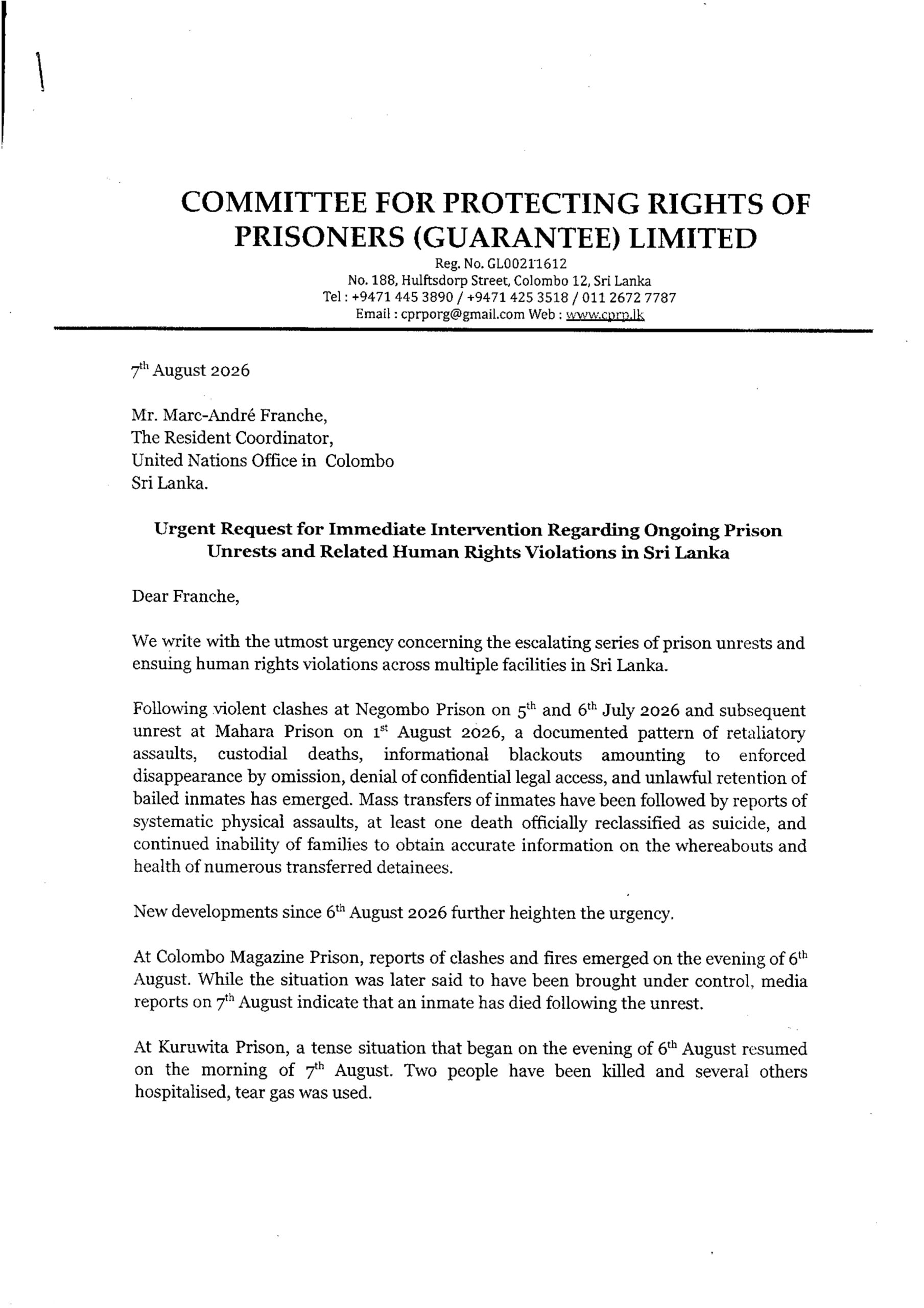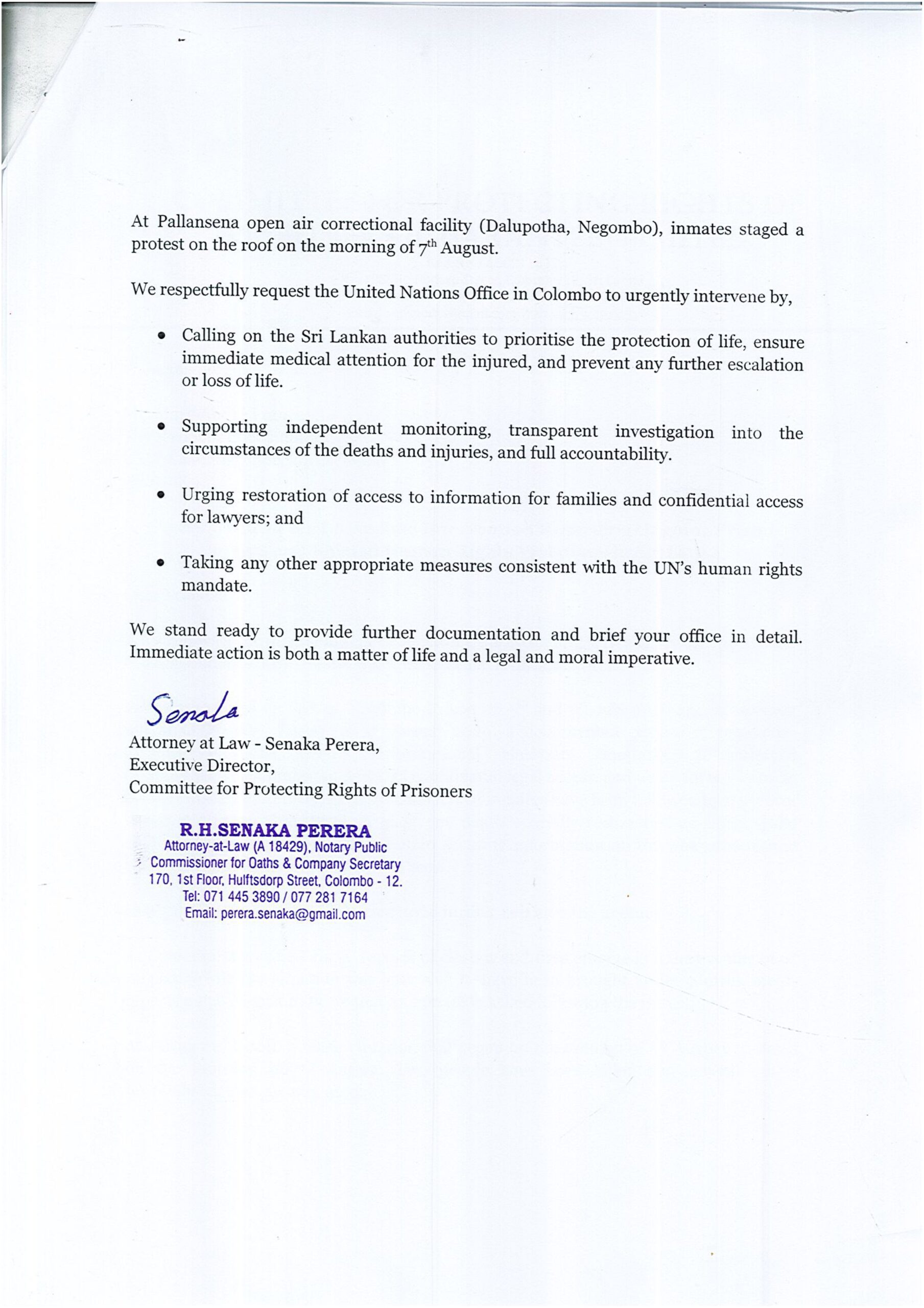

Sri Lanka’s prison system is experiencing one of its most volatile periods in recent years, with violent clashes, fires, alleged custodial killings, and widespread information blackouts reported across multiple facilities. Two formal letters sent this week by the Committee for Protecting Rights of Prisoners (CPRP) to the United Nations Office in Colombo outline a pattern of escalating crises and urge immediate international involvement.
The core developments
The letters describe a chain of incidents beginning in early July and intensifying through the first week of August:
- Negombo Prison – 5–6 July 2026 Violent clashes reportedly left several inmates injured. Families and lawyers were denied access, and CPRP alleges that some detainees were subjected to retaliatory assaults.
- Mahara Prison – 1 August 2026 Unrest erupted again, with CPRP reporting custodial deaths, enforced disappearances, and inmates who had been granted bail still being held unlawfully. A death initially reported as a custodial killing was later reclassified as a suicide, raising concerns about transparency.
- Colombo Magazine Prison – 6 August 2026 A fire broke out amid clashes, resulting in at least one inmate’s death. CPRP says authorities restricted information flow, leaving families unable to confirm the safety or whereabouts of detainees.
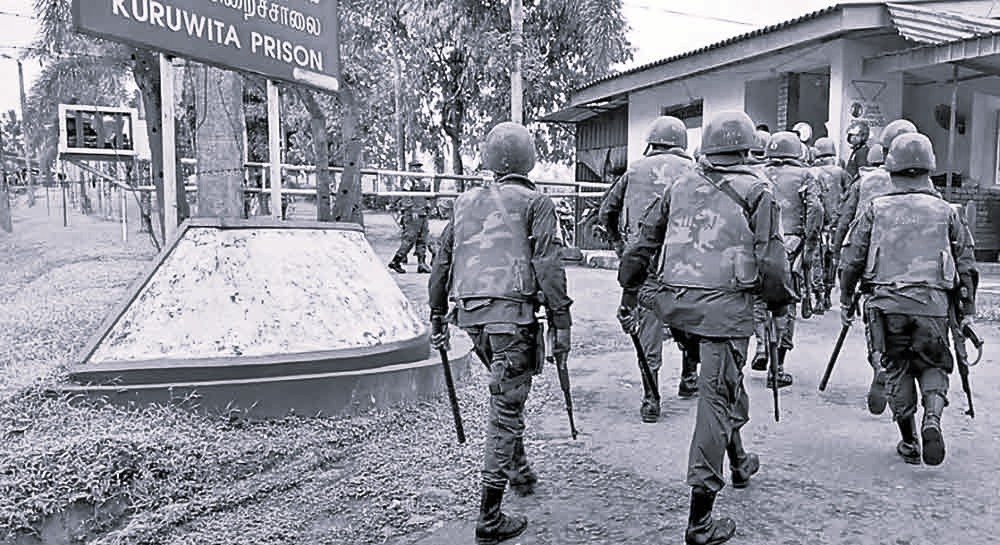
- Kuruwita Prison – 6–7 August 2026 Tear gas was deployed during unrest, with two people killed and several hospitalized. Independent monitoring groups were reportedly denied entry.
- Pallansena Open-Air Correctional Facility (Dalupotha, Negombo) – 7 August 2026 Inmates staged a rooftop protest, prompting CPRP to issue a second urgent appeal to the UN. The letter calls for protection of life, medical attention for the injured, transparent investigations, and restoration of access for families and lawyers.
What the letters demand
The CPRP’s appeals to the UN Resident Coordinator, Marc-André Franche, emphasize:
- Immediate protection of life and prevention of further violence
- Medical treatment for injured inmates
- Independent monitoring and transparent investigations into deaths and injuries
- Accountability for alleged abuses
- Restoration of communication channels for families and confidential access for lawyers
- UN engagement consistent with its human rights mandate
The organization says it is prepared to provide documentation and brief the UN in detail.
Wider context: a system under strain
Sri Lanka’s prisons have long faced structural challenges: overcrowding, understaffing, poor conditions, and slow judicial processes that leave thousands in prolonged pretrial detention. Human rights groups have repeatedly warned that these pressures create conditions ripe for unrest.
Recent months have seen:
- Overcrowding rates exceeding 200% in several facilities
- Delays in implementing prison reforms recommended by national commissions
- Increased tensions linked to narcotics crackdowns, which have led to mass transfers and intensified surveillance
- Reports of torture and ill-treatment, documented by local civil society and international observers
- A rise in inmate protests, often triggered by lack of access to healthcare, legal counsel, and information
The CPRP’s letters suggest that the current wave of unrest is not isolated but part of a broader systemic breakdown.
Government response
Sri Lankan authorities have acknowledged some incidents but maintain that security forces acted to prevent riots and protect public safety. Official statements have emphasized:
- The need to prevent prison gangs from coordinating violence
- Ongoing internal investigations
- Efforts to restore order through transfers and increased security
However, rights groups argue that these measures—particularly mass transfers and restricted access—may be worsening tensions rather than resolving them.
International implications
The UN has previously engaged with Sri Lanka on prison reform, including through the UNODC, OHCHR, and UNDP. The CPRP’s letters now place renewed pressure on the UN system to intervene more directly.
Given the severity of allegations—custodial deaths, enforced disappearances, denial of legal access—international scrutiny is likely to intensify.
What happens next
The situation remains fluid. Human rights advocates warn that without immediate de-escalation, further violence is likely. Families continue to report difficulty obtaining information, and civil society groups are calling for:
- Emergency access for independent monitors
- Judicial inquiries into deaths
- A moratorium on transfers until safety can be guaranteed
- Clear communication from the Ministry of Justice and Department of Prisons
Sri Lanka’s prison crisis is now a national human rights emergency—one that may shape the country’s justice landscape for years to come.
The letter: