
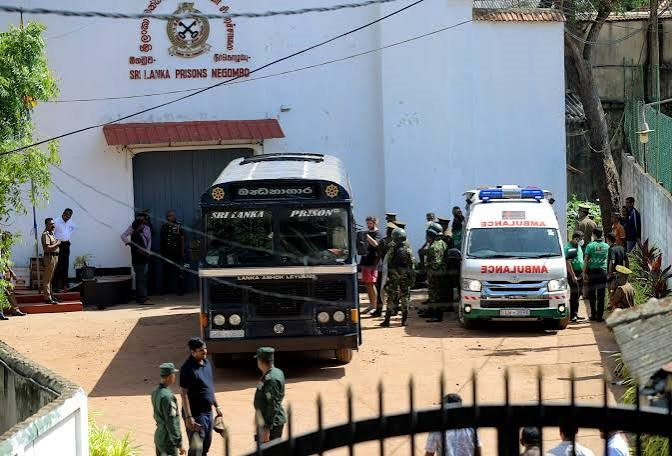

Following its investigation into the July 2026 violence at Negombo Prison, the Human Rights Commission of Sri Lanka (HRCSL) recommended urgent measures to prevent similar incidents and address accountability concerns.
The recommendations include:
- Conducting prompt, independent, and transparent investigations into all deaths, injuries, and allegations of torture or ill-treatment arising from the incident.
- Reducing severe prison overcrowding and improving living, sanitation, and healthcare conditions in correctional facilities.
- Recruit and train enough prison staff to address chronic personnel shortages.
- Ending the practice of relying on inmate groups or “party” prisoners to maintain discipline and order within prisons.
- Strengthening measures to prevent the circulation of drugs and contraband inside prisons.
- Providing compensation and support to the families of prisoners and prison officers who were killed or injured during the violence.
- Implementing broader structural prison reforms previously recommended by the Commission to improve safety, accountability, and respect for human rights.
-
The HRCSL recommended that authorities take legal action against individuals responsible for torture, ill-treatment and violence contributing to deaths in custody, and called for comprehensive investigations into all deaths and injuries arising from the Negombo Prison incident. The report did not explicitly call for the prosecution of officers involved in the shooting, although it stressed accountability and independent investigations.
Short Summary of the Incident
The HRCSL found that violence erupted at Negombo Prison on 5 and 6 July 2026 following clashes between rival inmate groups. The unrest escalated rapidly, leading to a breakdown of control in parts of the prison. Some inmates reportedly gained access to the prison dispensary and consumed stored medication, further aggravating the situation. The violence resulted in the deaths of prison officers and inmates, while more than 100 people were injured and required hospital treatment. The Commission’s investigation identified overcrowding, staff shortages, reliance on inmate groups to maintain order, and poor control of contraband as major factors contributing to the tragedy.