
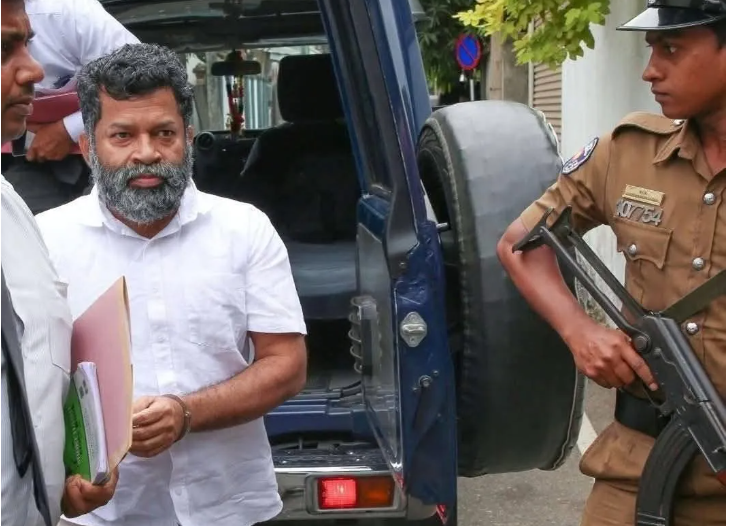

Sri Lanka’s Attorney General has indicted former Eastern Province Chief Minister Sivanesathurai Chandrakanthan, widely known as Pillayan, and three others over the abduction and killing of Prof. Sivasubramaniam Raveendranath, the Eastern University vice‑chancellor who disappeared in Colombo nearly two decades ago. The case, now before the Polonnaruwa High Court, marks the first time one of the country’s most prominent wartime disappearance cases has reached a criminal trial.
Prof. Raveendranath vanished on 15 December 2006 after attending the annual sessions of the Sri Lanka Association for the Advancement of Science. His driver returned to pick him up, but the vice‑chancellor never emerged. His body has never been found.
Pillayan, the TMVP, and His Political Rise
Pillayan leads the Tamil Makkal Viduthalai Pulikal (TMVP), a political party that grew out of the breakaway eastern faction of the LTTE led by Vinayagamoorthy Muralitharan (Karuna Amman). After Karuna’s 2004 split from the LTTE, the eastern faction evolved into an armed group aligned with government forces and later entered electoral politics.
Association with the Rajapaksa Family
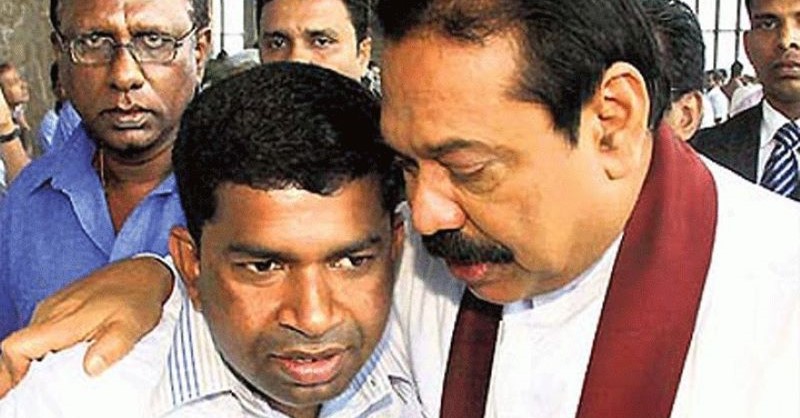
A key dimension of Pillayan’s political trajectory has been his close association with the Rajapaksa family, particularly during the final years of the war and the post‑war political consolidation:
- Mahinda Rajapaksa’s presidency (2005–2015) saw the TMVP operate as a government‑aligned paramilitary group in the East.
- Pillayan’s appointment as Chief Minister of the Eastern Province in 2008 was widely viewed as part of the Rajapaksa administration’s strategy to stabilise the East through alliances with former armed groups.
- He later served as a Member of Parliament and State Minister under governments backed by Rajapaksa‑aligned coalitions.
- Pillayan maintained political ties with Gotabaya Rajapaksa, whose tenure as Defence Secretary overlapped with the TMVP’s armed operations and later political integration.
- His party has repeatedly aligned with Rajapaksa‑led political blocs during national elections and parliamentary negotiations.
These associations formed the backbone of Pillayan’s political legitimacy within Sinhala nationalist circles, even as human rights groups continued to raise concerns about TMVP-linked abuses.
Pillayan has denied all wrongdoing, and the charges against him and the other defendants remain untested in court.
Threats and Violence at Eastern University
Prof. Raveendranath’s disappearance followed months of intimidation at Eastern University:
- In September 2006, armed men abducted Bala Sugumar, dean of the Faculty of Arts, demanding the vice‑chancellor’s resignation.
- Jaffna-origin academics and students were pressured to leave after Karuna’s split deepened tensions between northern and eastern Tamils.
- Businesses owned by Jaffna Tamils in Batticaloa closed after threats, with reports estimating 5,000 people fled the region.
- Senior lecturer Kumaravel Thambaiah was shot dead in May 2004, contributing to a climate of fear.
Prof. Raveendranath, himself from northern Sri Lanka, continued his duties from Colombo after the University Grants Commission refused to accept his resignation.
How the Case Turned Toward Pillayan
For nearly 19 years, no one was charged. The investigation shifted dramatically after witnesses described events at a clandestine camp in Sevanapitiya, Polonnaruwa District.
When Pillayan was produced before the Mount Lavinia Magistrate’s Court on 2 April, investigators alleged:
- Prof. Raveendranath was abducted and taken to the Sevanapitiya camp.
- The camp was operated illegally by Pillayan.
- The vice‑chancellor was detained, tortured, killed, and his body burned.
- The site functioned as an illegal detention centre for civilians, officials and businesspeople.
- 362 T‑56 rifles and 36 9mm firearms issued to Pillayan during the conflict remain unaccounted for.
The investigation is being conducted under the Prevention of Terrorism Act and the Penal Code.
- Witness Testimony and Court Proceedings
A former worker at the camp told investigators he recognised Prof. Raveendranath from a newspaper report. Two suspects have given confidential statements before a magistrate.
In June, Deputy Solicitor General Suharshi Herath told the Supreme Court that eyewitness testimony placed the killing inside the camp. She made the submission while opposing Pillayan’s fundamental rights petition challenging his arrest and detention.
Pillayan was represented by Manohara de Silva, PC, and Udaya Gammanpila. A three‑judge bench—Justices Mahinda Samayawardena, Arjuna Obeyesekere, and Gihan Kulatunga—heard the case. The state informed the court that indictments were being prepared.
Authorities have not publicly identified the witnesses or confirmed whether they were linked to the TMVP.
A 2007 U.S. diplomatic cable recorded that Prof. Raveendranath’s son‑in‑law believed he had been taken to a camp in Welikanda—near Sevanapitiya—and was no longer alive. This was never established in court.
Political Trajectory After the Karuna Split
The TMVP’s evolution from an armed faction into a political party was closely intertwined with the Rajapaksa administration’s wartime strategy. Pillayan became Eastern Province Chief Minister in 2008, later entered Parliament, and served as a State Minister.
His political ascent—backed by Rajapaksa alliances—has now collided with one of the most sensitive disappearance cases of Sri Lanka’s conflict era.
( with the inputs from Jaffna Monitor)