
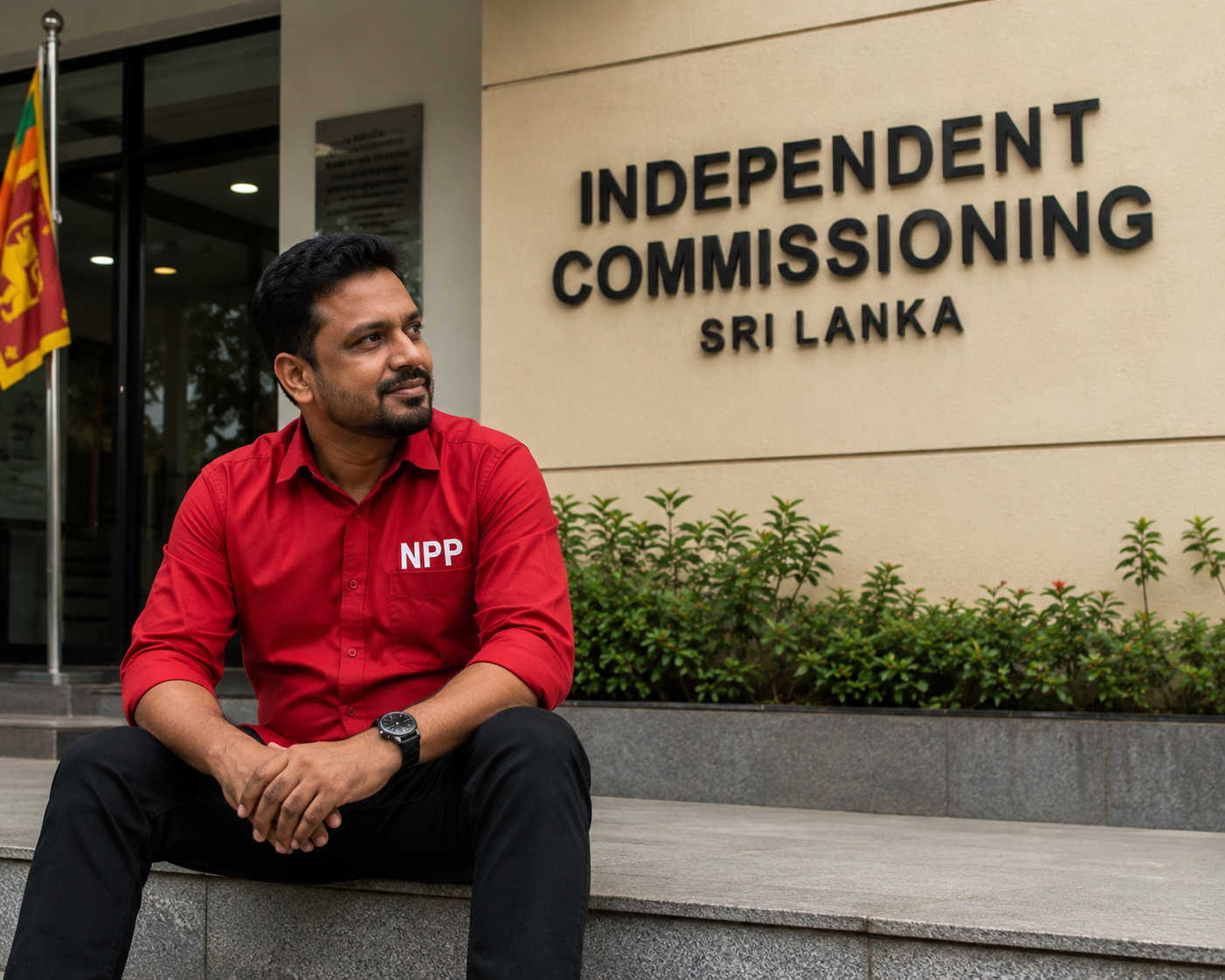

Following several months since first calling on ‘interested individuals’ to apply to be recommended for appointment by the President as members of the Human Rights Commission of Sri Lanka (HRCSL) and the National Police Commission (NPC), the Constitutional Council (CC) has re-advertised the call due to a lack of suitable responses.
Only ten individuals each have applied in response to initial advertisements by the CC to fill vacancies in the HRCSL and NPC, respectively, by notices dated April 24 and March 27. The CC has been unable to recommend candidates from the applications received, the Sunday Times understands. Its re-advertisement has requested applications to be sent to the Office of the CC on or before July 31. Those who had applied previously have been informed that they may re-apply before the deadline.
This is a significant departure from previous years where the process of recommending members to constitutional commissions and key statutory commissions attracted persons of eminence with selections made on merit. In part, a change in procedures by the CC in recent years where applicants are being asked to present themselves for ‘interviews’ before the CC has contributed to the reluctance of competent professionals and retired judges to come forward. Only retired public servants are, by and large, willing to apply.
Potential applicants to the commissions are also unwilling to risk an opaque process of selection and recommendation by the CC, the Sunday Times learns. In recent months, the CC has refused to release information on applications by journalists under the Right to Information (RTI) Act No 12 of 2016 asking for names of nominees and nominating organisations which had responded to a notice regarding filling a vacancy to the RTIC in early 2026. Similar information had been released by a previously constituted CC in 2022.
The Office of the CC has also refused to disclose information under the RTI Act regarding a decision made on the President’s nominee for the post of Auditor General on an information request filed by an attorney-at-law this year, stating that the information is required to be kept confidential by reason of the existence of a fiduciary relationship.
A lack of response similar to the HRCSL and the NPC prevails in respect of filling vacancies in the RTIC, comprised through a process of nominations, not applications like other commissions. The nominee of the Bar Association of Sri Lanka has a secured seat on the five-member body with civil society and media organisations in general responsible to nominate one member each. Appointment of the chair is at the discretion of the President while the recommendation of a remaining member is at the discretion of the CC.
Two commissioners – respectively the nominees of civil society and media organisations – resigned from the RTIC this year. Only five nominations were received in respect of the first vacancy that arose in early 2026. The notice in respect of the second vacancy, which arose on June 30 with media organisations informed to send in their nominees by July 6, has also not received a satisfactory response.
An added factor for the paucity of professionals consenting to be nominated for the RTIC is that, unlike other commissions, the payments of RTI commissionhttps://www.sundaytimes.lk/260719/news/no-takers-for-independent-commissions-interview-process-and-opaque-selection-cited-as-concerns-649582.htmlers have been unrevised (at Rs 65,000 with Rs 25,000 and Rs 5,000 as travel and phone allowances) since its establishment in 2016. RTI Commissioners are also not accorded the same facilities ex officio as other commissioners.
(Original heading -No takers for ‘independent commissions’; interview process and opaque selection cited as concerns)