
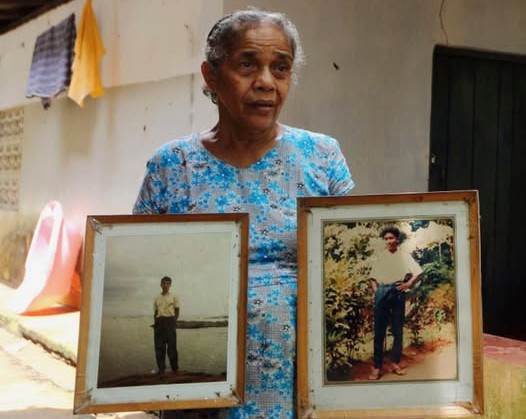

Image: Mother of Susantha Janaka and Nishantha Rohana, both schoolchildren at the time of arrest and disappearance.
The period from 1987 to 1990 remains one of the darkest chapters in Sri Lankan history — a horrific era in which state repression claimed the lives of more than 60,000 patriotic sons and daughters. Many were killed in ritualistic fashion; others were burned on tire pyres. Countless victims were buried in secret, leaving the earth itself as a witness to their suffering.
Their lives did not end with dignity. It is both a duty and a moral responsibility to deliver justice to these individuals. Failing to do so is not the mark of a civilized society. Neglecting such injustice is a tragedy that diminishes us all. Any government that claims to represent the people must ensure justice for these victims.
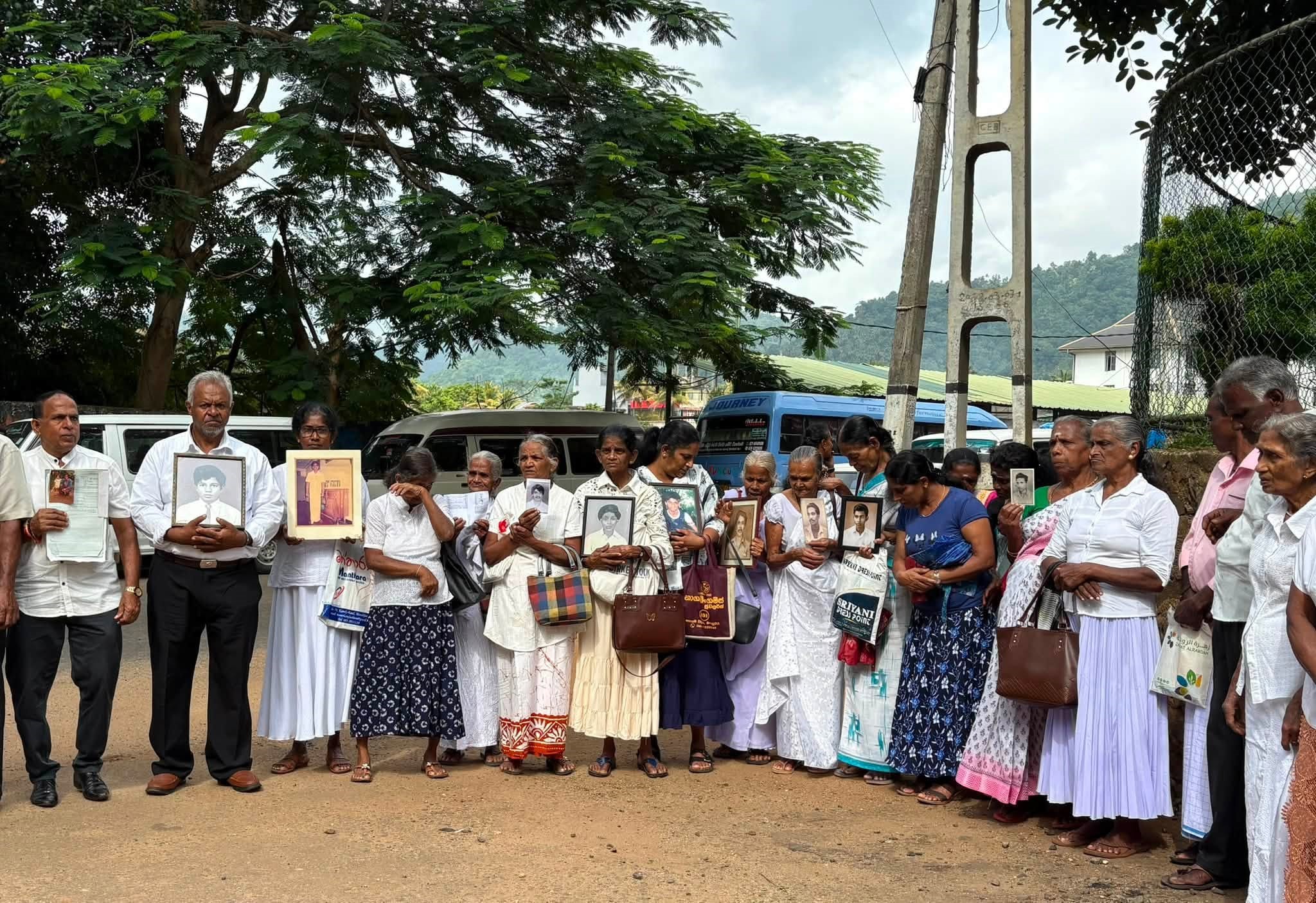
In 2012, a mass grave was discovered on the grounds of the Matale Hospital. More than 150 skeletal remains were unearthed. According to archaeologist Raj Somadeva, who led the excavation, the remains belonged to individuals who had been tortured, and the evidence clearly pointed to the period between 1987 and 1990. There is living testimony supporting this conclusion. It is well known that during that era, torture chambers operated in Matale — including at Vijaya College and the nearby inn. Survivors recount how those killed in these facilities were dismembered and their remains transported to remote areas.
Among the disappeared were my brothers, Susantha Janaka and Nishantha Rohana, both schoolchildren at the time. They were arrested during a daytime military raid in our village and taken to the military camp run by the 3rd Gajaba Regiment at Vijaya Vidyalaya, Matale.
From that moment onward, my mother searched for her children with a desperation only a grieving parent can understand. She never found them. They simply vanished. She pleaded for justice from every government that came to power, yet she never believed that the capitalist rulers of the time would deliver the justice she sought.
She believed justice would come only if the JVP came to power. With that conviction, she dedicated her life to bringing a JVP-led government into office. Within the movement, she became known as the “White Sister of Matale.”
When the mass grave was discovered, she was convinced that her sons’ remains might be among those found. This belief strengthened her resolve, and she became even more active in the JVP. Party leaders repeatedly vowed on political platforms that justice would one day be served. But my mother passed away in 2019 without seeing that promise fulfilled. My father later took up the same struggle, though he was already 85 years old.
Today, the National People’s Power (NPP) government led by the JVP holds a historic opportunity — not only to deliver justice for the Matale mass graves, but for all those who were unjustly killed across the country.
The JVP must commit itself fully to this task.
We believe that every victim of unlawful killing deserves a dignified end — and that justice, long delayed, must finally be delivered.
– Dhammika Ransirige (Dhammika Ransirige is the younger brother of two youths who were arrested and disappeared by security forces operating under Gotabaya Rajapaksa. He also served as the coordinating secretary to Matale District MP of NPP.)
( Translation of a Sinhala language post on FaceBook)