
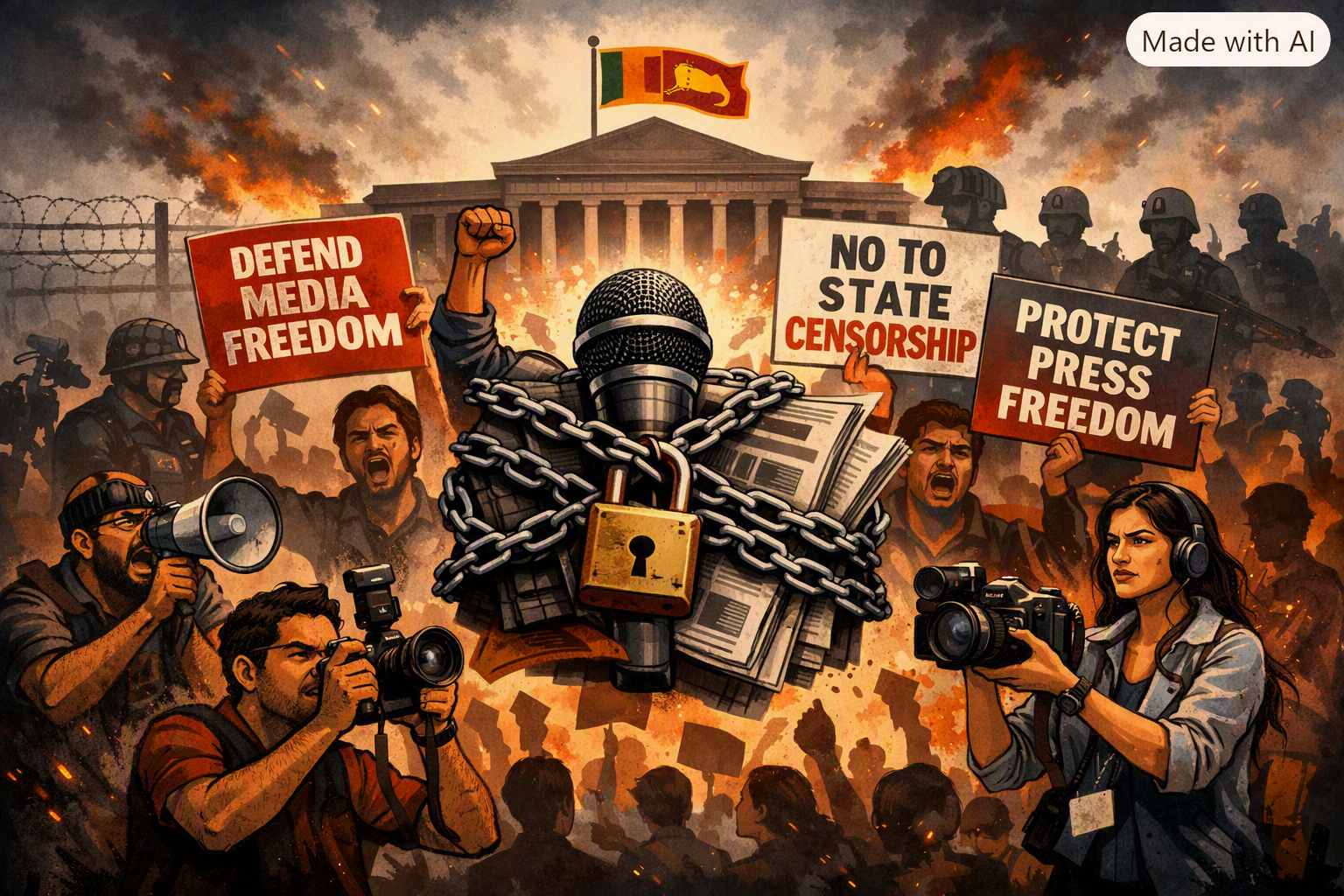

Two prominent members of the Free Media Movement have filed a petition before the Supreme Court challenging the constitutionality of the proposed “Chartered Institute of Media Professionals of Sri Lanka” Bill, warning that the legislation would create a state‑controlled regulatory body with sweeping powers over journalists and a wide range of content creators.
Filed on 4 August 2026 by Udaya Kalupathirana and Sunil Jayasekara, both members of the Free Media Movement, the petition argues that the Bill—tabled in Parliament on 22 July 2026—poses a direct threat to media freedom, professional independence, and citizens’ constitutional rights. The petitioners state: “the substantive provisions of the Bill will establish a statutory corporate body vested with extensive regulatory, administrative, disciplinary and policy‑making powers” over anyone defined as a “media professional.”
Executive influence and lack of independence
A central concern raised in the petition is the dominant role of the Executive in shaping and controlling the proposed Institute. The Bill empowers the Minister to appoint an Interim Council comprising the Ministry Secretary and six nominees, who would set membership criteria, election rules, and the initial governance structure. The petition warns that this arrangement “undermines the institutional independence expected of an impartial professional regulatory body.”
The petitioners argue that nearly half of the Governing Council members would be appointed through a process lacking statutory safeguards, enabling political influence over the body’s leadership and decision‑making.
Broad regulatory and disciplinary powers
The Bill grants the Institute wide authority to introduce and monitor professional standards, regulate training, conduct examinations, and maintain a register of media professionals. Clause 4(o) empowers the Institute “to introduce, develop, maintain and monitor professional standards in the field of media,” a mandate the petitioners say is overly broad and undefined.
More critically, Clauses 23 and 24 establish a disciplinary regime allowing suspension or cancellation of registration for “professional misconduct”—a term left entirely to rules made by the Council. The petition argues that this creates a licensing system for journalism, enabling the State to effectively bar individuals from practicing.
The petition states that such powers could produce a “chilling effect upon constitutionally protected expression”, deterring journalists and content creators from reporting or commenting on public affairs.
Extremely broad definition of “media professionals”
Clause 27 defines media professionals to include writers, content developers, presenters, broadcasters, editors, publishers, media educators, researchers, technicians, and camerapersons. The petition notes that this definition “extends far beyond journalists employed by conventional media institutions” and could subject ordinary citizens—such as bloggers or social media users—to statutory regulation.
Constitutional violations alleged
The petitioners argue that the Bill violates:
- Article 14(1)(a) – freedom of speech and expression
- Articles 12(1) and 12(2) – equality before the law
- Articles 3 and 4 – sovereignty of the people
They contend that the Bill’s cumulative effect may “substantially impair” fundamental rights and therefore require approval by two‑thirds of Parliament and a referendum under Article 83.
Relief sought
The petition requests the Supreme Court to declare the Bill, in whole or in part, unconstitutional and to require a special majority and referendum if Parliament intends to proceed.
The FR pettion in full:Media Professionals Petition Final