
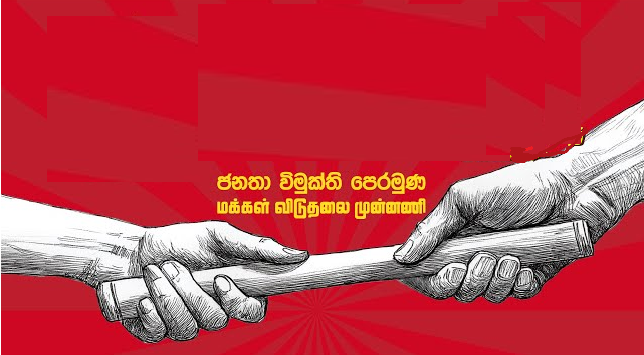

A Movement Born in the Margins
Many of us shaped by the Janatha Vimukthi Peramuna (JVP) in the late 1960s and 1970s carry convictions that have never fully faded. We were young and angry at inequality. We were incensed by colonial economic legacies that persisted long after independence. We believed Sri Lanka’s people deserved far better — socially, economically, and politically. Today, a party grown from those roots governs the country. The question before us is not whether we have arrived at the destination, but whether we are truly on the right path.
The JVP was founded in April 1965 in a working-class home in Akmeemana, Galle. A twenty-two-year-old Rohana Wijeweera gathered seven others for a discussion that would alter Sri Lankan political history. After studying at the Patrice Lumumba University in Moscow, comrade Rohana grew disillusioned with Soviet ideology and with the class-compromising tendencies of the established left. He concluded that no existing socialist formation had the revolutionary will to transform Sri Lankan society.
The JVP identified the rural proletariat as a necessary foundation of genuine social transformation. Its constituency was the likes of agricultural labourers, the unemployed youth, and the Sinhala-speaking school-leavers with a certificate but no prospects. The movement’s founding ideology rested on anti-imperialism, economic self-sufficiency, independence from Cold War superpowers, a commitment to incorruptibility, and a vision of national unity under socialist governance.

The 1971 insurrection was militarily defeated within weeks. Yet it announced the arrival of a new political force. This force was rooted not in Colombo drawing rooms but in southern villages. After surviving proscription, imprisonment, and the devastating second insurrection of 1987 to 1989 — which ended with the extrajudicial killing of approximately 60,000 people, including most prominent leaders and comrade Rohana — the JVP committed to parliamentary democracy. The path from 1965 to 2024 is extraordinary: from an underground revolutionary cell to a governing coalition with a two-thirds parliamentary majority.
Economic Inheritance and Challenges
The NPP government did not inherit a stable country. The 2022 sovereign default left deep scars. Inflation peaked at 70 percent. Foreign reserves collapsed. The social fabric frayed under severe hardship. By early 2026, macroeconomic indicators had stabilised. Inflation had returned to 2 to 3 percent. GDP growth is projected at 4 to 5 percent. These are genuine achievements. But stabilisation does not imply transformation.
Rising unemployment, poverty, and income inequality persist. Austerity conditions attached to the IMF programme have deepened hardship for working people, even as aggregate indicators improve. Indirect tax increases, electricity tariff hikes, wage suppression, and cuts to health expenditure have fallen most heavily on those least able to bear them. Education spending remains at a mere 1.5 percent of GDP. The IMF’s Extended Fund Facility has legislatively bound any future government to follow its conditions meticulously. Little fiscal room remains for the structural investments the original JVP vision demanded.
The global environment compounds this inheritance. The ongoing conflict involving Iran, the United States, and Israel has driven oil prices sharply higher. Tourism arrivals have fallen 23 percent year-on-year by March 2026. Estimated annual revenue losses stand at USD 1.6 billion. Worker remittances from Gulf Cooperation Council nations — approximately USD 4 billion annually — face a projected decline of up to 60 percent. Total projected foreign exchange losses from compounding global shocks exceed USD 8 billion. That figure surpasses the country’s usable foreign reserves. The ghosts of 2022 are not merely historical. They walk in the present.
Critics are correct to note that the NPP’s economic strategy in its first year has largely continued the neoliberal trajectory of its predecessors. This tension deserves honest discussion. There is no point in deflecting it elsewhere. The gap between the party’s founding anti-imperialist economics and the practical necessity of governing a debt-laden small open economy is real. It must be named and addressed.
The Economic Path Forward
For those of us shaped by the movement, the most important contribution we can make is to help the NPP remain anchored to its transformative mandate. This means neither uncritical cheerleading nor demoralising criticism. It means the engaged honesty of comrades who understand both the vision and the constraints. The party’s grassroots character is its greatest asset. It must be protected against the institutional pressures that domesticate radical governments over time.
The emergence of a genuinely multipolar world offers Sri Lanka real options that did not exist in 1971. A diversification of economic partnerships is both prudent and consistent with the JVP’s historic commitment to independence. Sri Lanka must reduce its dependence on any single bloc — whether the IMF framework, Chinese Belt and Road financing, or Western trade preferences. The Covid pandemic and the current world crisis have highlighted the critical importance of ensuring security in food, water, energy, and telecommunications. Sri Lanka must continue to encourage citizens and public sector workers to cultivate food. This is essential to address severe food insecurity and prevent a humanitarian crisis.
Urban agriculture, community spaces, and home gardens must be mobilised to promote food sovereignty. The objective is to reduce reliance on expensive imported food staples. Total export orientation, repeated as a mantra since colonial days, will not serve Sri Lanka in a turbulent world. A clean energy transition toward renewable sources can address the country’s structural oil import vulnerability. Expanding social welfare, increasing the minimum wage, and investing in public health and education are not luxuries. They are the foundations of a productive and equitable society.
The Unresolved National Question
The NPP came to power on the crest of the Aragalaya movement — a profound rejection of the corrupt elite that had driven the country to ruin. Its anti-corruption mandate is real. Its 65 percent approval rating after the first year testifies to widespread hope. Yet the national question remains unresolved. This is the most urgent structural challenge the government must confront.
Tamil and Muslim communities in the north and east continue to experience an ongoing military presence. Land seizures persist. Activists face harassment. Constitutionally mandated provincial council elections remain in abeyance. The NPP’s 2024 manifesto commitments to devolution and pluralistic civic nationalism represent the most progressive position any JVP-aligned formation has ever taken. Yet, paper commitments have not yet translated into structural change on the ground.
Provincial elections must be held without further delay. Genuine devolution under the 13th Amendment must proceed. The Prevention of Terrorism Act must be repealed or fundamentally reformed. The moral authority that comes from honestly confronting historical wrongs is not a concession to ethnic politics. It is the foundation of the national unity the JVP has always claimed to seek.
The abolition of the executive presidency also remains stalled. This was a core election promise. It was central to the ‘system change’ the NPP campaigned upon. The concentration of executive power in a single office has driven authoritarianism in Sri Lanka since 1978. Removing it is essential. There is no other option. Despite a parliamentary supermajority, significant constitutional changes have not yet been delivered. Every month of delay is a month in which the promise of transformation is quietly withdrawn. The NPP has the mandate and the parliamentary majority to deliver the transition to a parliamentary system. What it must find is the political will.
The Promise Has Not Expired
Those of us who joined the JVP in the 1960s and 1970s did so because we believed that Sri Lanka’s people deserved to live in dignity. Sinhala, Tamil, Muslim, Burgher, Malaiyaha and urban worker alike — all deserved freedom from poverty, exploitation, and the violence of unjust structures. That conviction has not expired. The NPP government represents, for all its contradictions and constraints, the most serious attempt in Sri Lanka’s post-independence history to govern in the interests of those who have always been governed over.
The world in 2026 is genuinely dangerous. Oil conflicts destabilise the global economy. Climate change accelerates. Authoritarianism advances. In this environment, a small island nation attempting to build a more just society faces severe headwinds. However, the JVP was never a movement that shrank from difficult conditions. It was built in cemeteries, rice fields, and factory floors by young people who had nothing but conviction and each other. The same spirit — disciplined, incorruptible, and rooted in the lives of ordinary people — is what this moment requires.
The flame of Vimukthi, of liberation, is not a relic. It is a living inheritance. Let us use it wisely.
5 April 2026
Melbourne