
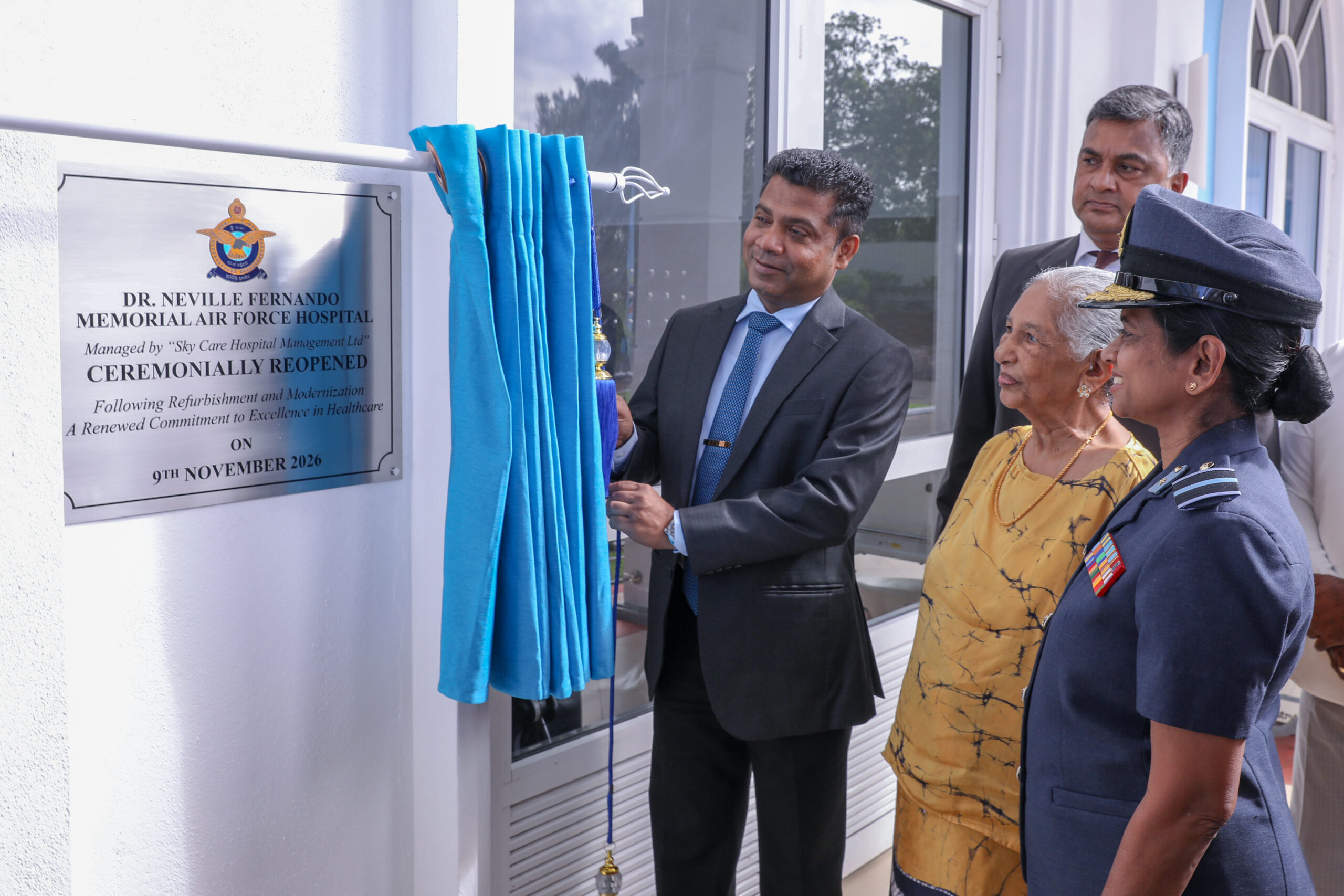

The ceremonial reopening of the Dr. Neville Fernando Memorial Air Force Hospital in Malabe on 9 November has drawn attention to the expanding role of the military in areas traditionally managed by civilian institutions. While presented by the government as a measure to strengthen healthcare delivery, the event marked the formal consolidation of Sri Lanka Air Force control over a major civilian medical facility following a Cabinet decision in February 2026 to transfer the operational management of the former Dr. Neville Fernando Teaching Hospital to the Air Force.
Health and Mass Media Minister Dr. Nalinda Jayatissa attended the reopening as Chief Guest, while Deputy Defence Minister Major General Aruna Jayasekara (Retd.) and Defence Secretary Air Vice Marshal Sampath Thuyacontha (Retd.) served as Guests of Honour. Their prominent presence underscored the central role of the defence establishment in the management of a healthcare institution that was originally established to serve civilian needs.
The transfer represents another example of the growing involvement of military institutions in civilian administration and public service delivery. Over the years, successive governments have increasingly relied on the armed forces in sectors ranging from health and education to agriculture, disaster management, infrastructure development and local governance. Critics argue that such developments risk blurring the distinction between civilian and military spheres, potentially weakening civilian oversight and democratic accountability.
Following the unveiling of a commemorative plaque, the visiting dignitaries toured the hospital’s facilities alongside senior Air Force officials and representatives of the Ministries of Defence, Health and Mass Media. The ceremony was also attended by Air Force Commander Air Marshal Roshan Goonetileke, Members of Parliament, senior government officials, and hospital staff.
For observers concerned about the militarisation of governance, the Air Force’s assumption of responsibility for a major civilian hospital is significant not merely as a healthcare initiative, but as part of a broader trend in which military institutions continue to acquire administrative and operational roles that have traditionally fallen within the remit of civilian authorities.