
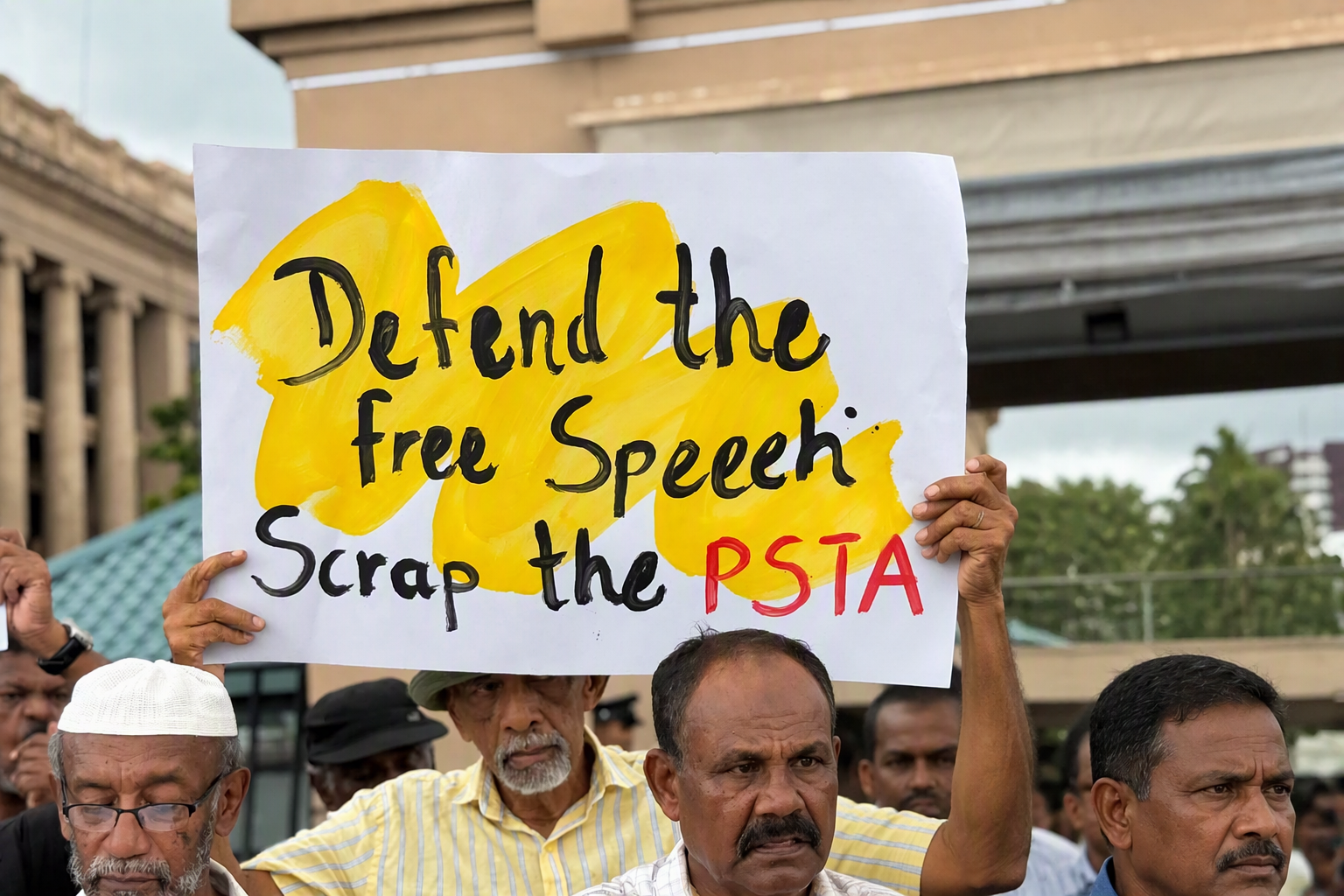

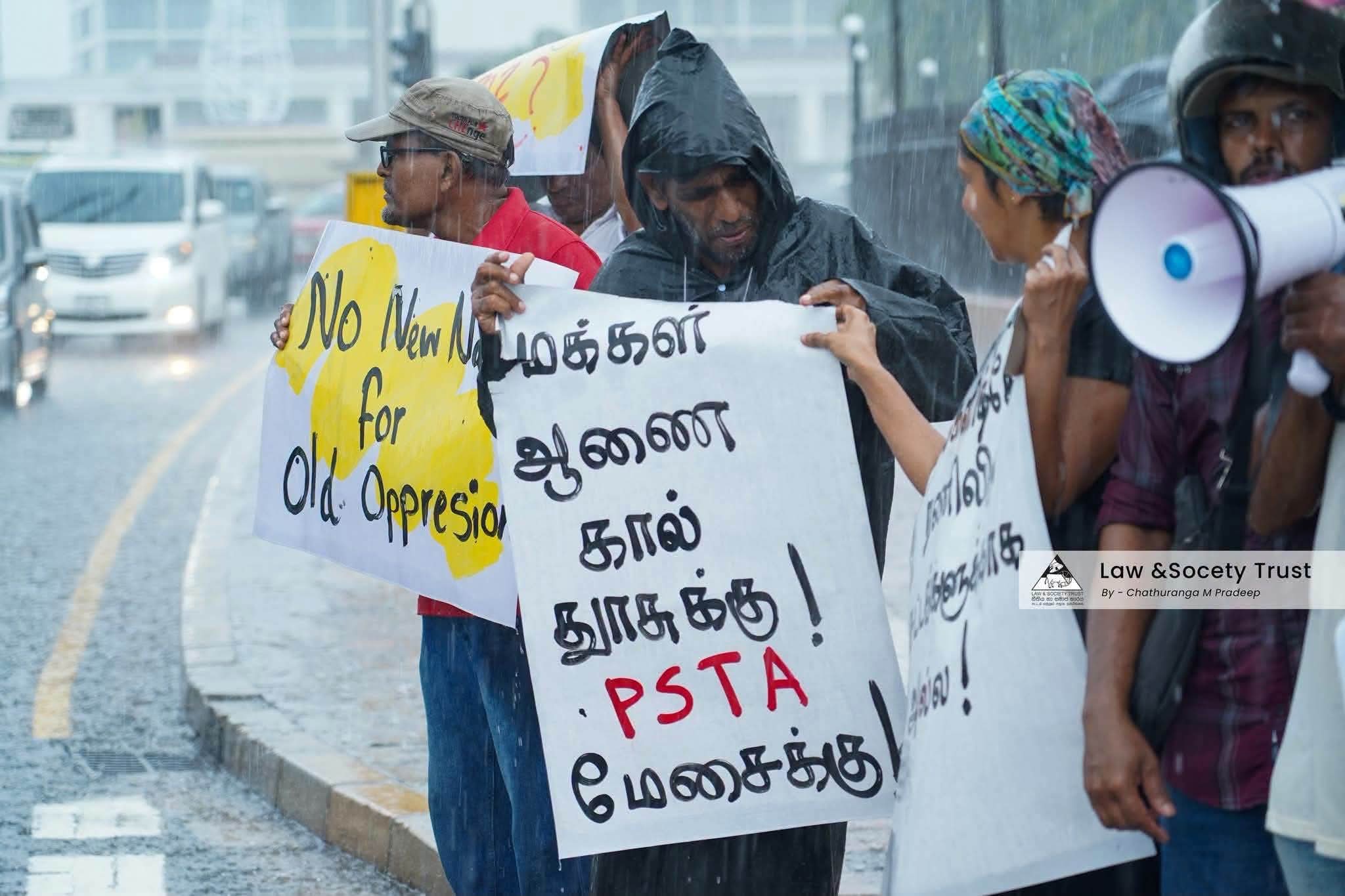
Despite heavy rain, civil society activists, trade union representatives, human rights defenders, and members of mass organisations gathered near the Presidential Secretariat in Colombo to protest the government’s proposed anti-terrorism legislation. Undeterred by the weather, demonstrators voiced concerns that the new law would further erode fundamental rights and democratic freedoms.
Security forces established roadblocks and significantly tightened security around the area as protesters attempted to march towards the Presidential Secretariat.
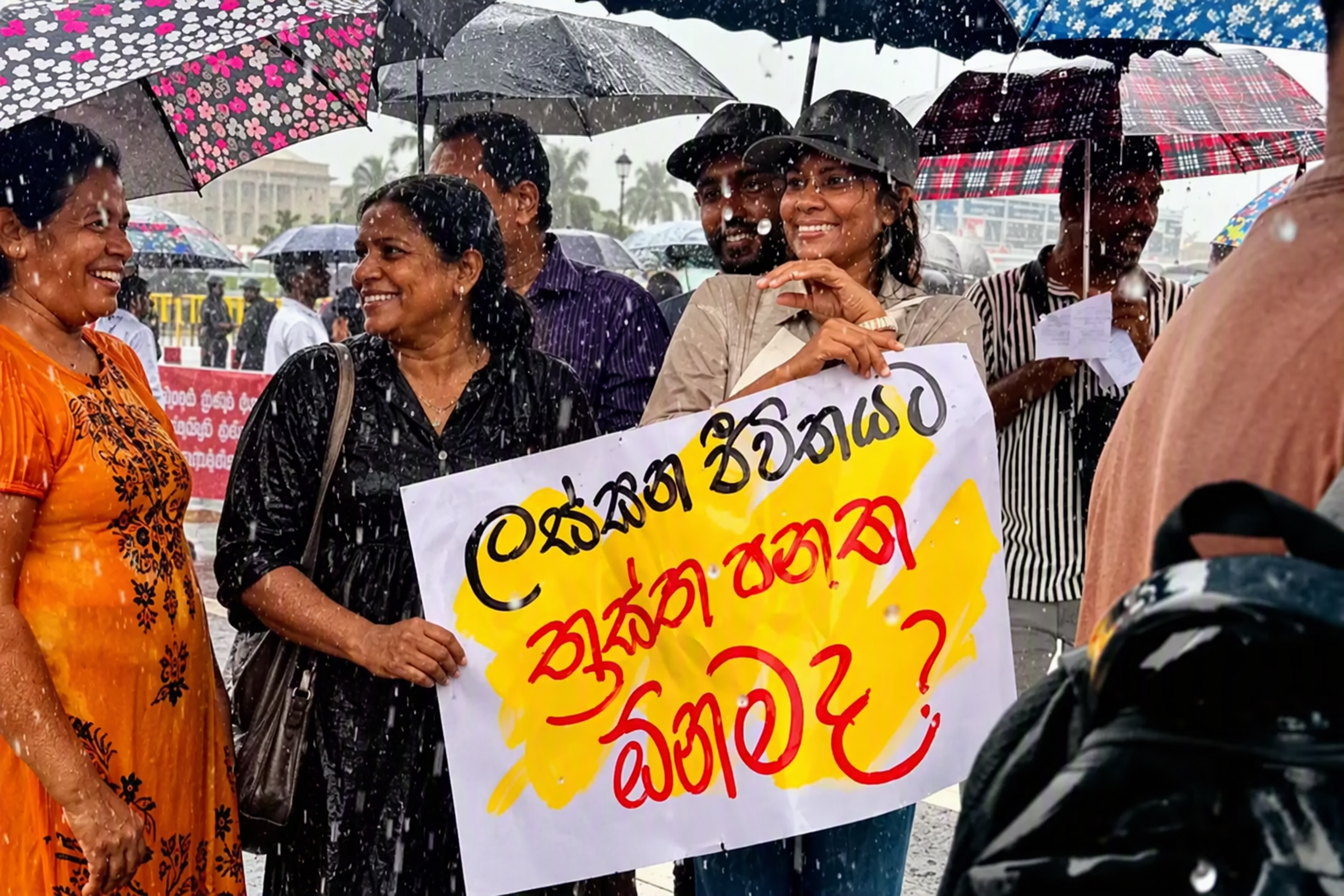
Main Demands of the Protest
1. Repeal the Prevention of Terrorism Act (PTA)
Protesters called for the complete abolition of the Prevention of Terrorism Act, a law that has enabled arbitrary arrests, prolonged detention without trial, and allegations of torture for more than four decades. They argued that the PTA has disproportionately affected minorities, political activists, and dissenting voices, and remains incompatible with international human rights standards.
2. Withdraw the Proposed Protection of the State from Terrorism Act (PSTA)
Demonstrators warned that the proposed Protection of the State from Terrorism Act (PSTA), while presented as a replacement for the PTA, retains many of the same problematic features and could be used to restrict freedom of expression, peaceful assembly, trade union activity, and legitimate political dissent. They therefore demanded that the bill be withdrawn and subjected to a genuinely consultative reform process.
Domestic and International Concerns
The protest reflects growing domestic opposition to the proposed legislation. International human rights organisations, including Amnesty International, Human Rights Watch, the International Commission of Jurists, and several UN human rights experts, have previously criticised both the PTA and successive replacement proposals for granting excessive powers to the executive and security agencies while lacking adequate judicial safeguards. The European Union has also repeatedly linked concerns over Sri Lanka’s counter-terrorism laws to its human rights commitments under the GSP+ trade arrangement.
Draft Law and the Ongoing Political Debate
While the government argues that a modern national security framework is necessary to address contemporary security threats and replace the decades-old PTA, civil society organisations, opposition parties, and legal experts stress that any new legislation must fully comply with constitutional guarantees and international human rights obligations.
As legal challenges and public campaigns against the bill continue to gather momentum, the debate over how to balance national security with democratic freedoms and the protection of fundamental rights is likely to intensify in the coming months.
(Images courtesy of The Leader.)