
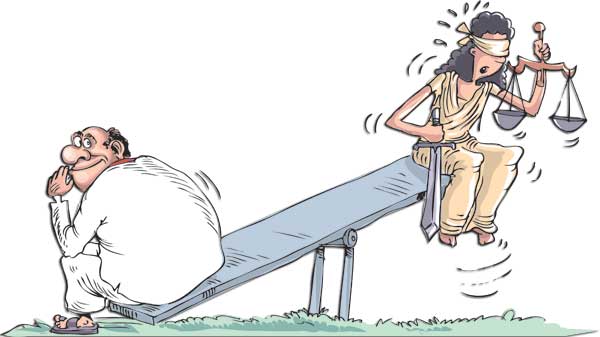

Colombo, May 25, 2026 — The Bar Association of Sri Lanka (BASL) has formally urged President Anura Kumara Dissanayake not to proceed with any constitutional amendment aimed at increasing the retirement age of judges serving in the country’s highest courts, warning that such a move could undermine public confidence in the judiciary and damage the rule of law.
In a letter dated 25 May 2026, addressed to the President, BASL expressed what it described as its “grave concern” over reports that the Government is considering amending the Constitution to raise the retirement age of judges of the Court of Appeal of Sri Lanka and the Supreme Court of Sri Lanka.
BASL Opposes Constitutional Change
The legal profession’s representative body argued that the existing retirement ages—63 years for Court of Appeal judges and 65 years for Supreme Court judges—have remained in place since the promulgation of the 1978 Constitution and should not be altered without compelling justification.
According to BASL, there is no demonstrated necessity for extending the retirement age of apex court judges. The association noted that the number of judges in both courts was significantly increased through the Twentieth Amendment to the Constitution of Sri Lanka, which expanded the Court of Appeal from 12 to 20 judges and the Supreme Court from 11 to 17 judges.
The association contended that these increases in judicial capacity negate any practical need for extending judicial tenure.
Warning Over Public Perception
A central concern raised by BASL is the potential impact such a constitutional amendment could have on public trust.
The letter states that extending the retirement age of sitting judges at the present time could be perceived as an attempt to interfere with the judiciary. BASL warned that members of the public may question the Government’s motives if a constitutional amendment is introduced solely for this purpose.
The association argued that the judiciary’s independence depends not only on actual freedom from influence but also on the public perception that judges remain impartial and insulated from political considerations.
“The Judiciary must not only remain independent in fact, but must also be seen by the public to be wholly independent, impartial, and free from even the slightest perception of influence, favour, accommodation, or impropriety,” the letter states.
Concern Over Ad Hoc Constitutional Amendments
BASL also expressed broader concerns about the use of constitutional amendments to address immediate political or administrative objectives.
The association observed that Sri Lanka’s Constitution has undergone numerous amendments over the years, some of which, it suggested, were introduced to serve the interests of governments in power rather than the long-term interests of constitutional governance.
It warned that a change to judicial retirement ages could establish a precedent for future governments to make ad hoc alterations affecting the judiciary, potentially weakening institutional safeguards and constitutional stability.
Appeal to Protect Judicial Independence
Emphasizing its role as a guardian of the rule of law, BASL said it was compelled to speak out against any proposal that could compromise confidence in the judicial system.
The association maintained that increasing the retirement age of judges is “neither in the interests of the judiciary nor of the people” and urged the President to refrain from pursuing such a constitutional amendment.
The letter concludes with an appeal to preserve the “independence, integrity, dignity, and public confidence” of the judiciary, describing these principles as essential to democratic governance and the maintenance of the rule of law in Sri Lanka.
The communication was signed by BASL President Rajeev Amarasuriya and Secretary Nalin De Silva.
Key Points
- BASL opposes any proposal to increase the retirement age of Supreme Court and Court of Appeal judges.
- The association says existing retirement ages have remained unchanged since 1978.
- BASL argues there is no operational need for the change because the number of judges in both courts was expanded in 2020.
- The body warns that such a move could be perceived as political interference in the judiciary.
- BASL says the amendment could erode public confidence and set a troubling constitutional precedent.
- The association has urged President Anura Kumara Dissanayake not to proceed with the proposed amendment.
This issue is likely to generate significant debate within legal and political circles, particularly given its implications for judicial independence, constitutional governance, and public trust in Sri Lanka’s democratic institutions.
the letter:BASL Letter of 25-05- 2026 to HE President Re Extension of Retirement Age of Judges (E)