
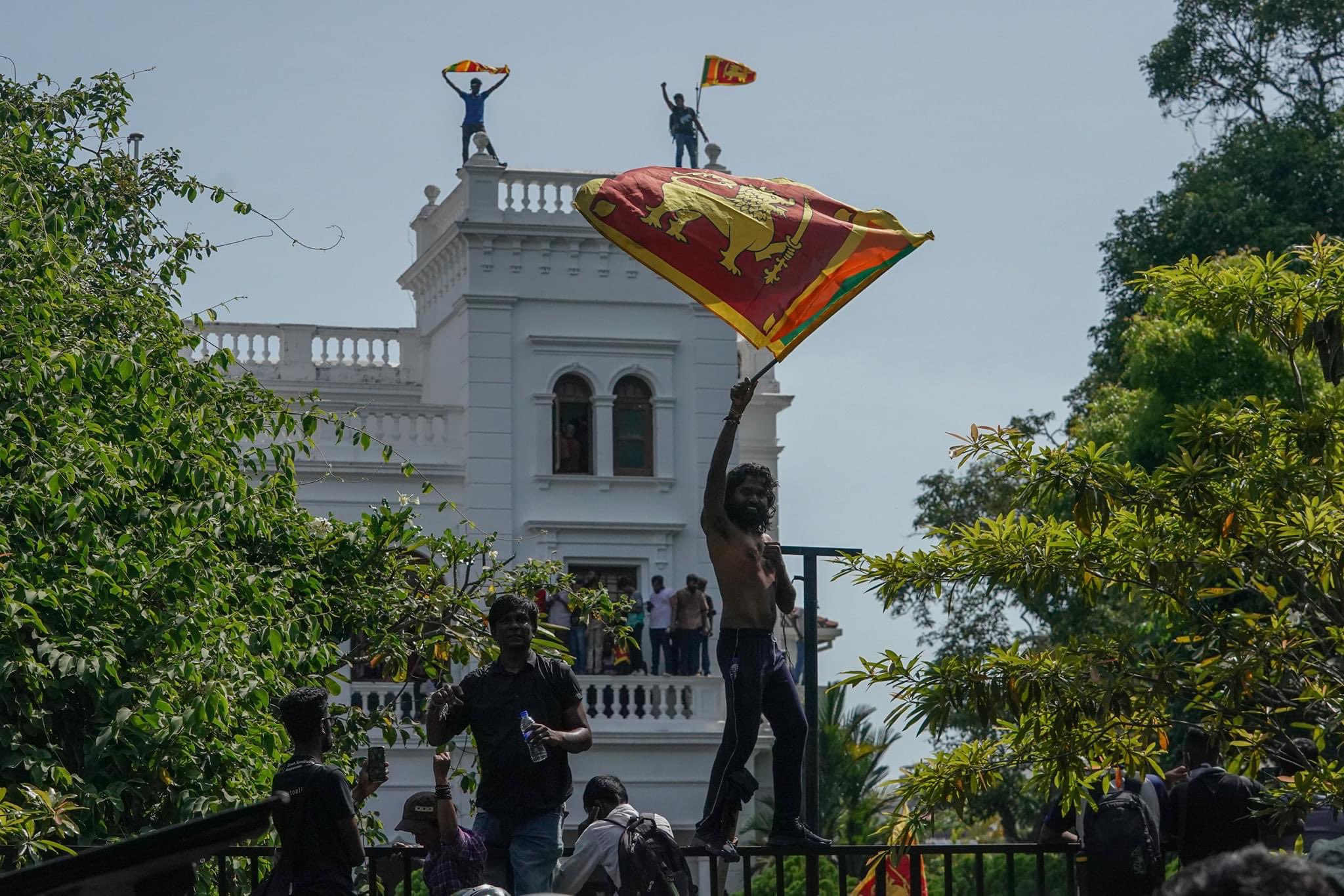

The Sri Lanka’s post‑2022 economic stabilisation, while necessary, is insufficient to secure lasting prosperity. Sri Lanka’s fundamental problem is not merely cyclical crisis or poor macroeconomic management, but deep and persistent institutional fragility. Over the past three decades, the country has experienced repeated episodes of progress followed by reversals because gains in freedom, governance, and economic openness have not been consolidated into durable institutions. As a result, recovery without structural reform risks reproducing the same vulnerabilities that led to collapse.
Episodic progress and fragile institutions
Sri Lanka entered the mid‑1990s with a paradoxical profile: social outcomes—health, education, and basic welfare—were far stronger than its income level would predict, but governance institutions were already under strain. Prolonged civil conflict, a highly centralised state, policy volatility, and weak constraints on executive power eroded institutional credibility. The Freedom Index data presented in the report shows that Sri Lanka’s path since 1995 has been characterised by volatility rather than cumulative improvement.
Although headline freedom levels in 2024 are higher than in 1995, this masks a central weakness: improvements across political, legal, and economic dimensions rarely moved together. Gains in one area were frequently undermined by deterioration in others, and progress consistently depended on political leadership cycles rather than institutional entrenchment. This lack of complementarity prevented reforms from becoming self‑reinforcing.
Economic freedom without stable governance
Sri Lanka maintained a broadly liberal economic framework for much of the past thirty years, including open trade policies and formal protection of private property. However, these policies were not supported by predictable governance or credible rule of law. As a result, economic freedom oscillated sharply rather than deepening over time.
The 2022 debt crisis exposed this vulnerability dramatically. The economic freedom index effectively reverted to mid‑1990s levels, underscoring the paper’s core lesson: economic progress built on weak governance is inherently unstable. Investor confidence, trade openness, and growth proved highly sensitive to political instability, leadership changes, and constitutional disruption.
Trade freedom in particular tracked political ideology. Periods of outward‑oriented governance were followed by inward‑looking protectionism, with repeated reversals in trade policy. Even during relatively open phases, Sri Lanka failed to translate openness into export diversification or dynamism. The export basket remained stagnant for decades, forcing the economy to rely increasingly on tourism, remittances, and external borrowing—none of which could substitute for a competitive tradable sector.
Social progress with structural limits
The report highlights women’s economic freedom as one of Sri Lanka’s more consistent legal improvements. Over time, laws governing property ownership, inheritance, and participation in economic life became more gender‑equal, with a notable improvement in 2022 through reforms to land‑use rights. However, these legal gains did not translate into labour‑market outcomes. Female labour force participation remains exceptionally low, reflecting structural barriers such as the absence of state‑funded maternity leave and private‑sector discrimination against younger women.
Political freedom exhibits even greater fragility. During the civil war, democratic space narrowed under emergency powers. After the conflict ended in 2009, political rights expanded, but meaningful improvements occurred only after major leadership changes, particularly in 2015. Subsequent reversals—including the 2019 constitutional crisis and increased executive centralisation—demonstrate that democratic practices remain contingent rather than institutionalised.
Legislative checks on executive power showed the widest swings of any indicator. Constitutional amendments repeatedly expanded and contracted presidential authority, weakening parliamentary oversight and distorting economic decision‑making. The legal subindex reflects similar instability: although the rule of law improved in aggregate since the 1990s, it remained uneven, politicised, and vulnerable during crises such as the COVID‑19 pandemic.
From freedom to prosperity: mixed outcomes
Sri Lanka’s prosperity outcomes reflect early social investments but long‑term stagnation. In the 1990s, the country enjoyed prosperity levels well above the regional average. Over time, this advantage eroded—not because growth was absent, but because it was poorly structured and weakly inclusive.
Real per‑capita income rose steadily until 2020, driven largely by domestic demand, government spending, and debt‑financed consumption rather than productivity or exports. By 2020, debt‑servicing costs absorbed roughly 70 percent of government revenue, making collapse inevitable. The 2022 crisis produced a 10 percent GDP contraction, with output expected to recover to 2018 levels only by 2026.
Structurally, Sri Lanka failed to generate high‑productivity sectors. Services expanded without sufficient sophistication, industry remained narrow and shallow, and agriculture stayed trapped in low‑productivity subsistence. Goods exports fell dramatically as a share of GDP between 2000 and 2020, leaving the economy structurally dependent on volatile external inflows.
Health and education remain relative strengths. Universal health care and long‑standing investments preserved high life expectancy and mitigated shocks during crises, including COVID‑19. Education achieved broad access and gender parity, but stalled at the upper end: Sri Lanka failed to expand or improve university education sufficiently, leaving the workforce ill‑suited to a knowledge‑driven economy.
Inequality, however, worsened consistently. Weak progressive taxation and reliance on consumption taxes limited redistribution, while crisis adjustment in 2022 disproportionately harmed poorer households. The use of workers’ pension funds in domestic debt restructuring exemplified elite capture of policy and deepened social costs.
Why recovery is not enough
The paper emphasises that Sri Lanka’s current IMF‑supported stabilisation programme is a crisis response, not a development strategy. While reserves, fiscal balances, and system stability have improved, treating stabilisation as success risks obscuring severe human costs. Real wages remain depressed, employment is at multi‑decade lows, and poverty has risen sharply.
Sri Lanka therefore faces a conceptual challenge: shifting from crisis management to long‑term development thinking. Decades of reactive governance have prioritised short‑term fixes over institution‑building. Without addressing this pattern, future shocks—whether climate‑related, geopolitical, or financial—will continue to produce outsized damage.
The path forward: four pillars
The author argues that sustainable development requires four elements working together:
- Macroeconomic discipline, embedded in a broader national development framework rather than treated as an endpoint.
- Institutional reform, including professional economic governance, evidence‑based policy, and implementation capacity.
- Ethnic reconciliation, not as a separate peace agenda, but as a prerequisite for political stability, investment confidence, and legitimacy.
- An export‑led growth strategy, focused on diversification, productivity, and integration into global value chains.
Additional priorities include institutionalised risk management, transparency and answerability in government, digital inclusion, higher female labour participation, and preparation for demographic ageing.
Conclusion
Sri Lanka stands at a pivotal moment. The country has repeatedly demonstrated the capacity to recover, but not to transform. Without institutional renewal, social reconciliation, and a coherent development vision, recovery will merely reset the conditions for the next crisis. The choices made now will determine whether Sri Lanka continues its cycle of collapse and rebound—or finally builds a stable, inclusive, and resilient path to prosperity.
By Nishan de Mel (Atlantic Council, April 2026) AI-generated summary of a longer article published in the Atlantic Council
Complete article here as a PDF – Sri Lanka needs a development plan, not just a recovery narrative