
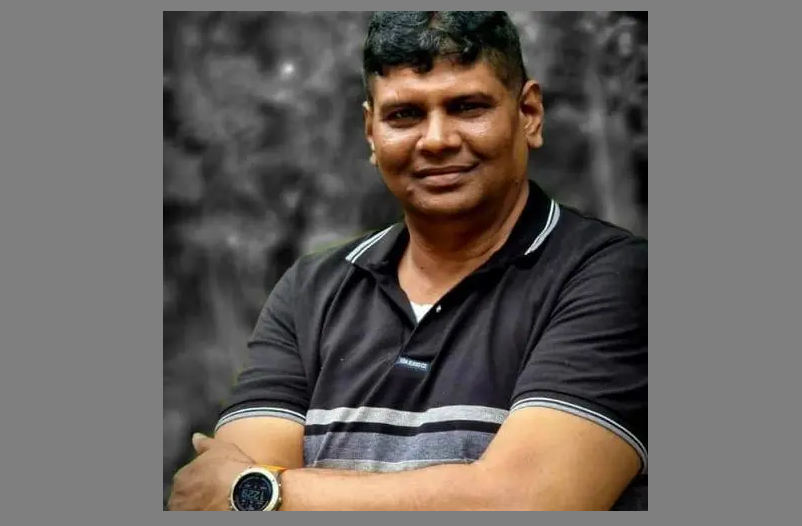

The Administrative Appeals Tribunal has ordered the immediate reinstatement of former Superintendent of Police (SP) Lakshman Cooray, who was removed from service during the Mahinda Rajapaksa administration in what the Tribunal has now determined to be a politically motivated and unlawful dismissal.
The ruling, delivered on April 9, directs that Cooray be reinstated to the rank of Superintendent of Police and be granted all promotions and service-related benefits he would have received during the nearly 14 years he was kept out of the police service.
A disciplinary inquiry may still be conducted, but the Tribunal has strictly limited this process to six months. If the Police Commission fails to conclude the inquiry within that period, it loses the authority to proceed further. Upon reinstatement, Cooray will rank as the sixth most senior officer in the Sri Lanka Police.
The Tribunal concluded that his removal was entirely illegal and carried out with clear intent of political retaliation.
Arrest Linked to the Assassination of Minister Jeyaraj Fernandopulle
SP Lakshman Cooray’s ordeal began on 12 August 2009, when the Terrorist Investigation Division (TID) arrested him on allegations of involvement in the assassination of former Minister Jeyaraj Fernandopulle.
The Assassination
Minister Fernandopulle was killed on 6 April 2008 in a suicide bombing at a marathon event near the Kanthi Stadium in Weliweriya.
- 16 people, including the Minister, died in the attack
- More than 80 others were injured
- The LTTE was blamed for the bombing, and several suspects were arrested under the Prevention of Terrorism Act (PTA)
Cooray was accused of conspiring in the attack, though no credible evidence was ever presented linking him to the bombing.
Nearly 14 Years in Detention Without Conviction
Following his arrest, Cooray was held in remand and later at the Boossa Detention Camp under PTA detention orders.
He remained incarcerated for almost 14 years, despite the absence of substantive evidence.
In 2022, the Gampaha High Court acquitted both Cooray and former LTTE member Selvarajah Kirubakaran, ruling that the prosecution had failed to establish any involvement in the assassination beyond reasonable doubt.
Supreme Court Findings: Torture, Unlawful Detention, and Violations of Fundamental Rights
A landmark Supreme Court judgment—delivered by Chief Justice Murdu Fernando, Justice Priyantha Fernando, and Justice A.H.M.D. Nawaz—found that Cooray’s fundamental rights were violated during his arrest and detention.
The Court held that:
- He was tortured while in TID custody
- His detention violated Articles 11 and 13(2) of the Constitution
- The government must pay Rs. 30,000 in compensation
- Two TID officers must personally pay Rs. 300,000 each
- Two additional officers must pay Rs. 200,000 each
The Court also noted that his arrest lacked reasonable grounds and that he had been held under detention orders issued by the then Defence Secretary.
Legal Analysis: How the Tribunal Ruling Complements the Supreme Court Judgment
The Supreme Court and Tribunal rulings address two distinct but interconnected dimensions of the injustice faced by Lakshman Cooray. The Supreme Court judgment dealt with constitutional violations, establishing that Cooray’s arrest, detention, and treatment in custody were unlawful and amounted to torture. It provided a rights‑based remedy through compensation and a formal declaration of wrongdoing by state officers.
The Administrative Appeals Tribunal, however, examined the administrative and career consequences of those violations. It concluded that Cooray’s removal from service was procedurally unsound, politically motivated, and fundamentally illegal. By ordering reinstatement, restoration of seniority, and recognition of lost promotions, the Tribunal addressed the long-term professional harm caused by the wrongful arrest and detention.
Together, the two decisions form a comprehensive legal acknowledgment that both Cooray’s personal liberty and professional standing were unjustly compromised—and that the state bears responsibility for rectifying both.
A Significant Victory Against Political Persecution
After more than a decade of legal battles, the Tribunal’s reinstatement order marks a major victory for Lakshman Cooray and a broader affirmation of the rights of public officials who faced politically motivated reprisals.
His return to service—after being wrongfully implicated in one of the country’s most high-profile assassinations—stands as a powerful reminder of the importance of judicial oversight, accountability, and the rule of law.
(With the inputs from a news story by Tharindu Uduwarageda on the Satahan web site)