
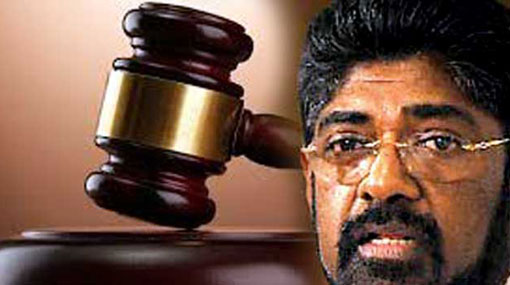

The Supreme Court’s decision holding former Health Minister Keheliya Rambukwella and several senior health sector officials personally responsible for violating the Fundamental Rights of the public marks a defining moment in Sri Lanka’s recent legal and governance history. Delivered at a time when public trust in state institutions has been deeply eroded, the judgment sends a strong message that ministerial authority cannot be exercised above the law, particularly when public health is at stake.
The case arose from a controversial drug procurement process carried out in 2022 under the Indian Credit Line, during which medicines were purchased from an unregistered supplier outside established procurement procedures. A Fundamental Rights petition filed by Transparency International Sri Lanka challenged these actions, arguing that the decisions taken by political and administrative authorities had placed the lives and wellbeing of citizens at risk. After considering the evidence, the Supreme Court found that the conduct of the former Health Minister and key officials was not merely irregular, but unlawful and constitutionally impermissible.
In a firm rebuke, the Court ruled that the granting of a Waiver of Registration for the medicines in question was wrongful, arbitrary, and capricious. It further held that the use of unsolicited direct contracts bypassed mandatory safeguards designed to ensure drug safety, transparency, and accountability. By declaring the transaction null and void, the Court underscored that procedural shortcuts in the health sector cannot be justified, regardless of the pressures faced by those in power.
What makes the ruling particularly significant is the Court’s decision to impose personal financial liability on those found responsible. Former Minister Rambukwella was ordered to pay Rs. 75 million in compensation, while the then Secretary to the Ministry of Health, the former Chairman and Chief Executive Officer of the National Medicines Regulatory Authority, and the former Director of the Medical Supplies Division were each ordered to pay Rs. 50 million. The compensation was ordered not as a symbolic gesture, but as a direct consequence of the harm caused to the public by decisions taken in violation of constitutional protections.
The judgment goes beyond compensation. Recognising the potential criminal dimensions of the conduct revealed, the Supreme Court directed the Commission to Investigate Allegations of Bribery or Corruption to initiate action under the Anti‑Corruption Act against those found responsible. This directive ensures that accountability does not end with a civil finding of liability, but may extend into the criminal justice system where warranted.
Legal observers have noted that the ruling represents one of the strongest affirmations in recent years of the Supreme Court’s role as guardian of Fundamental Rights, particularly the right to health and lawful administration. By holding both political leadership and senior public officials accountable, the Court rejected the notion that responsibility can be diffused or avoided within complex bureaucratic structures. Instead, it affirmed that those who exercise power over essential public services carry a heightened duty of care.
Beyond its immediate legal consequences, the judgment has broader implications for governance in Sri Lanka. It reinforces the principle that emergency conditions, financial constraints, or political expediency cannot be used to justify departures from statutory safeguards, especially in sectors that directly affect human life. For a public that has endured repeated crises linked to mismanagement and lack of oversight, the ruling offers a measure of reassurance that constitutional accountability remains enforceable.
As the full written judgment is awaited, the Supreme Court’s findings already stand as a landmark intervention. They serve as a warning to future office‑holders that decisions affecting public health will be scrutinised not only through the lens of policy, but through the uncompromising standards of constitutional law. In doing so, the Court has reaffirmed that the protection of the people’s rights is not optional, even at the highest levels of government.
Keheliya Rambukwella was one of the strongest politicians in the Rajapaksa era and now faces a court case on money laundering as well.
The Judgement:sc_fr_65_2023_with_sc_fr_82_2023