

Introduction
Sri Lanka is an old and established democracy. It has a long electoral democratic tradition, having introduced universal franchise as early as 1931, and a track record of peaceful changes of governments through the ballot since then. Post-independence Sri Lanka is shaped by war (1983 – 2009) and insurgencies (1971, 1987-89) and more recently a crippling economic and political crisis (2022). Understanding and assessing the enabling space for civil society in Sri Lanka today requires recognising and factoring in some of the key dynamics in the country, particularly the ethno-religious contestations among its main community groups of Sinhalese, Tamils and Muslims and the post-independence state-building process that seemingly entrenches Sinhala Buddhist majoritarianism. These get superimposed on an unequal and patriarchal society. These deep drivers continue to influence state-civil relations and how they manifest in fundamental freedoms of association, assembly, and expression. They also play a role in how they are enjoyed by different segments of the population.
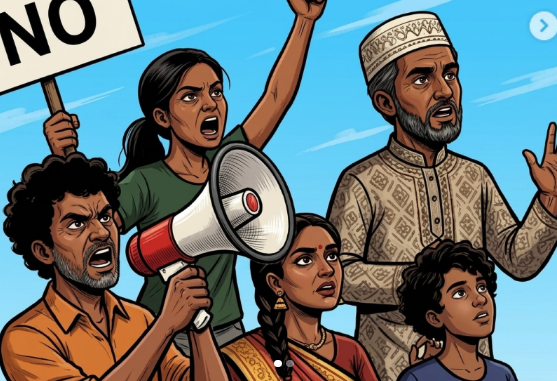
In 2022, the economic crisis precipitated by long periods of poor governance and a growing frustration with the political status quo triggered a massive people’s uprising known as Aragalaya/Struggle. The Aragalaya resulted in the forced resignation of the then President, Prime Minister and the government. After an interim period (2022-2024) with a President elected by the parliament, a new President and government were elected with a significant mandate at the end of 2024. The Aragalaya of 2022 was unprecedented and was the largest show of civic activism in Sri Lanka. However, the Aragalaya was in turn met with the quick consolidation of interests by those in government, followed by repressive measures.
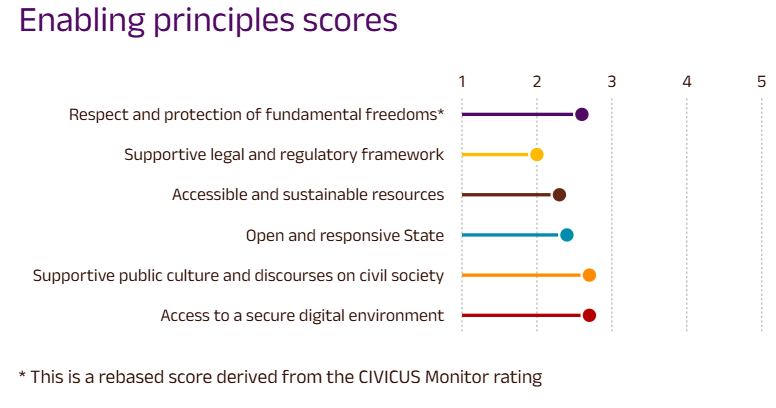
The newly elected National People’s Power (NPP) government came to power in late 2024 with a supermajority and a clear mandate for a ‘system change’ anchored in participation and transparency. In keeping with the mandate, the government is pursuing a multi-pronged anti-corruption agenda. This consists of long-delayed legal reforms, strengthening anti-corruption institutions, and measures to bring about a change in public culture.
The country is on an International Monetary Fund (IMF) prescribed economic recovery program with typical austerity measures that have far-reaching impacts on poorer segments of the population. Deep structural reforms like sustaining primary surplus, cutting down budget deficits, restructuring state-owned enterprises, increasing tax revenue, trade liberalisation and active investor promotion are at the top of the NPP government’s programmes. The looming debt repayment burden to avoid another cycle of crisis has compelled the government to follow a narrow path recommended by the IMF. The new government has not yet commenced any work on its promise to abolish the executive presidency or on constitutional reforms to address the national question of power sharing and reconciliation. When they do so, the relevant civil society actors expect to be involved in being heard and in shaping the outcomes. But the process and avenues for civil society’s constructive engagement with this government on these issues remain unclear.
Over the course of 2025, while some positive changes, like the recent shifting of the NGO Secretariat from the Ministry of Public Security to the Ministry of Rural Development and Community Empowerment, have been noted, many other trends that adversely impact the free functioning of civil society have continued. The persistence of restrictive legal frameworks, draconian security laws, and systematic harassment and pervasive surveillance continued to characterise the operating environment for civil society. Groups working on rights and justice issues, especially in the war-affected north and east areas where Tamils and Muslims are predominant, faced heightened scrutiny and intimidation.
Despite the context, Civil Society Organisations (CSOs) remain a crucial force in advocating for human rights, accountability, and inclusive development. The enabling space is thus a complex, highly contested, and often precarious arena that demands resilience and innovation from civil society actors to pursue their mandates within a shifting political landscape.
Reconditions:
To the Government of Sri Lanka
• Refrain from any new law that imposes mandatory registration on CSOs or encodes expanded surveillance and control over the sector. Retain the plural means and voluntary nature of registration of CSOs.
• Codify a voluntary, user-friendly registration process that gives full effect to the fundamental rights guaranteed in the Constitution of Sri Lanka and is developed with civil society input.
• Eliminate security sector intervention in civil society registration and clarify that this is not provided for under existing law. Requests for input from security or intelligence officials and special police clearance reports should not be part of the routine registration process.
• Confirm and communicate that a secondary registration under the Voluntary Social Service Organisations (VSSO) Act is voluntary under current law and that provisions of the VSSO Act and the resultant obligations apply only to the entities registered under the Act. The NGO Secretariat, in coordination with the Ministry of Public Administration and the Central Bank of Sri Lanka (CBSL), should proactively communicate these positions to relevant officials in the public and banking sectors.
• Simplify and reduce the frequency of the onerous reporting requirements currently prescribed by the NGO Secretariat for organisations registered under the VSSO Act. Eliminate the need for approval of routine plans and regular reports by the NGO Coordinator/Divisional Secretary/District Secretary.
• Develop a policy framework on ‘State-CSO relations’ that provides a mutually agreed set of principles and guidelines for engagement between the sector and the government, via a participatory process led by the Ministry of Rural Development and Community Empowerment, with a steering team that includes CSO representatives.
• Ensure that the ‘State-CSO relations’ policy envisions the sector as an independent, constructive partner in relief and development and a critical stakeholder in a democratic society by setting out the positive role that government could play and the negative measures it should refrain from in order to provide an enabling environment.
• Take cognisance of the updated FATF recommendation pertaining to the not-for-profit sector. Accordingly, the Financial Intelligence Unit (FIU) at the CBSL should not unduly single out the not-for-profit sector with additional burdensome requirements when receiving foreign funds. This is particularly pertinent given the FATF review of Sri Lanka due to take place in 2026.
• Put in place forums and processes for transparent and structured participation and consultation with relevant CSOs on policies, laws, and projects/interventions on different subject areas at the district, province and national levels.
• Give space for the NGOs at district level coordination committee meetings, parliamentary oversight committee meetings and other consultative forums with decision makers. • Establish a process for participatory law-making and governance with a system of white paper, technical consultations, public consultations and feedback loops on key issue areas. • Re-engage with the Open Government Partnership (OGP).
• Dismantle the permissive legal framework and institutional practices that enable military and security sector surveillance and intrusion into civil society activities. To achieve this:
▪ Repeal the Prevention of Terrorism Act (PTA) and announce a moratorium on its use until it is repealed. Any anti-terror law shall be within the ordinary law framework.
▪ Reform the Online Safety Act (OSA) in line with the recommendations made by the Supreme Court, demands of the civil society and international best practice.
▪ Reform Penal Code Sections 365 and 365A.
▪ Stop the abuse and misapplication of laws like the International Covenant on Civil and Political Rights (ICCPR) Act, the PTA and the Public Security Ordinance (PSO) by the Police.
▪ Ensure strict application of judicial oversight in obtaining banking and telecommunication details of CSOs and HRDs.
• Ensure diligent application of data privacy.
• Abolish the NGO Tax. Revise and update the law providing for tax exemptions for donations to charitable institutions by expanding the list of eligible organisations. • Provide adequate resources and strengthen the Right to Information (RTI) Commission. Improve awareness and accessibility of the RTI Commission for people at the district level.
To the Civil Society in Sri Lanka
• Adopt a code of conduct for the CBO/NGO sector and establish a self-regulation mechanism to enhance good governance, transparency and accountability. • Institute a system of tracking and documenting violations of fundamental freedoms faced by CSOs and HRDs with a view to compiling and disseminating periodic reports, responding to any incident/crisis situation and informing advocacy for an enabling environment.
• Establish inclusive and representative civil society platforms that: o Encourage dialogues across different communities on critical issues. o Help in strategic dialogues/engagement and advocacy with the government on critical issues of interest, including laws, regulations and conduct of government authorities impacting the enabling environment for CSOs. o Coordinate issue-based collective advocacy with the government. o Promote volunteerism as well as private sector and individual philanthropic outreach at district and national levels.
• Develop issue-based and organisation-based plans to diversify funding sources by actively pursuing global, regional, non-traditional and private sector funding.
• Build the capacity among CSOs for data-driven advocacy, better communication approaches, digital literacy and security.
• Conduct individual, organisational and collective community and media outreach programs based on one’s work to enhance civic awareness and build a constituency of support for the work that CSOs are doing.
From the Report of the EU SEE — a CSO-led system monitoring civic space: sri-lanka-country-focus-report