
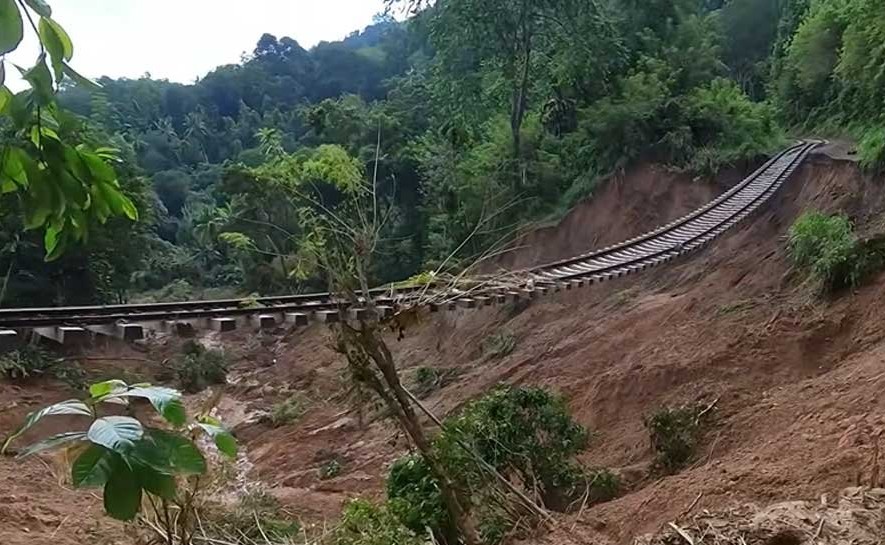

Three major State agencies are grappling with an estimated Rs. 216 billion funding requirement to restore critical infrastructure damaged by the recent Ditwah-related natural disasters, officials informed the Parliamentary Sectoral Oversight Committee on Infrastructure and Strategic Development on 11 December.
Key Damage Estimates
- Road and Bridge Restoration:
Initial losses at the Road Development Authority (RDA) are pegged at Rs. 75 billion, following damage to 316 roads and 40 bridges.
However, factoring in full rehabilitation needs, the total requirement escalates to Rs. 190 billion. - Power Sector Losses:
The Ceylon Electricity Board (CEB) reported infrastructure damage worth Rs. 20 billion, while Lanka Electricity Company Ltd. recorded losses of Rs. 252 million, which it plans to cover through existing allocations. - Water Supply Impact:
The National Water Supply and Drainage Board estimates losses of Rs. 5.6 billion, with 156 water supply schemes affected. Restoration work has been completed, but rehabilitation funding is being sought from the Asian Development Bank (ADB).
Funding and Relief Measures
- The Government has requested Parliamentary approval for a Rs. 50 billion supplementary estimate for emergency relief this year, with plans for an additional Rs. 500 billion allocation in 2026.
- Discussions are under way with the World Bank for a Rs. 2 billion loan, alongside other multilateral funding options. The committee urged utilities to prioritise grant funding to avoid tariff hikes from additional borrowing.
Outstanding Assessments
- Damage to railway lines and regional roads remains unassessed. The committee stressed the need for a structured financing mechanism for regional road rehabilitation.
Future Preparedness
Committee members emphasised the importance of disaster-resilient infrastructure planning and pledged support to ministries in strengthening long-term resilience strategies.
With the inputs from The Financial Times.