


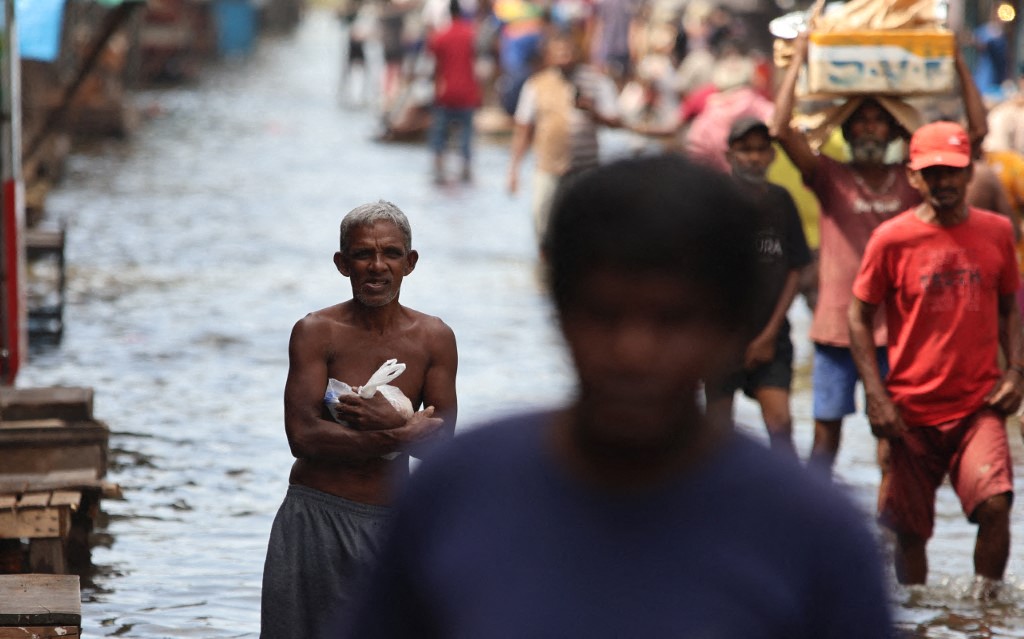
An elderly resident clutches a lunch packet to his chest while wading through a, flooded street in Colombo, Sri Lanka, on December 1, 2025. Credit: Tharaka Basnayaka / AFP
Speaking at a meeting with police officers on December 3, the deputy minister of public security, Sunil Watagala, claimed “malicious attacks” against Sri Lanka’s president, Anura Kumara Dissanayake, and senior ministers were being circulated online, particularly from Sri Lankans residing abroad. During the meeting, the minister warned that if the alleged defamation continued, Sri Lankan authorities would invoke the Public Security Act. Emergency powers under Section 5 of the Public Security Act allow wide restrictions on information during crises.
Despite the minister’s comments, the Sri Lankan President has pledged that the Act would not be used to silence legitimate criticism or dissent.
The SLWJA has criticised the minister’s proposed directive, as an attempt to suppress freedom of expression under the guise of disaster management.
The directive comes as Sri Lanka grapples with responding to the devastating impacts of Cyclone Ditwah, which passed through the island nation on November 28, killing at least 474 people and leaving at least 356 missing. Nearly 1.1 million people have been impacted nationwide, with the president describing the disaster as the most challenging in Sri Lanka’s history.
Amid the disaster, IFJ has been advised by its Sri Lankan affiliates that some journalists and media workers reporting the cyclone’s destruction and its fallout are continuing to place themselves at undue risks for the sake of securing stories. Some media reports had also fallen prey to publishing unverified information, fake news and sensationalist coverage which only served to exacerbate rather than help recovery efforts. The IFJ strongly advises that media workers follow the IFJ Charter on climate action, which emphasises ethical environmental reporting.
The IFJ and its Sri Lankan affiliates remind journalists of the critical importance to uphold professional reporting and exercise extreme caution while reporting on natural disasters. All information and claims should be thoroughly fact checked before publication to avoid doing further harm or creating undue stress for an already suffering population. So too, journalists should remain vigilant of their own safety in the course of their reporting and reminds that no story is worth dying for.
SLWJA said: “In the backdrop of several prior instances where the government has threatened media freedom during the past year, SLWJA strongly condemns the Deputy Minister’s statement.”
The IFJ said: “The media has an enormous responsibility to report and deliver professional and ethical news, especially in times of crisis, and the government should continue to support the public’s right to know and its right to freedom of expression.”