

The government must take a sledgehammer to the Meteorological Department
By Roshanga Wickremesinghe.
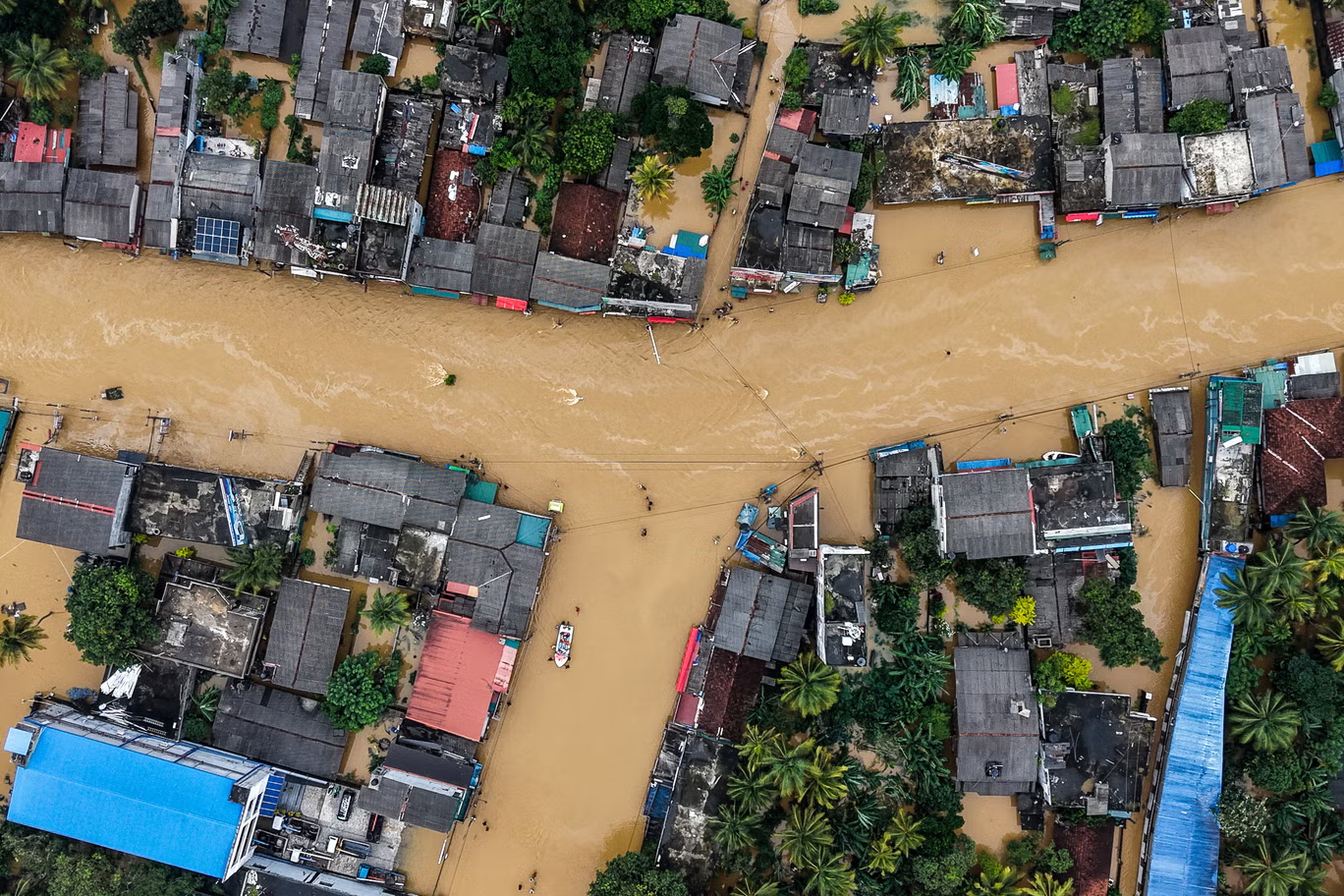
First of all, this level of severe weather has never been experienced by nearly 80% of our country in our history, from the time we started to keep records or in ancient times. It may have happened during our king’s time but there is no record of such events. So, this is the first time that we are seeing this level of rainfall going back 100s of years. Some experts hypothesize that the rainfall which fell in a north-western to a south-eastern direction due to the anticlockwise rotation of the storm, may have been even as high as 500-600 mm of rain and in some areas even higher than that. Due to the lack of working rain gauges covering the whole of Sri Lanka we may never know the real level of rainfall.
So long story short, the road network and the rail network in Sri Lanka has never been tested for this level of a deluge ever since they were built. The roads and railroads that did not receive this type of rainfall in the western southern and sabaragamuwa regions must now be tested to see if it can stand such an event in the future.
The only thing that withstood the rainfall has been the new expressway infrastructure built by the governments post the 2004 Tsunami. Here, some aspects of river flows, flood plains and soil density as well as avoiding land slide areas were considered in the design phase. However, even with this level of diligence some access points have gone underwater and will need immediate redesigning and reconstruction to ensure vehicular access even under the most severe weather conditions. It may come as a surprise to some but having the right infrastructure that join the ports air ports, main bus and rail terminals and hospitals during a disaster is as vital as having this connectivity for economic activity. Otherwise our road and rail network will remain a 200 year-old relic. Similarly, many hospitals have gone under water, therefore the Ministry of Health must take steps to analyze which hospitals went under water within a given district hospital hierarchy and swap or change the locations (swap locations of type of hospital) of them or completely relocate them to ensure maximum access to health care services during such emergencies.
We all know by now the recent history of the Meteorological Department and how the saga of the Doppler radar is unfolding, those who have committed these fraud and thievery should be held accountable and prosecuted to full extent of the law. Had any of the Doppler radar been operational it would have helped us a lot in the forecasting of rain and the volume of rain and where it is falling.
This can help the emergency services to focus on these areas. As a National priority the government must take a sledgehammer to this department and completely re-structure it and reorganize it in a way that it serves its intended national purpose. I think this has to take number one priority along with the recovery and reconstruction because we never know when the next climatological disaster is going to happen. We need this department at its peak performance right through from now on. Otherwise, this is going to keep on happening over and over again. Along with this our ministry of higher education must look at producing a PhD level local universities programmes on the subjects of meteorological and climatology etc. to produce our own human capital.
It is also high time that the government strictly adheres to and implements building codes. Make sure that people don’t construct any kind of home, hotel, shop or any kind of restaurant on the beach, riverside, on the edge of canals and streams, and in any places where there is a building reservation. Most justify the building saying it is only for day time trading but end up being a home housing multiple generations. They set up a small tea shop and overnight they build a house. I think these should be completely stopped as people’s lives are at risk. Even if they don’t care about it, I think the government should make sure that they’re not allowed to trade or reside in any of these vulnerable places because that way we don’t have to keep on running to save these people in a time of such an event and focus on those who are facing dangers that have not been foreseen. We have to stop this famous “Kelani Palama syndrome” which is now happening, island wide.
Historically previous governments have allowed this nonsense to go on and on. Allowing their supporters to build houses and shops in reservations, commanding local government officials to issue assessment numbers and forcing the utility providers to provide services. This time around, nothing short of draconian action must be taken and all such places must be demolish and completely enforce the laws and regulations, implement building codes very strictly. Starting in the Colombo District and then one by one go around the country and ensure that no illegal constructions or banks or coastal areas or reservations are allowed. Local government officials should be empowered to continuously monitor to make sure that these don’t happen. It is arguable that this nonconformity of this policy is as bad as the performance of the meteorological department because most of these deaths in such places are due to people building in unsafe areas that have been already classified as unsafe areas.
At one particular moment in our history, we have to take a stand and stop this and completely demolish all existing unauthorized constructions once and for all and move them to safer ground. I know it might be politically very unpopular, however, one has to do it if you want this country to move from its current underdeveloped status to a developed country. This activity of ensuring policy conformity must be given very high priority.
Going forward, Sri Lanka needs to completely relook at its road and rail network and make it more robust to meet at least 300 to 450 mm of rainfall. Also making sure that all other new roads and rail lines (Kelani Valley) are designed and built to withstand such extreme weather conditions. The current practice of creating and destroying a sand barrier at the river mouth to manage the flow of these major rivers must be stopped. At least now the government must look at a Kalani Ganga Multiple Lock and Dam System for flood prevention. This will allow the creation of a levee system to hold the excess water and slowly release it to prevent flooding
It is critical that the incumbent government must initiate a full-scale evaluation of the handling of the storm with the objective of how to improve the response from the line ministries as well as all the other coordinating ministries and civilian service providers.
The government should also look at the possibility of increasing the capacity and role of the non-military rescue operation sector, i.e., land and air ambulance services, fire brigade and rescue services, sea, land and cave search and rescue services, in the civilian domain and not only rely completely on military when things such as this happen. This will help establish safety at a local community level with the integration of these services with daily life. We need to expand these services and make them more civilian and accessible to the public at large to increase the response time. If we are able to come out of this catastrophe victoriously most of what is discussed above needs to happen before people can feel comfortable to re-establish their lives as well as build better ones. Otherwise every new adverse weather condition will compound the issues brought about by this storm.
(About the Author – Roshanga Wickremesinghe is the author of book “How Small Countries Can Compete and Grow – A Case for Sri Lanka”. He is the founder of Think Tank Lanka (Pvt) Ltd. – a Strategy think tank and R & R Associates Consulting, a sector-independent Strategy Consulting practice.)