
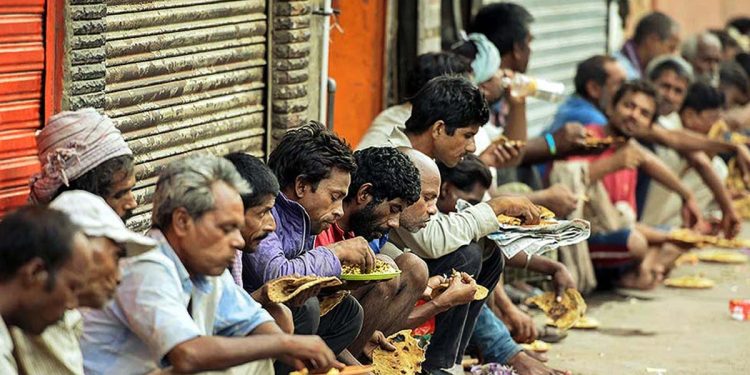

Beyond governance failures, the economic picture remained deeply troubling as 2025 drew to a close. Poverty levels hovered stubbornly around twenty-five percent. It meant one in every four households faced food insecurity. Parents struggled to feed their children. Families made impossible choices between medicine and meals. The promise of economic relief that helped propel the NPP to power had not yet materialised for millions of citizens.
The 2025 budget claimed record allocations for education, but the numbers told a different story. The allocation fell short of the promised six percent of GDP target, though officials insisted funding would continue rising in subsequent years. Healthcare and education spending actually faced cuts even as public services strained under mounting pressure. Teachers worked in overcrowded classrooms with outdated materials. Hospitals ran short of essential medicines. The gap between rhetorical commitment to social services and actual resource allocation has undermined public confidence in the government’s priorities.
Meanwhile, the 2026 budget maintains high defence spending. Eighty-five percent of it is allocated to cover recurrent costs like salaries rather than modernisation or investment in desperately needed social services. The military budget remains protected while schools and hospitals scrape by. This allocation pattern reflects entrenched institutional priorities that the NPP has proven unable or unwilling to challenge, despite its transformative mandate.
Cyclone Ditwah and Budget Ambitions
Nature delivered another devastating blow when Cyclone Ditwah struck in late 2025. It caused catastrophic damage estimated at up to seven billion dollars. Infrastructure crumbled. Agricultural land flooded. The disaster compounded an already desperate situation. It diverted resources from development priorities to emergency response and reconstruction. The cyclone exposed Sri Lanka’s vulnerability to climate-related shocks and the limited capacity of government systems to respond effectively while maintaining other commitments.
Against this backdrop, the 2026 budget set remarkably ambitious targets. Those are a primary surplus of 2.5 percent of GDP and economic growth approaching seven percent. To many analysts, these figures seemed implausible. The IMF’s more conservative projection of 3.1 percent growth appeared far more realistic, particularly given Cyclone Ditwah’s devastating impact on productive capacity. The disconnect between government projections and independent assessments raise questions about whether policymakers were engaging with economic realities or relying on optimistic assumptions to justify difficult fiscal choices.
This growing disconnect between political rhetoric and conventional policy reflects a fundamental challenge facing the NPP government. They secured power by promising to break with the past. However, they found themselves constrained by international commitments, financial realities, and the limited space to strategically manage a small island economy facing multiple simultaneous crises.
The question confronting both government and governed is a profound one. Does pragmatic continuity represent wise stewardship under impossible constraints, or does it constitute a fundamental betrayal of the mandate for transformative change? The answer to that question will likely determine not just the government’s political survival, but the country’s economic future and public faith in democratic governance itself.
The Entropy of Political Systems
A powerful metaphor from physics helps us understand the challenges facing the NPP government. The second law of thermodynamics states that in any isolated system, entropy, the measure of disorder, will always increase over time unless energy is continuously applied to maintain structure and order. This principle extends beyond the laboratory into governance. Political systems, like physical ones, naturally drift toward fragmentation and decay without constant renewal and effort.
Political institutions require continuous civic energy to function effectively. This energy manifests as public trust, active participation, adequate resources, and clear shared vision. When these elements weaken, political entropy increases. Division and polarization act like friction in a machine, slowing progress and generating systemic disorders. Overly complex processes produce red tape and gridlock. They are visible manifestations of deteriorating order. Without fresh energy input, even well-intentioned systems slide toward ineffectiveness.
The first year of the NPP government reveals this entropy in action. A sizeable portion of the parliamentary majority consists of novice politicians lacking governmental administrative experience. At least some of them appear to have been misled wantonly, or otherwise. This deficit has reportedly hindered the execution of complex legal and economic reforms that the country desperately needs. Despite bold pledges to abolish the executive presidency and share power with the provinces, the 2026 budget allocated no funds for constitutional reform processes. The momentum that carried the party to a landslide victory appears to be gradually stagnating and, at times, dissipating without the organizational energy needed to sustain transformation.
Efficiency Versus Effectiveness
Management theorist Peter Drucker drew a crucial distinction between efficiency and effectiveness. Efficiency depends on doing things right. Effectiveness depends on doing the right things. The NPP’s approach to justice for victims of disappearances and their families illustrates this tension between process and purpose.
The government continues with domestic mechanisms including the Office on Missing Persons and Office for Reparations. By late 2025, the Office on Missing Persons had successfully traced twenty-three missing persons and issued Certificates of Absence to facilitate reparations. The Office for Reparations provided financial assistance to over four thousand families, with individual payments of two hundred thousand rupees allocated in the budget.
Yet meaningful criminal prosecutions against alleged perpetrators remain rare. Actual disbursement of promised funds has been delayed or remains incomplete due to unknown factors. A new initiative, Project 5M, was launched in early 2026 to provide immediate compensation of one million rupees and housing for families of recent disaster-related deaths. The system includes vocational training, livelihood opportunities, and psychosocial support.
However, certain victim groups, particularly in Tamil-majority regions, continue to reject what they view as financial handouts in the absence of genuine criminal justice and truth-telling. The government maintains its commitment to homegrown solutions, resisting international mechanisms involving foreign judges or evidence-gathering. That is a stance that has satisfied certain stakeholders while frustrating others. This approach prioritises efficiency in delivering financial compensation over effectiveness in addressing the deeper need for justice and reconciliation.
Sri Lanka faces formidable challenges in addressing past human rights violations, due to impunity for perpetrators and resource constraints. Individual investigations are inefficient, plagued by delays, a culture of impunity, and an overloaded judicial system. The Office on Missing Persons (OMP) has not resolved any cases since its inception in 2017. Existing domestic laws lack the necessary frameworks to prosecute serious international crimes, while resource limitations hinder the Attorney General’s Office and the police in managing complex cases.
The time elapsed since the major conflicts has led to lost evidence due to deaths of key witnesses. Establishing a genuine Truth-Seeking Mechanism can provide a strategic alternative by prioritising the needs of victims and promoting national healing. However, scepticism remains among international bodies and victim groups. This is due to the concern that, without political will, a new commission, such as the proposed Commission for Truth, Unity, and Reconciliation (CTUR), could only serve to deflect scrutiny rather than implement real changes.
Implementation Gaps and Lost Trust
The gap is widening between rhetoric and reality in several areas. The government has continued returning land held by the military, but at a snail’s pace that frustrates communities seeking to rebuild their lives. More worryingly, the government appears to have reneged on its election promise to repeal the Prevention of Terrorism Act by introducing another bill with similar flaws that will lead to future violations of basic human rights.
The government is also facing accusations of stacking the Office of Reparations with military personnel. Despite winning significant support in Tamil areas during the election, the NPP has not utilised inclusive approaches in most newly appointed administrative mechanisms. This and the government’s cautious approach toward transitional justice have generated growing disappointment among the very communities that helped elect it in those areas.
The pattern of good intentions being undermined by poor execution can be witnessed across multiple policy domains. Recent controversies surrounding renewable energy development, utilisation of multiple languages simultaneously (e.g. from the delivery of the first Presidential address to Ditwah communications) in public administration, and educational reforms indicate disconnects between participative, consultative, and inclusive management practices on one hand, and policy formulation and implementation on the other. When different leaders express diverse or conflicting positions on prevailing issues, confusion spreads among both supporters and onlookers. It also provides opportunities for political opponents to challenge the government’s intentions.
The clarity, civility, and unified direction essential for maintaining organisational vitality and holding a steady political line against adversaries appear to be worked out intermittently rather than consistently. This inconsistency undermines the government’s credibility and makes it difficult for supporters to defend its record or for citizens to understand its true priorities.
External Economic Pressures
External economic pressures are compounding the challenges facing the government. Re-imposed US tariffs on Sri Lankan exports, including apparel and tea, threaten efforts to revive the economy. Significant capital repayments on external debt are due in mid-2027. This will require rapid reserve accumulation by cutting unnecessary foreign exchange expenditures, advancing and improving agricultural and industrial production to meet basic domestic needs, and strengthening export-led growth mechanisms. Many of these measures are yet to be implemented.
The initial goodwill of the electorate risks erosion if tangible economic improvements remain elusive. Citizens who voted for transformative change are growing impatient with incremental progress and bureaucratic inertia. Without continuous infusion of civic energy, trust, inclusion, participation, and sharp vision, the system’s natural tendency toward disorder accelerates. The NPP came to power promising system change. Nevertheless, a systemic transformation requires more than a mere electoral victory. It demands a sustained effort, clear priorities, inclusive governance, and the courage to challenge entrenched interests.
To be continued