
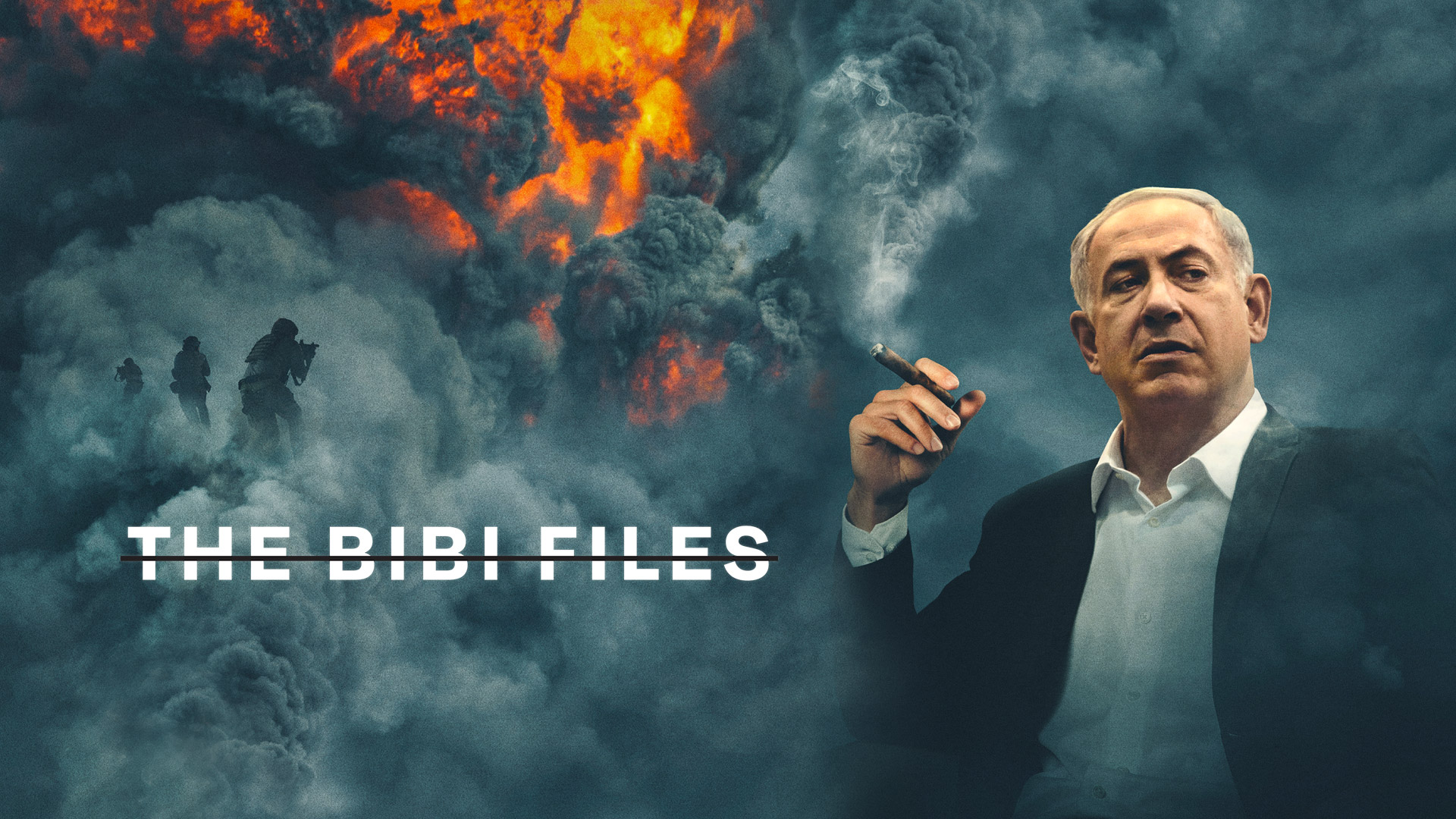

For years, Israeli Prime Minister Benjamin Netanyahu pursued a controversial strategy of allowing millions in Qatari cash to flow into Gaza—a policy that critics now say helped strengthen Hamas and ultimately enabled the October 7, 2023, attacks. The arrangement, which funneled approximately **$35 million monthly** into Hamas-controlled Gaza, has become a central focus of both a new documentary and ongoing political scandals engulfing the Israeli leader .
The Documentary: “The Bibi Files”
A recently released documentary titled “The Bibi Files” has brought renewed attention to Netanyahu’s role in the Qatari funding arrangement. The film, produced by American journalist Tucker Carlson and released in 2026, features explosive interrogation footage in which Netanyahu allegedly discusses his strategy toward Hamas in stark terms.
According to excerpts from the documentary, Netanyahu told investigators: “This is confidential and can’t be leaked, okay? We have neighbors here, sworn enemies. I’m constantly passing them messages. I confuse them, mislead them, lie to them, and then HIT them over their heads”.
The documentary reveals that the Qatari payments began in 2012 and escalated significantly after 2018, when Netanyahu’s security cabinet formally approved the monthly cash transfers. By some estimates, the total amount transferred over the years exceeded $1 billion.
How the Funding Mechanism Worked
The funding arrangement was highly unusual even by Middle East diplomatic standards. Qatar, a Gulf state that hosts Hamas’s political leadership and has no formal diplomatic ties with Israel, would send suitcases filled with American dollars through the Rafah crossing. Israeli intelligence officers reportedly escorted Qatari officials delivering the cash.
Key aspects of the arrangement included:
– Monthly payments of approximately $35 million during peak periods
– Cash delivered in physical suitcases rather than through formal banking channels
– Qatar reportedly required Netanyahu to put his funding requests in writing—anticipating that he might later deny authorizing the payments
Netanyahu’s Strategic Rationale
Netanyahu’s stated justification for allowing the cash transfers was humanitarian: preventing a crisis in Gaza by funding infrastructure, civil servant salaries, and aid to needy families. However, multiple sources indicate a more strategic—and divisive—calculation.
According to reporting from The Jewish Chronicle and confirmed by Netanyahu’s own 2019 statements to his Likud party, the prime minister saw maintaining Hamas’s control over Gaza as a way to prevent Palestinian unification. By keeping Gaza under Hamas and the West Bank under the Palestinian Authority’s Fatah faction, Netanyahu sought to undermine any credible movement toward a unified Palestinian state.
As Netanyahu reportedly explained to party colleagues, the strategy was to “support the delivery of funds to Gaza”—strengthening Hamas while weakening Fatah, thereby maintaining the political separation that allowed him to argue Israel had “no credible Palestinian peace partner” .
The Qatargate Scandal
The funding controversy has now morphed into a sprawling political scandal dubbed “Qatargate” by Israeli media . While the original cash transfers were approved at the cabinet level, recent investigations have focused on allegations that Netanyahu’s close aides accepted payments from Qatari interests to promote Doha’s image in Israel.
Key figures under investigation include:
– Yonatan Urich — A Netanyahu adviser since 2013, co-owner of a media consulting firm
– Eli Feldstein — A former spokesman who reportedly received payments via American lobbyists
The two are suspected of receiving payments from Jay Footlik, a U.S. lobbyist registered to represent Qatar, in exchange for promoting pro-Qatari messaging to Israeli journalists. Feldstein allegedly received approximately $10,000 monthly through intermediary Israeli businessman Gil Birger .
The investigation, led jointly by Israeli police and the Shin Bet domestic security agency, has expanded to include journalists and political operatives. Netanyahu himself was questioned as a witness in the case on March 31, 2025 .
Divergent Responses
Netanyahu has vigorously defended both his original policy and his aides, dismissing Qatargate as a “political witch hunt” designed to remove right-wing leadership . He has described Qatar as “a complex country… but it is not an enemy state” .
Critics, however, argue the scandal reveals a dangerous pattern. Former Prime Minister Naftali Bennett stated: “Qatar is the driving force behind Hamas. The prime minister’s advisers were working for Qatar, not for us. All of this was happening during a war in which our children are fighting” .
Political analysts note that the scandal’s timing—coinciding with Netanyahu’s attempts to dismiss Shin Bet chief Ronen Bar—has created a constitutional crisis. Professor Gideon Rahat of Hebrew University observed: *”In a normal country, if the prime minister had spies in his office, he would resign, but we are not in normal times” .
The October 7 Reckoning
The policy of allowing Qatari cash into Gaza came under devastating scrutiny after October 7, 2023, when Hamas launched an attack that killed approximately 1,200 Israelis and resulted in the capture of 251 hostages .
Critics argue that the cash transfers, which continued until the attack, directly enabled Hamas’s military buildup. While Qatar claimed the funds were for humanitarian purposes, multiple reports indicate the money was fungible—freeing up Hamas’s own resources for tunnel construction, weapons procurement, and military preparations .
In a striking turn, Netanyahu publicly acknowledged in September 2025 that Qatar funds Hamas, using this as justification for an Israeli airstrike on Doha. “Qatar is connected to Hamas, it bolsters Hamas, it harbours Hamas, it funds Hamas,” Netanyahu told a press conference, calling the strike “entirely justified” .
Conclusion
The documentary “The Bibi Files” and the ongoing Qatargate investigation have exposed a central paradox of Netanyahu’s long tenure: a leader who promised toughness on terror simultaneously authorized the flow of hundreds of millions of dollars to an organization his government classified as a terrorist group. Whether this was a cynical divide-and-conquer strategy or a catastrophic miscalculation remains at the heart of what may prove to be the defining scandal of modern Israeli politics .