
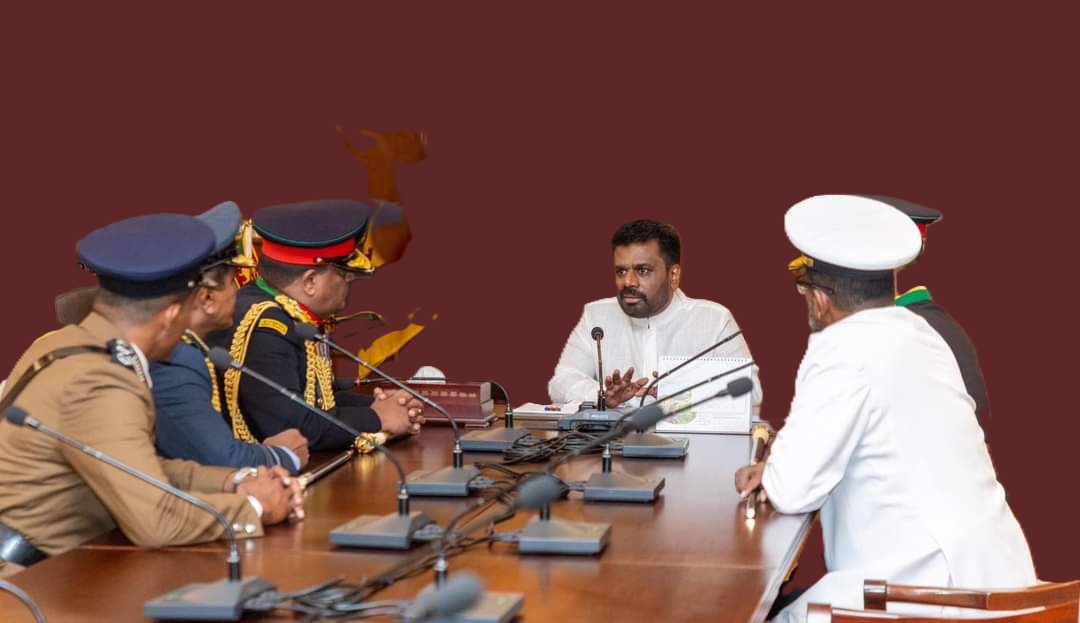

The Protection of the State from Terrorism Act (PTSA) 2026 is the government’s proposed replacement for the Prevention of Terrorism Act (PTA) of 1979. It claims to modernise counter‑terrorism law while aligning with human rights standards — but it also introduces broad new powers that affect speech, association, and digital activity.
1. What counts as “terrorism” under the PTSA?
A person commits terrorism if they intentionally cause serious harm — such as death, injury, hostage‑taking, major property damage, cyber‑attacks, or handling weapons — for a political or ideological purpose, including:
- provoking fear
- intimidating the public
- pressuring a government or international organisation
- threatening sovereignty or territorial integrity
Protests, strikes, and dissent are explicitly excluded, but only “by themselves,” which leaves room for interpretation.
2. What are the new speech‑related offences?
The PTSA criminalises:
- “Encouragement of terrorism” — including statements, signs, or online posts that intentionally, knowingly, or recklessly encourage terrorism.
- “Terrorist publications” — distributing, sharing, transmitting, or even possessing material that could be understood as encouraging terrorism or useful for committing it.
There is a defence for good‑faith journalism, criticism, satire, and public‑interest reporting, but the burden of proof may fall on the speaker.
3. What about proscribed organisations?
The Act creates sweeping offences for:
- membership
- recruitment
- leadership
- harbouring
- promoting or supporting
- donating
- wearing symbols
- attending meetings
- disseminating information
of any organisation the government has proscribed.
This covers conduct inside and outside Sri Lanka.
4. What powers do police and armed forces get?
The PTSA allows:
- stop and search without warrant
- entry and search of premises
- seizure of documents and digital devices
- arrest by police, military, or coast guard
- detention orders issued by the Minister for up to 8 weeks, extendable with judicial approval
- restrictions on movement, curfews, and prohibited places
Magistrates and the Human Rights Commission have oversight roles, but the executive retains significant control.
5. What are the penalties?
- Terrorism causing death → life imprisonment
- Other terrorism consequences → up to 20 years + Rs. 20 million fine
- Offences linked to proscribed groups, publications, training → up to 15 years
- Failure to provide information → up to 7 years
- Violating curfew or restriction orders → up to 3 years
6. What does this mean for the public?
The PTSA affects:
- journalists
- activists
- civil society
- online users
- diaspora communities
- minority groups
- humanitarian workers
Because many offences depend on intention, knowledge, or recklessness, interpretation will matter — and enforcement practices will determine whether the PTSA becomes a rights‑respecting law or a rebranded PTA.
PTSA vs PTA vs International Standards
1. Definition of Terrorism
PTA (1979)
- Extremely broad and vague.
- Included property damage, disruption of essential services, and acts “likely to cause religious, racial or communal disharmony.”
- Criticised for enabling arbitrary arrests.
PTSA (2026)
Improvements:
- Introduces a purpose + consequence test.
- Excludes protests/strikes “by themselves.”
Risks:
- The consequences list remains wide (e.g., “serious obstruction” of electronic systems).
- “Propagating war” and “violating sovereignty” are politically loaded and open to misuse.
- “Recklessness” in speech offences lowers the threshold for criminal liability.
International Standards
UN guidance requires:
- Clear, precise, and narrow definitions
- Violence or intent to cause death/serious harm
- No criminalisation of peaceful expression or dissent
Risk: PTSA still falls short of the clarity and narrowness required.
2. Arrest, Detention, and Due Process
PTA
- Allowed detention without charge for up to 18 months.
- No meaningful judicial oversight.
- Widespread torture documented.
PTSA
Improvements:
- Detention Orders are capped at 8 weeks, with judicial extensions.
- Mandatory HRCSL notification.
- Access to lawyers guaranteed.
Risks:
- Arrest powers are extended to the armed forces and the coast guard.
- “Reasonable suspicion” remains undefined.
- Minister retains power to issue Detention Orders — an executive function inconsistent with international norms.
- Judicial oversight is present but not robustly independent.
International Standards
- Detention must be judicial, not executive.
- Must be prompt, with strong safeguards against torture.
- Military involvement in policing should be exceptional.
Risk: PTSA retains executive detention and military policing, contrary to UN recommendations.
3. Freedom of Expression and Media Freedom
PTA
- Used to arrest journalists, suppress reporting, and criminalise dissent.
PTSA
Improvements:
- Includes a good‑faith defence for journalism, satire, and criticism.
Risks:
- “Encouragement of terrorism” includes recklessness, which is incompatible with the ICCPR.
- “Terrorist publications” includes possession, which can criminalise journalists, researchers, and archivists.
- Interpretation depends heavily on law enforcement discretion.
International Standards
- ICCPR Article 19 requires:
- necessity
- proportionality
- legality
- direct incitement to violence
Risk: PTSA criminalises speech that falls short of incitement, violating the Rabat Plan of Action.
4. Association and Proscription
PTA
- Allowed blanket bans on organisations without transparency.
PTSA
Improvements:
- Some procedural clarity.
Risks:
- Extremely broad offences: wearing symbols, attending meetings, “espousing the cause,” or “acting on behalf of” a proscribed group.
- No requirement to prove intent to support terrorism.
- Diaspora communities are particularly vulnerable.
International Standards
- Restrictions must be:
- necessary
- proportionate
- linked to violent conduct
Risk: PTSA criminalises symbolic, expressive, or historical association.
5. Oversight and Accountability
PTA
- No meaningful oversight.
PTSA
Improvements:
- HRCSL visits
- Magistrate oversight
- Forensic medical examinations
Risks:
- Oversight mechanisms depend on implementation capacity.
- Executive retains significant control over detention and proscription.
- No independent review body for counter‑terrorism powers.
International Standards
- Require independent, impartial, and effective oversight.
Risk: PTSA oversight is partial and insufficient.
6. Overall Assessment
Compared to the PTA
The PTSA is less abusive on paper but retains the core architecture of the PTA:
- broad definitions
- executive detention
- military policing
- speech‑related offences
- sweeping proscription powers
Compared to International Standards
The PTSA:
- partially aligns with procedural safeguards
- fails on definition, necessity, proportionality, and protection of expression
- risks replicating PTA‑style abuses under a modernised legal framework
( With the help of AI, but checked for accuracy)
Read the Act as a PDF: SriLanka PTSA 2026 Draft