
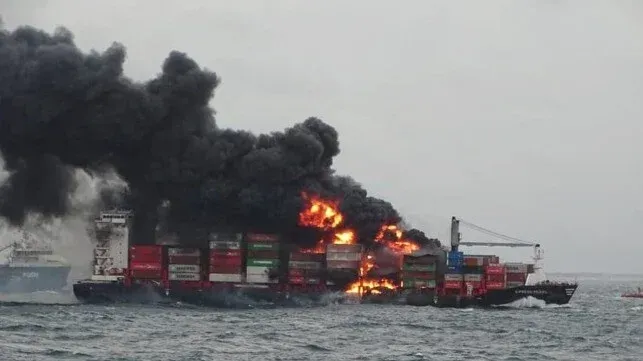

In May 2021, a fire engulfed the cargo ship X-Press Pearl off the west coast of Sri Lanka. Tons of hazardous substances spilled into the Indian Ocean, killing wildlife and polluting the food source of local communities. Ocean Reporting Network Fellow Saroj Pathirana and reporter Leana Hosea investigated the disaster’s environmental impact and the government’s handling of the aftermath.
For nearly a year, as a Pulitzer Center’s Ocean Reporting Network (ORN) Fellow, I investigated the aftermath of the X-Press Pearl disaster and its implications for Sri Lanka and beyond. While my colleague Leana Hosea focused on the scientific dimensions, my reporting centered on alleged corruption, accountability, and the pursuit of judicial remedies. This work unfolded across borders and institutions, combining court reporting, access-to-information requests, community-based sourcing, and public-interest storytelling. What follows is a reflection on the methodology I used to investigate alleged corruption in the wake of the worst ever maritime disaster in Sri Lanka’s history.
Treating litigation as a reporting beat
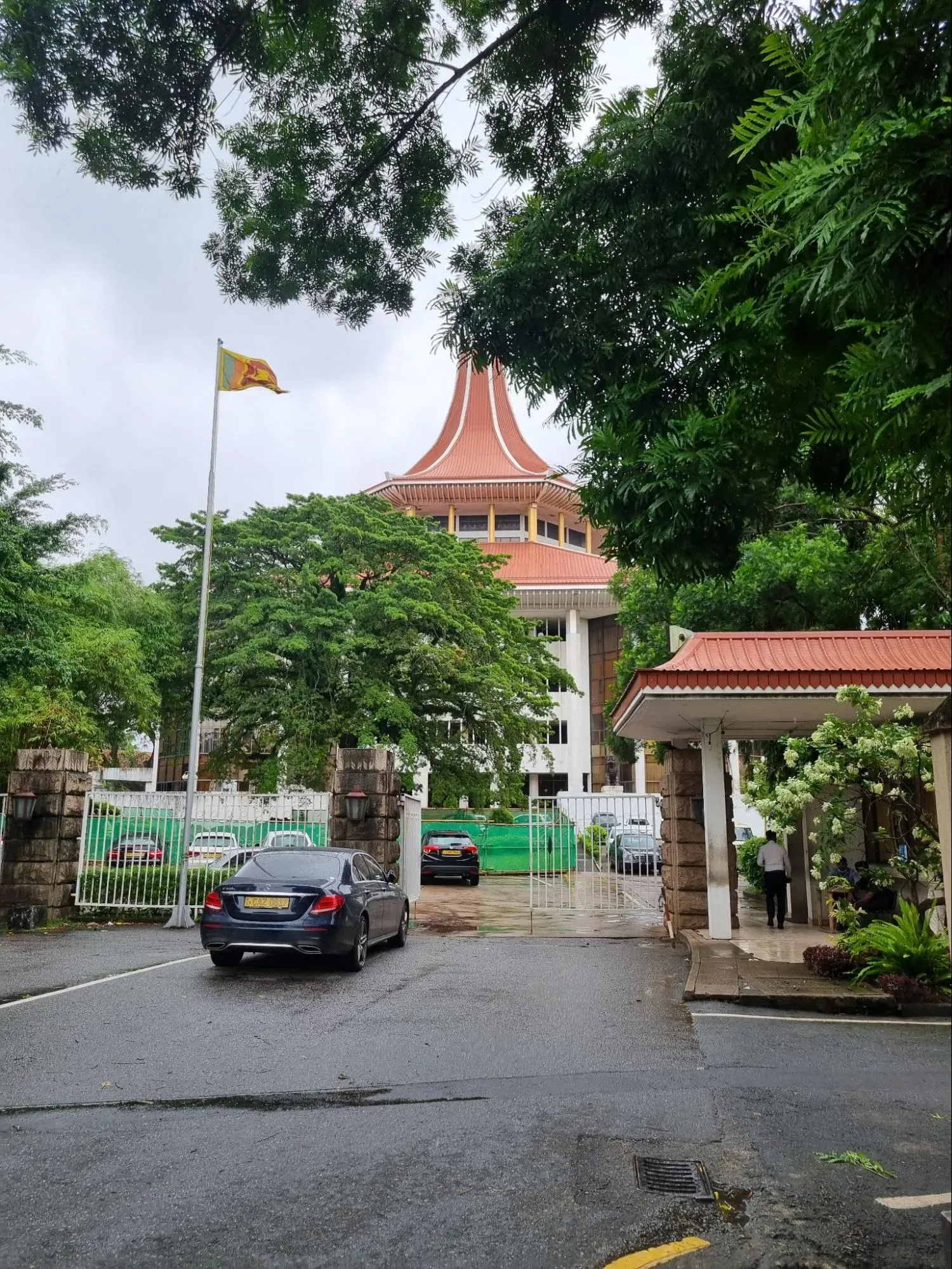
My investigation was anchored in the Supreme Court of Sri Lanka, where multiple fundamental rights petitions were filed against the state, the shipowners and related parties. Although I have lived in the UK for nearly three decades, I based myself in Sri Lanka during this period to attend hearings in person. This was not occasional court reporting; it was a sustained commitment to treating the Supreme Court as a primary reporting beat.
Regular attendance allowed me to track the evolution of arguments, judicial questions, procedural delays, and shifts in legal strategy. Four years on, the country has forgotten the disaster; many details that wouldn’t appear in local press—such as judges’ observations, counsels’ concessions, or the framing of liability—emerge only through physical presence in court. Over time, familiarity also reduced barriers: lawyers, court officials, and fellow observers began to recognize me, making informal but crucial exchanges possible during breaks and after hearings.
Court documents, affidavits, expert reports, and interim orders formed the backbone of my factual reporting. I systematically collected and archived filings from both petitioners and respondents, allowing me to cross-check public claims against sworn statements. This disciplined legal reading was essential in identifying inconsistencies, omissions, and areas where state agencies including the Attorney General’s department appeared reluctant to disclose information.
Building trust across adversarial lines
A key methodological principle was to speak with sources from all sides of the dispute. I cultivated relationships not only with lawyers representing petitioners—environmental groups, community leaders, and affected citizens—but also with those appearing for the state and the shipowners. This required patience and a clear demonstration of professional independence.
By engaging with opposing legal teams, I was able to understand the internal logic of defense strategies, the constraints faced by state institutions, and the points of contention that mattered most behind closed doors. These conversations, often off the record, helped me frame sharper questions in subsequent interviews, while maintaining ethical boundaries about what could be published.
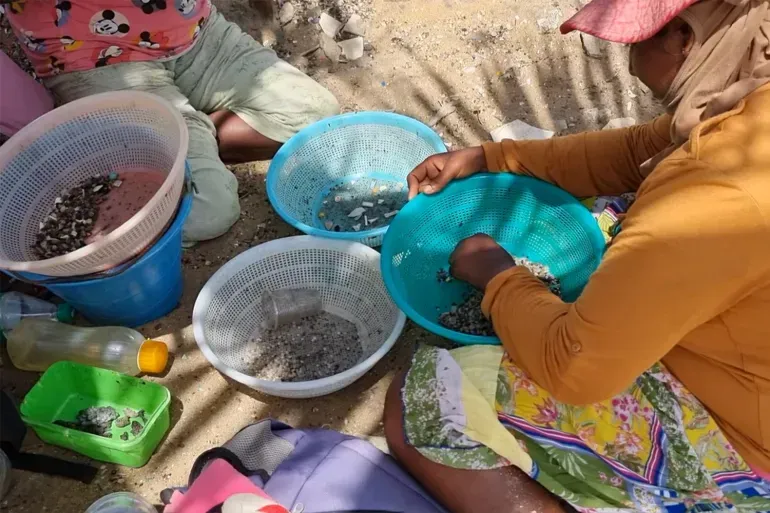
Beyond lawyers, I spoke extensively with scientists, maritime experts, environmental activists, trade unionists, industry figures, and affected community members. Women collecting plastic nurdles along Sri Lanka’s Western coastline became particularly important sources—not only as witnesses to environmental harm, but also as observers of how cleanup contracts, compensation mechanisms, and official narratives unfolded at ground level.
Right to Information
Filing Right to Information (RTI) requests was a central pillar of my methodology. I submitted numerous requests to the Attorney General’s Department, the police, the Ministry of Justice, the Marine Environment Protection Authority (MEPA), and other relevant state bodies. These requests sought documents and data on decision-making processes, communications with shipowners, financial arrangements, and enforcement actions.
RTI work is slow and often frustrating, but its value lies in persistence. Even refusals or partial disclosures can be revealing, signalling institutional resistance or highlighting areas of sensitivity. In some cases, delays and denials themselves became part of the story, raising questions about transparency and accountability in a matter of significant public interest.
I treated RTI responses as living documents; cross-referencing them with court filings, statements made by officials in the media, and information provided by sources. This triangulation helped separate verified facts from speculation and strengthened the credibility of published findings.
Networking as structured reporting
Although networking is sometimes portrayed as informal or opportunistic, I approached it as a structured reporting method. Regular court visits created a predictable space for interactions, while follow-up meetings allowed for deeper conversations away from public scrutiny.
As my reporting became more visible—both locally and internationally—community leaders, trade unionists, and industry insiders began approaching me proactively. Their claims were tested against documentary evidence, and anonymity was granted only when justified by risk.
This two-way flow of information proved crucial. Sources did not merely provide tips; they also helped me understand institutional cultures, power dynamics, and the historical context shaping the response to the disaster.
Social media as a transparency tool
Social media, particularly Facebook, played a deliberate role in my methodology. Rather than using it only for promotion, I used social platforms to raise awareness when authorities refused to release vital information or when court developments were being underreported.
By sharing verified updates, court observations, and explanatory context, I aimed to widen public engagement with a complex legal process. This visibility had two effects: It encouraged whistleblowers and informed citizens to come forward, and it placed additional public pressure on institutions to respond to legitimate questions.
Publishing across platforms
Throughout the Fellowship, I filed stories through international and local media networks, adapting the same core findings for different audiences. Long-form investigations allowed space to unpack allegations of corruption and institutional failure, while television discussions on national channels helped translate legal developments into accessible language for the wider public.
The Supreme Court’s eventual order directing the shipowners to pay USD 1 billion in compensation marked a significant moment. While judicial outcomes are never attributable to journalism alone, sustained reporting helped keep the issue in public view and underscored the stakes involved.
Investigating alleged corruption after the X-Press Pearl disaster required more than uncovering hidden documents or securing exclusive interviews. It demanded a methodology rooted in presence, persistence, and ethical rigor: showing up in court repeatedly, filing RTIs despite resistance, listening to communities alongside elites, and using public platforms responsibly.
This approach reflects a broader belief that accountability journalism is cumulative. Each court hearing attended, each document requested, and each conversation carefully verified contributed to a fuller picture of how power operates in moments of environmental crisis.