
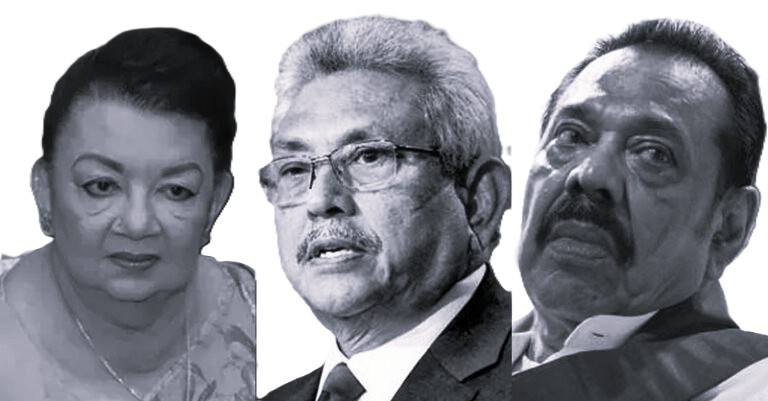

The Bribery Commission, presenting its evidence before Colombo Chief Magistrate Asanga S. Bodaragama today (20), informed the court that 22 houses from the Sirisanda Housing Project—constructed by the Housing Development Authority for impoverished and low‑income residents of Colombo—had been allocated to political associates at the request of former Defence Secretary Gotabaya Rajapaksa, former First Lady Shiranthi Rajapaksa, and a former Attorney General.
The Commission to Investigate Allegations of Bribery or Corruption revealed this information when it produced retired Brigadier Ranjith Samarasinghe, Director of Urban Development and Regeneration Programmes of the Sirisanda Housing Project, who was arrested for allegedly causing financial loss to the government and conferring benefits on another group.
According to the Commission, out of the 366 houses intended for distribution among the poor, twenty‑two (22) had been diverted in this manner. A document submitted to the court lists the beneficiaries: the former First Lady’s beauty therapist; a beautician responsible for hair styling; a personal secretary to the former President; two domestic workers from the presidential residence; a clerk employed at the presidential residence; a labourer; a naval lieutenant; a former newspaper editor; a worker attached to the residence of the Railways General Superintendent; a district coordinator of the Presidential Office; a domestic employee at an embassy in Singapore; an office assistant at the Presidential Secretariat; and a maid who had worked at the residence of a former Attorney General.
It was further stated that the housing complex—constructed at a cost exceeding Rs. 390 million—had been allocated in 2014, and that the suspect would be produced before the court on charges of causing government losses and committing acts of corruption.
Chief Magistrate Asanga S. Bodaragama inquired whether these individuals had actually taken up residence in the allocated houses. In response, the Bribery Commission informed the court that four houses were unoccupied, some had been rented out, and the individual residing in Singapore had obtained a house despite not returning to Sri Lanka.
The Commission further explained that, under standard procedures, houses allocated to low‑income families were provided only after the beneficiaries had resided in the relevant estates for at least five years, supported by water and electricity bills. However, the arrested Director—retired Brigadier Ranjith Samarasinghe—had allocated these 22 houses to individuals who did not meet any of these eligibility requirements.