

United Republican Front (URF) leader Patali Champika Ranawaka has sharply criticized the government for what he describes as a systemic failure to anticipate and mitigate the impact of Cyclone Ditwah. Speaking to the Daily Mirror, he outlined a detailed account of how multiple state institutions possessed the necessary data and early warnings, yet failed to act in time to prevent widespread destruction.
According to Ranawaka, the government’s repeated claim—that the Department of Meteorology did not provide adequate warnings—simply does not hold up to scrutiny. He points out that as early as November 25, the Department had publicly issued alerts indicating the development of a cyclone with the potential to bring more than 200 mm of rainfall to Sri Lanka. These warnings were available on the Department’s own website, and the Disaster Management Centre (DMC), he argues, should have had full access to detailed reports. The DMC and its Director General, he insists, were obligated to be fully aware of the situation.
Ranawaka further explains that the Meteorology Department was not the only institution with critical information. The Ceylon Electricity Board (CEB), which monitors daily hydrological curves to manage hydroelectric generation, had precise data on rainfall, reservoir inflows, and spill levels across the Mahaweli and Kelani river basins. Similarly, the Mahaweli Development Authority maintains comprehensive dam safety manuals—developed by international engineering experts from Sweden, the United Kingdom, and Germany—detailing how to respond to situations exactly like this. With modern computerized systems and real-time data centres such as the one in Polgolla, authorities had access to accurate information on rainfall, reservoir capacity, and water discharge rates.
Despite this wealth of data, Ranawaka argues, the government continued to claim that it lacked proper information. Yet the records clearly show that between November 26 and 27, water levels rose sharply across multiple reservoirs. Heavy rainfall was recorded in Randenigala, Victoria, Upper Kotmale, Kotmale, and Nawalapitiya. By around 9 a.m. on the 26th, he says, it should have been obvious to any responsible official that the reservoirs were on track to overflow. Proper management—such as a controlled release of 800 cubic metres per second from the Kotmale Reservoir—could have kept downstream water levels within safe limits, preventing flooding.
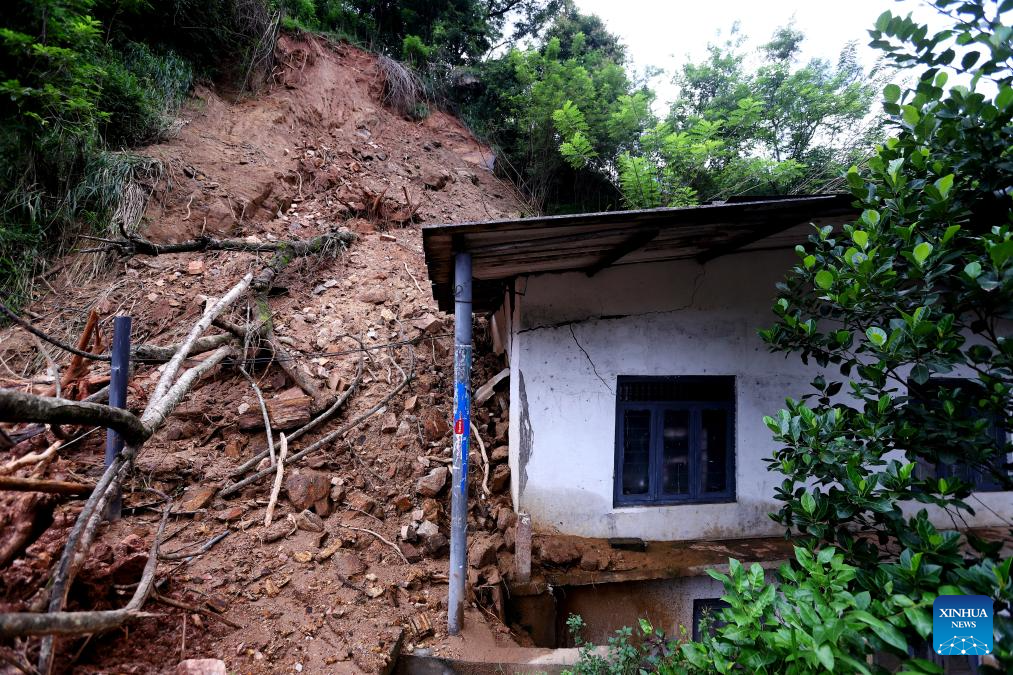
Instead, catastrophic flooding occurred in Gampola, Gelioya, Gatambe, Peradeniya, and Randenigala. Mahiyanganaya town was inundated, causing severe destruction. Ranawaka stresses that a careful analysis of rainfall data from Hunnasgiriya and surrounding areas would have allowed authorities to issue timely evacuation warnings. Instead, many residents were forced to flee only when landslides were already crashing into their homes.
Local officials, including Assistant Divisional Secretaries and police stations, had the capacity to warn communities well before the disaster unfolded. However, in several areas, alerts were issued only on November 27 or 28—after the worst damage had already occurred. Notably, rainfall diminished significantly after the 28th, as the cyclone moved northward. Districts such as Badulla, Kandy, and Matale faced minimal risk. The danger period, Ranawaka emphasizes, was limited to just two days and could have been managed with timely intervention.
For him, the core issue is the lack of coordination among institutions. As the head of the National Disaster Management Committee, the President bears ultimate responsibility for ensuring preparedness and response. Yet the committee was convened only on November 27—after the disaster had already unfolded. At that point, all reservoir gates were opened simultaneously, releasing massive volumes of water into the Mahaweli River and worsening the devastation.
Ranawaka stops short of directly accusing the President of negligence, noting that he cannot say whether the President was properly briefed. However, he insists that the existing disaster management framework—laws, policies, action plans, and the Disaster Management Centre—places a clear duty on officials to evaluate risks and keep the President fully informed. Whether this happened or not, he argues, must be determined through an impartial, professional inquiry.
In his view, only a transparent investigation can reveal where the system failed, who failed to act, and how Sri Lanka can prevent such tragedies in the future.
An edited version of a longer interview appeared in the Daily Mirror