
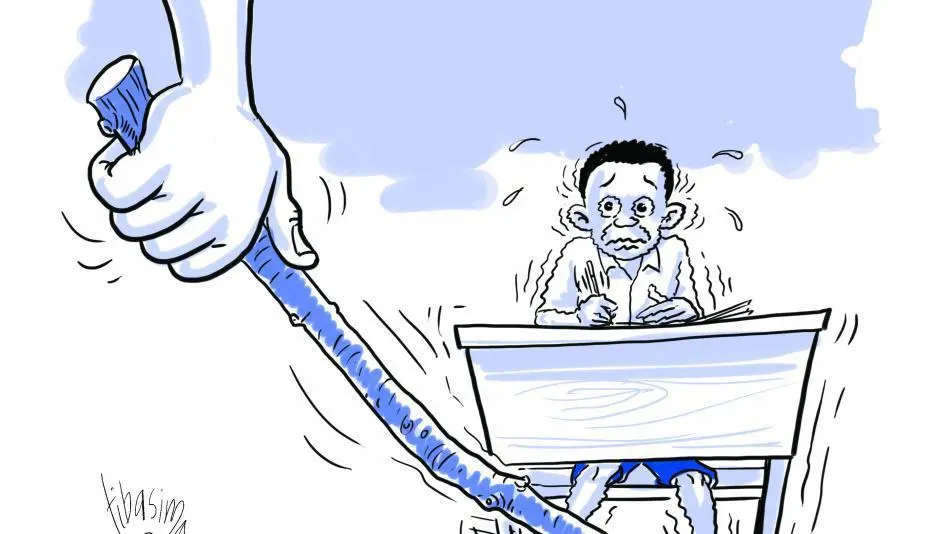

Image: © 2017 Marco Tibasima for Human Rights Watch
Colombo: Sri Lanka’s National Child Protection Authority (NCPA) has recorded 11,409 complaints related to corporal punishment by 28 February 2026, raising renewed alarm over the persistence of violence against children and intensifying pressure on the Government to complete long‑delayed legal reforms.
The figures were disclosed at a media briefing at the Department of Government Information on 6 April, where NCPA Director (Planning and Information) Shanika Malalgoda urged the public to report all incidents of child abuse and corporal punishment without delay. She noted that the Authority received 10,455 complaints in 2025 alone, of which 2,099 related to cruelty against children.
Malalgoda emphasised that complaints can be made free of charge via the 24‑hour child helpline 1929, stressing that early reporting is critical to preventing further harm to children.
Proposed Penal Code Amendments
Addressing the briefing, Preethika Sakalasooriya, NCPA Head of Legal and Director (Legal), outlined a series of proposed amendments to the Penal Code aimed at closing longstanding legal loopholes that have allowed corporal punishment to persist in homes, schools and institutions.
Among the key proposals is an amendment to Section 308A, which deals with cruelty to children. The NCPA has recommended replacing the word “wilfully” with “intentionally”, a change intended to strengthen prosecutions by clarifying the mental element of the offence.
The Authority has also proposed the introduction of a new offence titled “Corporal Punishment in Respect of Children”, which would explicitly prohibit:
- The use of physical force that causes pain or discomfort, whether as punishment or correction
- Non‑physical acts intended to cause humiliation, regardless of severity
Under the proposed provision, offenders could face up to six months’ imprisonment and/or a fine of up to Rs. 10,000, reflecting a shift towards recognising even “mild” forms of punishment as harmful.
Harsher Penalties for Violence Against Children
Sakalasooriya further said that amendments have been recommended to Sections 314 and 316 of the Penal Code, which deal with causing hurt and grievous hurt. In cases involving children, the proposed reforms would allow courts to impose sentences of up to 10 years’ imprisonment, particularly where serious injury is caused.
In addition, the NCPA has proposed amending Section 82, which currently permits corporal punishment administered “in good faith”. Legal experts have long argued that this provision has been used to justify physical discipline by parents and educators, undermining child protection efforts.
Government Action and Legislative Progress
The proposed changes mirror provisions already contained in the Penal Code (Amendment) Bill, which was approved by the Sectoral Oversight Committee on Governance, Justice and Civil Protection in September 2025 and scheduled for a second reading in Parliament.
The Bill seeks to prohibit corporal punishment in all settings, including schools, homes, child detention centres and childcare institutions, and to remove long‑standing exceptions that have allowed physical discipline under the guise of correction.
However, the reform process has been contentious. Some education sector groups and legal commentators have expressed concern about vague language in earlier drafts, warning that poorly defined offences could criminalise reasonable disciplinary practices by teachers. In response, government officials have maintained that the legislation is intended to prevent abuse, not to target educators acting lawfully and proportionately.
Broader Child Protection Framework
Sri Lanka’s move to strengthen laws against corporal punishment follows other recent reforms. Amendments to the Children and Young Persons Ordinance, which came into force in January 2024, extended legal protection to all children under 18 and repealed provisions that permitted corporal punishment by parents, teachers or guardians.
International organisations, including UNICEF, have welcomed these steps, while stressing the need for full legal alignment, effective enforcement and public education to change deeply entrenched social attitudes towards physical punishment.
A Persistent Social Problem
Despite policy advances, child rights advocates warn that the latest complaint figures point to a deeply rooted cultural acceptance of corporal punishment. Studies and media reports indicate that physical and humiliating forms of discipline remain common, particularly in domestic and educational settings, even where ministerial circulars prohibit them.
As Parliament prepares to revisit the Penal Code amendments, the NCPA has reiterated that legal reform must be accompanied by awareness campaigns, positive discipline training for parents and teachers, and stronger reporting mechanisms to ensure children are protected in practice, not just on paper.