


Image: Joseph Hooker and S.A. Wickremasinghe- both advocate preserving our forests over 5000 feet
Part 1
Think of a future where breathing becomes difficult, water sources vanish, and wildlife gradually disappears from our planet. This isn’t an imaginary scenario. It will be the stark reality we face if forest destruction continues at its present pace.
Forests are called our planet’s lungs and nature’s biodiversity vaults. It is because they are essential for sustaining all life forms on earth. To highlight this essential fact each March, the UN observes International Day of Forests. It is to emphasise the vital connection between people and forests and why their protection matters.
Despite our growing awareness, roughly 10 million hectares of forest vanish worldwide each year through deforestation[i]. That is equivalent to losing an area the size of Portugal annually. The Amazon rainforest, our planet’s primary oxygen source, experienced unprecedented clearing in 2022. It lost 1.98 million hectares. Colombia’s situation worsened markedly in 2024. That was with the forest loss reaching 113,608 hectares. That loss was a startling 43 percent jump from the year before.
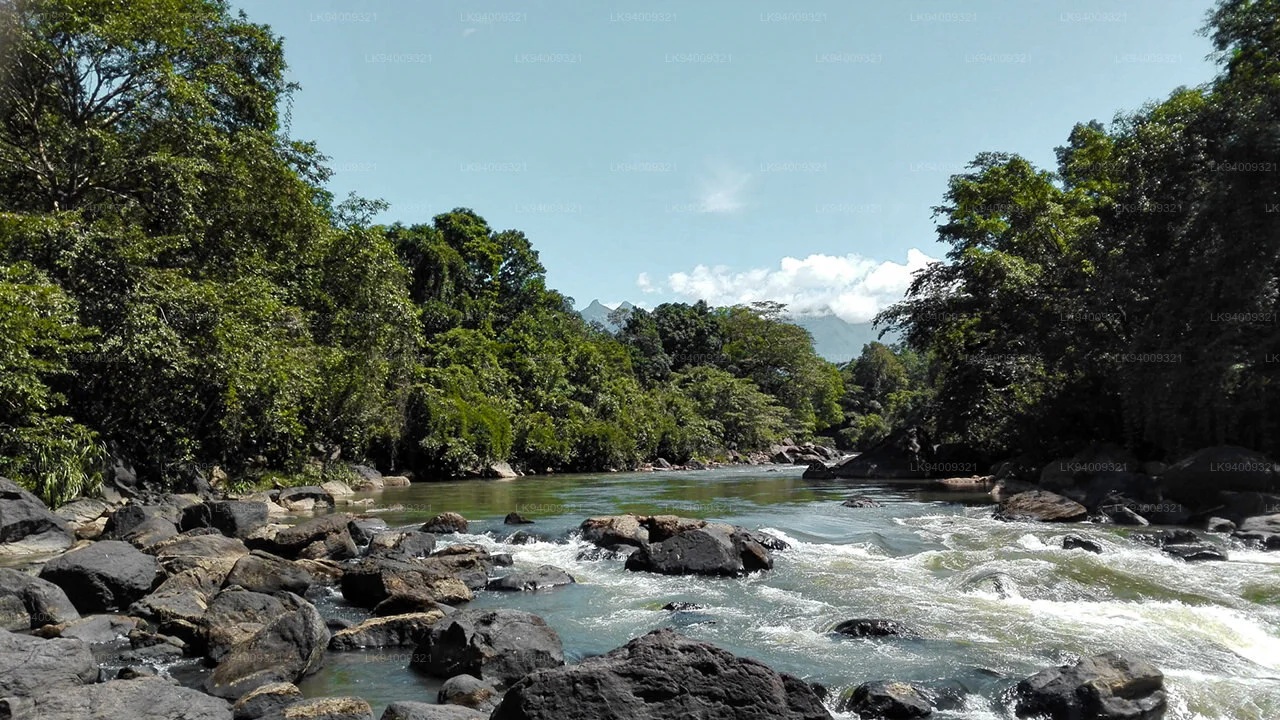
A Mixed Picture
Sri Lanka’s conservation efforts have been commendable. It has achieved significant progress in reducing forest loss since the crisis levels of the 1990s. By 2020, natural forests covered 3.3 million hectares. It was more than half the country’s total land. This achievement deserves recognition[ii].
However, the challenge persists. During 2024 alone, 110 square kilometers of natural forest disappeared. This allowed the releasing of 4.2 million tons of CO₂. Remaining forests face mounting pressure, especially in the vulnerable dry zones. Current data reveals that forest decline continues. It highlights the critical need for consistent forest stewardship.
In light of this, the article will examine the policy measures Sri Lanka can adopt to expand, protect, and sustainably manage its forest ecosystems. The catastrophic flooding and landslides of November 2025 have demonstrated the importance and pressing need for such discussions.
Learning from catastrophe
The recent catastrophe intensified due to the lack of both, an adequate preparation in the past, and an effective response. Multiple factors appear to have contributed to the disaster. Though meteorological services had issued warnings about severe rainfall, the country failed to mobilise quickly enough to lessen its impact. Perhaps power-politics would have diverted attention away from the seriousness of the impending catastrophe.
The disaster exposed critical flaws in the country’s flood control infrastructure such as poorly maintained waterways, malfunctioning drainage networks, and non-operational pumping facilities. Timely warnings did not reach many at-risk communities. With stronger governance, better inter-agency coordination, and consistent adherence to safety procedures many lives could have been spared.
Understanding Historical Context
The JVP emerged in the 1960s and at the time it was called the ‘Movement’. This subject associated with deforestation and the colonial economy formed a crucial component of its early political education program. Those discussions examined how economic difficulties trigger social and political upheaval. The follow up study sessions held in educational camps explored these themes further, and touched upon geology, hydrology, climate science, and more.
During my years at Rahula College in Matara, my involvement with the National Student Union of the Communist Party of Sri Lanka (CPSL) led me to read Dr. S.A. Wickramasinghe’s booklet from around 1955, “ගල්ඔය වාරිමාර්ග ක්රමය සහ කෘෂිකර්මයේ අර්බුදය” (The Galoya Irrigation System and the Agricultural Crisis)[iii]. One important and interesting point I noticed was that the same American firm had designed and built both the Tennessee Valley and Galoya projects. Yet the firm implemented two distinctly different approaches during the two projects.
The discussions led to comparison of Sri Lanka’s traditional tank cascade system with Inginiyagala Dam built under Galoya Scheme and Tennessee Valley Scheme in the US. The Tennessee Valley Authority undertook a massive federal initiative, beginning in the 1930s, to transform the impoverished Tennessee River region. The scheme provided flood control, improved navigation, and generated hydroelectric power. It brought electricity to rural communities, stimulated economic development, and advanced conservation alongside agricultural techniques. This initiative led to the construction of 29 major dams[iv].
It delivered affordable energy to a struggling area, by significantly improving living standards and attracting manufacturing. The scheme encouraged environmental stewardship and progressive farming methods such as contour ploughing, while investing in education. Crucially, the scheme partnered with community cooperatives for power distribution, supporting grassroots development. American conservatives condemned it as “socialist” due to government involvement[v].
Nevertheless, at the time this program dramatically revitalised the region. It provided inexpensive energy and established a blueprint for comprehensive regional development. Essentially, the Tennessee Valley project pioneered large-scale public infrastructure for regional advancement, utilising dams, and integrated planning to address poverty, energy needs, and environmental concerns.[vi]
Let us return to our central theme – forests. Forests provide countless crucial benefits extending well past simple shade and scenic beauty. They form the foundation of ecological, economic, social, and health systems supporting life itself. As powerful climate defenders, forests can absorb nearly 30 percent of carbon dioxide released from burning fossil fuels. According to the UN Environment Programme World Conservation Monitoring Centre (WCMC), protecting, rehabilitating, and responsibly managing forests could contribute to cutting one third of emissions. It is a requirement for preventing climate disaster[vii].
Regarding water security, forests serve an irreplaceable function. Forested watersheds are areas where forests significantly influence water collection, filtration, and regulation. Tree roots and forest soil naturally filter pollutants in water, improving its quality before it reaches rivers and reservoirs. Forests absorb rainfall, reduce rapid runoff, stabilise soil (preventing erosion), and regulate streamflow, mitigating floods and maintaining water supply during dry periods. They provide essential ecosystem services, offering a cost-effective, nature-based solution for water security.
These areas act as natural sponges that capture rain, purify it, and then release it slowly into streams, rivers, and groundwater. It is the basis for providing clean, reliable freshwater while reducing floods and droughts. Forested watersheds supply more than three-quarters of the earth’s available freshwater. They control water flow and affect local rainfall patterns, critically supporting both farming and urban areas. For Sri Lanka, where effective water management proved crucial during November 2025’s disaster, forests represent indispensable water security protectors.
These are critical natural infrastructure, acting as “green infrastructure” that often offers cheaper and more resilient water management than built alternatives. Over half the world’s population relies on forested watersheds for drinking water. For example, large cities like New York and Mumbai depend on them. Better water quality from forests can lower treatment costs for municipalities. By managing water resources more effectively, forests help communities adapt to impacts of climate change.
Forests act as natural shields against disasters. Properly managed woodland and tree coverage can lessen disaster impacts during crises and afterwards. Mountainous forests minimise soil loss from flooding. Mangrove and coastal forests reduce storm surge and tsunami force. Well-maintained inland forests lower wildfire danger. Europe’s Danube Delta initiative exemplifies this perfectly. Through ecosystem restoration and reforestation, their project decreased wildfire threats, reduced flooding risks, enhanced farmers’ water access, and created strong incentives for community-based restoration.
Supporting Agriculture
Forests function as agricultural partners in ways scientists are still discovering. Forest ecosystems and their soils interact dynamically with surrounding environments, by providing vital support for food production and worldwide food security. Soil, a fundamental component of forests, governs critical functions including water distribution and nutrient absorption. Through erosion prevention, forests also combat and reduce salt accumulation in soil.
Combining forestry with farming through agroforestry represents a recognised sustainable approach for preventing forest loss while addressing climate change. Properly designed agroforestry delivers substantial advantages such as, improved soil nutrients, shelter for beneficial pest-controlling species, varied income sources for farmers, and more consistent microclimates supporting greater biodiversity.
13 December 2025
[i] World Resources Institute: Global Forest Review 2025, How much forest was lost in 2022? At https://gfr.wri.org/global-tree-cover-loss-data-2022
[ii] Global Forest Watch 2025, Sri Lanka, At https://www.globalforestwatch.org/dashboards/country/LKA/?category=forest-change
[iii] British botanist Sir Joseph Dalton Hooker had a complex and influential relationship with the issue of deforestation. It was primarily due to his role in the British imperial forestry network and his scientific observations of human environmental impact. In 1873, he saw what was happening to the mountain forests in Sri Lanka. His simple message to colonial authorities was to leave all forests 5,000 feet above sea level undisturbed. Soon, the government issued a protective order. Following this there should not have been further clearing, further cutting in the central highlands above that crucial elevation. (https://www.fao.org/4/w7708e/w7708e02.htm)
[iv] Connel, D 2027, The Tennessee Valley Authority: Catchment planning for social development, In The Global Water Forum at https://www.google.com/url?sa=t&source=web&rct=j&opi=89978449&url=https://openresearch-repository.anu.edu.au/bitstreams/73358364-7936-445b-ad94-424b8af11d03/download&ved=2ahUKEwjQh8GhhL6RAxUSklYBHfSMN0cQFnoECDoQAQ&usg=AOvVaw0SPDmmPfqOafz2dOb-Gusk,
[v] The New York Times, May 27 1935, TVA ‘SOCIALISM’ HIT BY LIBERTY LEAGUE; ‘ Never Have Dreams of Bureaucrats Flowered So Perfectly,’ Group Charges. At https://www.nytimes.com/1935/05/27/archives/tva-socialism-hit-by-liberty-league-never-have-dreams-of.html
[vi] However, today, Tennessee Valley is confronting the complexities of significant clean energy initiatives while addressing economic factors and the future of its public utility, amidst regional challenges such as weather and crime.
[vii] UN Environmental Programme, WCMC 2023, Exploring the vital role of our forests, At https://www.unep-wcmc.org/en/news/exploring-the-vital-role-of-our-forests