

BY Riza Yehiya/ Ceylon Today.
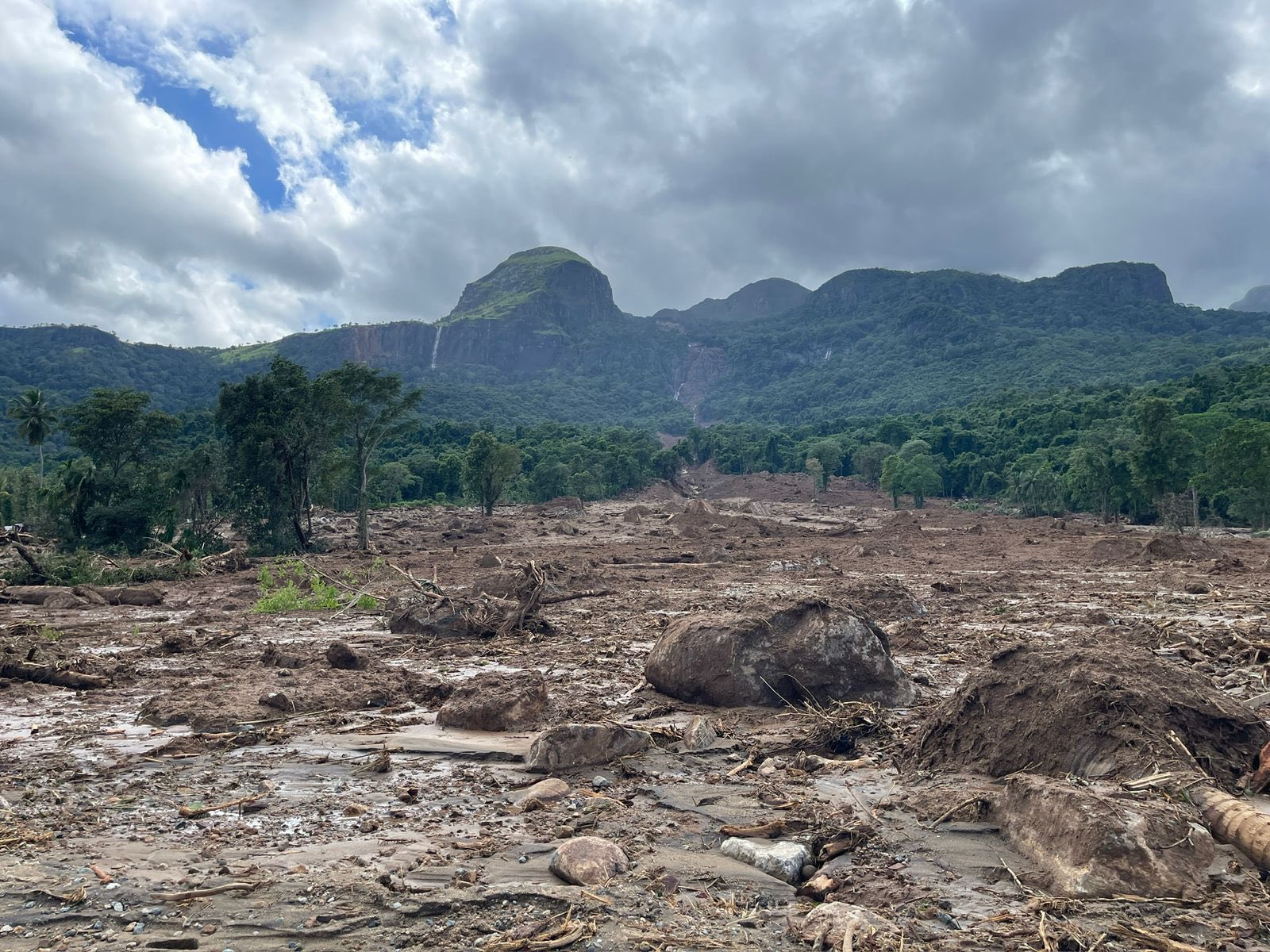
Cyclone Ditwah, a significant tropical storm originated as a low-pressure system near the Sri Lankan coast on 26 November. It rapidly intensified into a cyclonic storm by 27 November. While meteorological forecasts accurately predicted very heavy rainfall exceeding 200 mm, the actual devastation revealed a critical, under-appreciated factor which was translational speed.
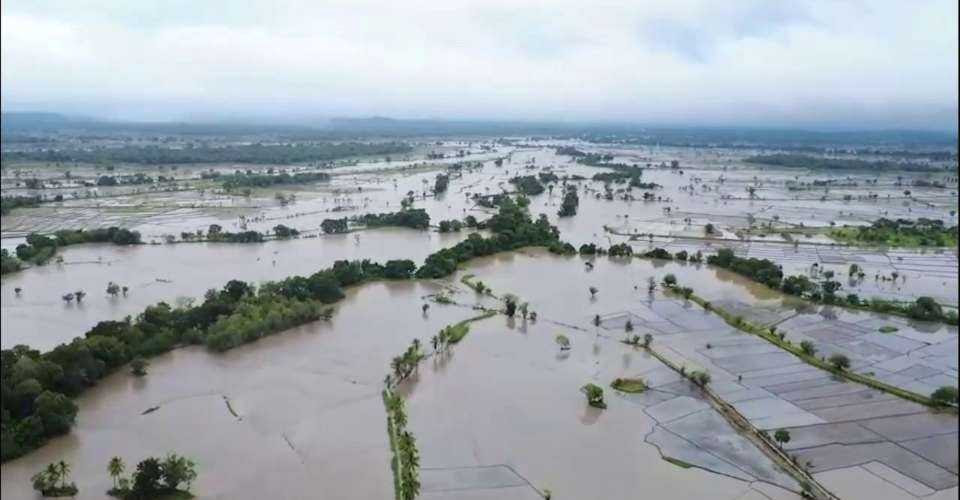
Moving at a crawl of three-eight km/h over land, Ditwah became a relentless, stationary rain machine. This slow movement led to extraordinary, concentrated rainfall intensities, far surpassing seasonal averages. Key measurements included: Gammaduwa (Matale) – 540.6 mm in 24 hours, and Mullaithivu – 161.9 mm in a single three-hour burst.
Slow speed equals high impact
The catastrophe of Ditwah was not solely due to the wind, but to water. Its slow translational speed meant that extreme rainfall saturated the same watersheds for extended periods. This saturation transformed the landscape, where even moderate sustained winds (60-70 km/h) and violent squalls could trigger catastrophic flooding and landslides. The ground, overloaded with 200-400 mm of rain in short windows, simply gave way, reshaping terrain and obliterating infrastructure not designed for this new paradigm.
Climate change and the new realities
Climate change is the cumulative outcome of human behaviour over generations. Excessive consumption, the relentless extraction of natural resources, and irresponsible waste disposal have placed an unsustainable burden on the planet. Human lifestyles have reshaped natural ecosystems, undermining their capacity to sustain life. Equally important is the failure to manage economic resources sustainably and equitably — an imbalance that generates climate injustice and intensifies the global climate challenge. In many ways, climate change represents the earth’s ecological response to persistent human mismanagement.
These shifts introduce new and pressing realities. Rising global temperatures increase regional ambient heat, destabilises local weather systems and disrupts agriculture, livelihoods, and human settlements. Ecological tipping points manifest through extreme events — flash floods, droughts, cyclones, and high-intensity winds — rendering traditional weather prediction increasingly unreliable.
Addressing this multifaceted challenge requires a coordinated response from all sectors of society. Citizens must be equipped with climate literacy to respond responsibly and with nuance. States must establish progressive policies, regulations, and legislative frameworks that encourage sustainable behaviour, hold corporations accountable for responsible resource management, and ensure that businesses mitigate the environmental and ecological impacts of their operations — including waste reduction and sustainable resource cycles.
A significant portion of our civil infrastructure is ageing and, more critically, was designed using outdated climatic baselines. These systems are no longer adequate for the new realities shaped by climate change. Unpredictable weather patterns, turbulent atmospheric behaviour, intense rainfall, prolonged droughts, groundwater depletion, and pollution — all demand updated “new design data” to guide infrastructure planning and development. Climate-resilient infrastructure, particularly in areas such as rainwater management, flood control, heat insulation, and structural resistance to high winds — requires innovative, forward-looking engineering solutions.
The infrastructure capacity must be enhanced to withstand these emerging pressures. Understanding the complete “upstream–downstream” dynamics of environmental systems is essential to developing sustainable strategies. Policymakers must recognise how upstream issues affect downstream vulnerabilities to avoid systemic failures. This underscores the need for a comprehensive framework built on the following pillars: Climate change awareness for citizens, technocrats, corporate entities, and policymakers; Updated engineering design principles aligned with contemporary climatic data; and A robust disaster management framework, prioritising awareness, predictability and early warning, prevention, response, preparedness, management, post-disaster recovery, and mitigation and long-term resilience.
These disaster management responsibilities rest not only with the State and its institutions but also with corporations, civil society, political actors, and individual citizens. A resilient ecosystem is built — or undermined — by our collective and individual behaviours. Ignoring these responsibilities on the assumption that they belong to “someone else” only deepens vulnerability.
Social responsibility
The devastation caused by Ditwah is profound. Its impact on infrastructure, ecology, the environment, livelihoods, and social well-being is comparable to, and in some ways greater than, the destruction wrought by the 2004 tsunami. Such an event has the potential to transform the trajectory of our society — economically, socially, and politically — either towards recovery or prolonged instability.
This catastrophe presents a challenge not only to the Government but also to the political opposition, which must move beyond “business as usual” and contribute constructively to national recovery. As the disaster has affected people across all segments of society, it should dismantle barriers of race, religion, caste, and region. Political manipulation that seeks to exploit divisions for power must be rejected.
Instead, national unity is imperative. Citizens — regardless of identity or background — must stand together, assume shared responsibility, and support one another to rebuild a stronger, more resilient nation.
Compounding a crisis: Outdated systems meet new realities
The devastation was amplified by systemic vulnerabilities: Outdated design standards. Critical infrastructure relies on century-old hydrological data, unfit for climate-change-driven weather extremes; Unregulated settlement. Expansion into floodplains and landslide-prone zones multiplied exposure; and Environmental feedback loops. Rising sea levels impede river discharge, causing backwater flooding in estuaries and crippling local drainage systems. These factors converged to turn a severe weather event into a human and economic disaster.
Policy imperatives: Building systemic resilience
The lesson from Ditwah is clear: incremental adaptation is insufficient. We require a foundational shift in policy and planning.
Overhaul planning and building regulations
Regulations must mandate climate resilience as a non-negotiable standard.
Hydrological redesign: Increase the baseline design rainfall intensity from 100 mm/h to 150 mm/h and establish regional datums for flood retention (One-in-Five, 10, and 20-year flood levels).
Mandate on-site retention: Enforce strict plot coverage limits, require porous paving for all parking and garden areas, and mandate integrated rainwater harvesting systems in buildings to reduce flash flood runoff.
Innovate in flood zones: Develop a regulatory framework for “housing on stilts” in controlled areas between retention zones and five-year flood levels, coupled with stringent waste management to protect drainage.
Green infrastructure: Require buildings with roofs over 100 square metres to implement green roofs or rainwater harvesting on at least 50% of their surface area.
Reinvent road and drainage construction
Road networks must be re-envisioned as integrated drainage systems.
Universal storm drainage: All roads must be flanked by engineered storm drains. The catastrophic washing away of arterial roads underscores the non-negotiable need for proper headwalls, wing walls, toe walls, and curb walls for protection and stability.
Eco-engineering: Promote gabion walls over solid concrete for better seepage and soil stability. Regulate the use of deep-rooted vegetation and geotextiles in vulnerable slopes.
Stringent quality oversight: Establish robust technical supervision and quality control mechanisms for all Local Authority-led infrastructure projects.
Foster a culture of resilience and responsibility
Climate-centric education: Embed climate science and sustainability into national school curricula to foster a generation aware of environmental stewardship.
The polluter pays principle: Legislate to ensure that corporate entities bear the full cost of environmental mitigation for damage caused by their operations, creating a powerful economic incentive for sustainable practice.
Risk-based zoning: Enforce scientific, climate-sensitive zoning to strictly prohibit new settlements in high-risk areas while supporting managed retreat where necessary.
Conclusion
Ditwah served as a tragic but revealing stress test of our infrastructure and planning systems. It exposed, with stark clarity that slow-moving, rain-intensive storms are among the most severe climate change threats that we now face. The policy imperatives outlined above are therefore not optional recommendations — they are urgent, foundational requirements for protecting our communities. We must shift decisively from reactive clean-up efforts to proactive, science-driven resilience building. Our ability to withstand the next climate shock will depend entirely on the choices that we make today.
Ultimately, the people are the true victims of this disaster, which is rooted in long-term human behaviour and unsustainable practices. This moment calls for national unity and collective introspection — to transform our lifestyles, reshape our behaviour, and champion policies that support the creation of a climate-resilient society.
The writer is an architect and sustainability consultant.