
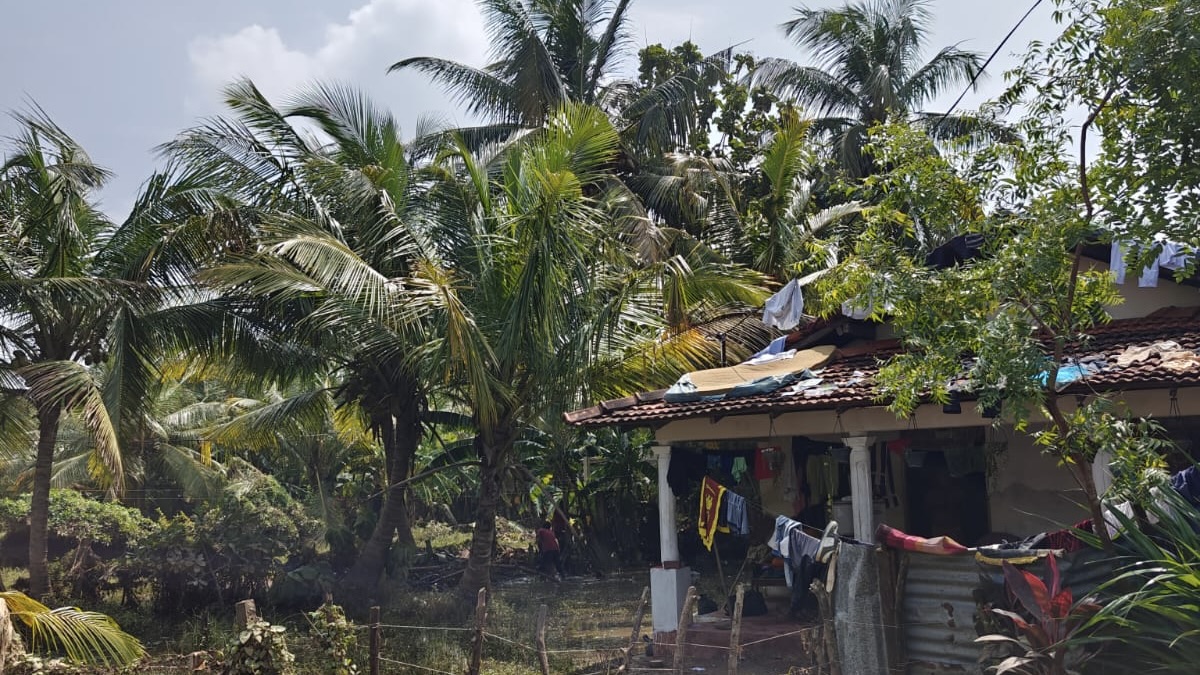

Cyclone Ditwah has caused devastating consequences for the island nation and brought to the fore new challenges to the debt-burdened country
December 08, 2025 by Shiran Illanperuma.
President Anura Kumara Dissanayake has called Cyclone Ditwah the “largest and most challenging natural disaster” in Sri Lanka’s history. Over 2 million Sri Lankans (around one in 10 people), including over 275,000 children, have been affected. As of December 8, 635 people have been reported dead and 192 remain missing.
Initial estimates place the economic cost at up to USD 7 billion, which is around 7% of the country’s GDP – more than the combined budget for healthcare and education. Meanwhile, over 86,000 houses are damaged or destroyed, two-thirds of railway lines are unusable, major roads and bridges have been blocked or damaged, industrial plants, and machinery have been destroyed, and agricultural lands and irrigation infrastructure are damaged.
There is now much soul searching and political maneuvering around the causes of the disaster and the extent to which it may have been predicted and prevented through better resources, organization, and leadership. The following are six theses about what Cyclone Ditwah has revealed about the longstanding fissures in Sri Lanka’s society and economy.
Vulnerability to climate change: Cyclone Ditwah is part of a broader trend of anomalous and extreme weather events caused by climate change. Forming in the south of Sri Lanka – unusually close to the equator – Ditwah slowly traveled northwards across the country, increasing the intensity of the devastation. After landfall, the cyclone did not weaken as expected but maintained its strength for a considerable time. Over 350 mm of rain was discharged in the space of 24 hours, which is above the norm for Sri Lanka. Though the country has experienced at least 16 cyclones since 2000, these have been very mild due to the its location close to the equator. Sri Lanka ranks high in the Global Climate Risk Index but 81.2% of the population lacks adaptive capacity for disasters. For Sri Lanka, Ditwah may only be the opening act of the Capitalocene.
Neoliberalism’s attrition of state capacity: Cyclone Ditwah comes in context of Sri Lanka ongoing 17th program with the International Monetary Fund (IMF), which has led to increased indirect taxation and a reduction in public investment. Despite having good disaster response mechanisms on paper (the Disaster Management Act No. 13 of 2005), decades of austerity have created real weakness in infrastructure, organizational capacity, and access to modern technologies. Urban drainage infrastructure has not kept pace with changing meteorological patterns while unregulated urban development has intensified flooding and landslides. Sri Lanka’s meteorology department lacks tools (like sufficient Doppler radars) to make more precise forecasts. Equipment like helicopters are old and in need of maintenance, leaving the country dependent on foreign aid for rescue efforts.
Differentiated impacts on workers: Ditwah affected all 25 of Sri Lanka’s districts but the impacts on people were differentiated along class lines. In the Free Trade Zone (FTZ) in Katunayake, some factory workers found their boarding flooded and were stranded for two days without access to basic facilities. Since the majority of FTZ workers are internal migrants, they have historically fallen through the cracks of relief efforts conducted by the local government. According to the Asia Floor Wage Alliance, factories continued production on the Monday after the floods, some even encouraging workers to sleep in factory premises if their homes were damaged or destroyed. In Kilinochchi, unions reported that workers still in relief camps were asked to go to work, giving no time to recover from the losses – some workers now owning little other than the clothes on their backs. In urban areas, low-income settlements along canals and rivers are the most vulnerable to floods. Meanwhile, the housing of plantation workers in the central highlands are among the most vulnerable to landslides, which in some cases wiped out entire families or villages.
Enduring colonial legacies: The highest death toll so far is in Sri Lanka’s central highlands (over a third of deaths were reported in the district of Kandy), which are the most vulnerable to landslides. This is largely a legacy of British colonialism which displaced the local peasantry and associated agroecology to make way for export crops (mainly tea and rubber). The deforestation of the highlands for plantations led to soil erosion and landslides which continues to this day. The Malaiyaha Tamil community, who were brought from South India to work as indentured workers on the plantations, are among the most vulnerable to these landslides. Many do not own land and reside in ‘line rooms’ inside the estates, facing the highest rates of poverty and malnutrition in the country. Moreover, the remote locations of these settlements have rendered many inaccessible or uncontactable by rescue workers.
Intensification of agrarian crisis: Cyclone Ditwah struck during Sri Lanka’s Maha season, the major of the two cultivating seasons in the country. Early reports indicate that 273,000 acres of paddy lands have been affected by floods. Even if replanted, yields for next year are likely to be affected. The construction of big dams without cascading systems has intensified flooding in downstream farms. Farmers are still accounting for the damage done to capital goods like combine harvesters and lorries (often leased at high interest rates from private finance companies), as well as the damage done to irrigation canals. There is simply no data on how much livestock has been lost, since many in the sector are smallholders. These developments threaten food sovereignty and intensify rural indebtedness (38% of rural households are indebted), pushing smallholders to ruin and intensifying the pre-existing trend of internal and external migration. Meanwhile, the shocks to supply chains have led to shortages and price gouging, and will also open up avenues for the import of agricultural products. Vimukthi De Silva, from the Movement for Land and Agricultural Reform, says that the agrarian sector will need a significant debt moratorium and a government land-use policy (made in consultation with farmers’ organizations) to recover.
Spectre of disaster capitalism: The cost of rebuilding will be enormous for the Sri Lankan state, whose fiscal and monetary space has already been squeezed by the IMF and creditors. Annual payments of interest on debt account for 30% of government expenditure. The IMF has promised swift release of the sixth tranche (USD 350 million) of the ongoing External Fund Facility. The government has requested an additional USD 200 million through the IMF’s Rapid Financing Instrument to meet immediate relief efforts. Meanwhile, the government has established a ‘Rebuilding Sri Lanka’ fund for local and international donors. However, the composition of the fund’s management committee reads like a who’s who of Sri Lanka’s oligarchs – a range of merchant capitalists with extensive interests in plantations, trade, finance, insurance, and real estate. Together, the companies represented and their subsidiaries account for over 20% of capitalization in the Colombo Stock Exchange. The lack of representation from social movements, small producers, and relevant government departments raises concerns over the class character of reconstruction efforts.
Shiran Illanperuma is a Sri Lankan journalist and political economist. He is a researcher at Tricontinental: Institute for Social Research and a co-editor of Wenhua Zongheng: A Journal of Contemporary Chinese Thought.