
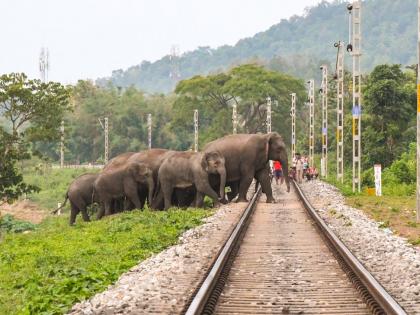

As Sri Lanka marked World Elephant Day 12 August, conservationists renew the call for science-based solutions to the human-elephant conflict that goes beyond political experiments
By Malaka Rodrigo/ sundaytimes.lk
A living wild elephant in Sri Lanka could be worth as much as Rs. 3.8 billion when its ecological, cultural and tourism values are considered, according to an assessment presented at a World Elephant Day event held in Colombo.
The figure, presented by an environmental lawyer Malaka Palliyaguru of the Society for Conservation of Wild Elephants in Sri Lanka (SCWE), offers a striking perspective on the value of an animal that is often discussed primarily in terms of the damage it causes to crops and property.
It also raises a fundamental question: If a living elephant can represent billions of rupees in value, how should Sri Lanka manage the growing conflict between people and elephants? On the other hand the killing of a wild elephant in contrary results in a penalty of just half a million rupees, which is strikingly disproportionate.
World Elephant Day, observed annually on August 12, was established to draw global attention to the conservation of elephants, the threats they face and the need to improve their protection and welfare. In Sri Lanka, the occasion once again brought the country’s long-running human-elephant conflict into focus.

Barana: A majestic tusker of Kalawewa was killed by electrocution. Pic by Mevan Piyasena
Among the events held this week was a gathering organised at the University of Colombo by the Society for Conservation of Wild Elephants in Sri Lanka, a relatively young organisation formed by wildlife photographers and other elephant enthusiasts.
The organisation emerged following the deaths of several iconic tuskers last year. The successive losses deeply affected many wildlife enthusiasts and prompted them to come together to advocate stronger action to protect wild elephants.
The group subsequently launched a signature campaign calling for meaningful Government action. Members travelled from Matara to Jaffna, collecting signatures even in areas where human-elephant conflict is particularly severe.
Interestingly, the message they received from many conflict-affected communities was not one of hatred towards elephants.
People living with elephants have genuine grievances. They face crop losses, damage to homes and property, disruption to livelihoods and, in some cases, the loss of family members. But a majority of them are not asking for elephants to be eliminated, but they are simply asking for a solution, said Saranga Deva De Alwis, the president of SCWE.
Addressing the gathering, Malaka Palliguru, who drafted the Society’s proposal that was presented to the Director General of the Department of Wildlife Conservation (DWC), said the organization had attempted to assess the economic value of a living elephant based on internationally accepted Natural Capital Accounting (NCA).
The value of a wild elephant cannot be measured solely through its direct economic contribution. Under the Contingent Valuation Method (CVM), its value can be assessed through three broad components: direct-use value, such as income generated through wildlife tourism and other activities; indirect-use value, reflecting ecosystem services such as seed dispersal, habitat modification and maintenance of ecological processes; and non-use or existence value, which captures the value people place on knowing that elephants continue to exist in the wild, even if they never directly encounter or benefit from one. CVM can also measure people’s willingness to pay (WTP) to prevent the extinction of elephants, providing an estimate of how much society values their continued survival. Taken together, these components offer a more comprehensive assessment of the economic value of a living wild elephant.
Mr.Palliyaguru said that international estimates of wild elephants elsewhere were considered as benchmarks, including assessments of the economic contribution of African elephants through tourism and ecosystem services. One estimate cited an annual tourism value of about US$1.7 million for an individual Kenyan elephant. Another valuation by the International Monetary Fund (IMF) had assessed the economic value of an African elephant for its ecological services in 2019 as USD million 7.5.
The precise valuation can certainly be debated. A comprehensive national valuation would require economists, ecologists, tourism specialists and other experts to develop a methodology specifically for Sri Lanka.
But the principle behind the exercise is important.
An elephant provides a lot of ecosystem services while it is alive. It disperses seeds, modifies vegetation, creates habitats and influences ecological processes across large landscapes. It also contributes to wildlife tourism and has an exceptional place in Sri Lanka’s cultural heritage.
Its value therefore cannot be measured simply by the price of ivory or by the cost of compensating a farmer for a damaged crop.
The assessment becomes even more striking when compared with the legal consequences of killing an elephant. As highlighted at the event, the existing fine of Rs. 500,000 is minute compared with the estimated value of a living elephant. The disparity illustrates how poorly the economic value of wildlife can be reflected in conventional penalties.
Can Sri Lanka solve the conflict?
The Society’s president, Saranga Deva de Alwis, said the organisation believes Sri Lanka already has a scientific foundation for addressing the human-elephant conflict. He referred to the National Action Plan for the Mitigation of Human-Elephant Conflict prepared in 2020 by a Presidential Committee headed by Dr. Prithiviraj Fernando and involving experts including Dr. Sumith Pilapitiya.
The plan was developed using scientific evidence and research, and included a range of proposed measures for reducing conflict. Yet six years later, its implementation remains incomplete.
Dr. Fernando, speaking at the World Elephant Day gathering, stressed the need for a national strategy that recognises the reality that most Sri Lankan elephants share landscapes with people.
For about six decades, Sri Lanka has attempted to restrict elephants to protected areas, which cover only around 17% of the country’s land. That strategy, he said, has failed to resolve the conflict.
“It would be foolish to believe we can proceed with the same strategy expecting this will get success now,” he said.
Sri Lanka has already developed national strategies for elephant conservation and human-elephant conflict. A national elephant conservation strategy was developed in 2006. Yet many of its recommendations were not implemented.
The 2020 plan was another attempt to establish a science-based framework. In 2022, another Presidential Committee was established to help implement it.
But the country’s economic crisis at the time meant that adequate Government funding was not available. Despite this, experts were able to secure funds for field interventions. One initiative resulted in electric fences being established around approximately 300 paddy fields. According to Dr Pilapitiya, this was associated with a reduction of around 20% in human deaths in 2024.
Such results need continued scientific monitoring to determine why and where particular interventions work. But they demonstrate the importance of testing solutions rather than adopting policies based solely on political preferences.
Dr Fernando said that if the Government wants to modify the 2020 strategy, there is nothing inherently wrong with updating a policy, while stating the “The science has not changed, so there wouldn’t be much changes expected”.
Dr. Pilapitiya, a former Director General of the Department of Wildlife Conservation, also pointed to the difficulties faced by wildlife officials. Officials can become constrained by political decisions and administrative pressures, encouraging them to adopt what appears to be the easiest solution — attempting to keep elephants inside protected areas.
But the 2020 strategy was based on scientific literature, including peer-reviewed research, and incorporated approaches that had already been tested through pilot projects.
Sri Lanka has scientists who have studied elephants and human-elephant conflict for decades. It has accumulated data from field research. It has tested different mitigation methods. It has produced national strategies.
The issue, therefore, is not a lack of scientific knowledge, but the political will to implement the strategies tried and tested, Dr.Pilapitiya said.