

There is a familiar story behind the daily lives of many people in our country: a story of hardship and tears. No matter how deep those struggles are, those responsible for addressing them often treat them lightly. Until the nation truly recognises the weight of these tears, the social and economic hardships experienced by ordinary people will remain unresolved.
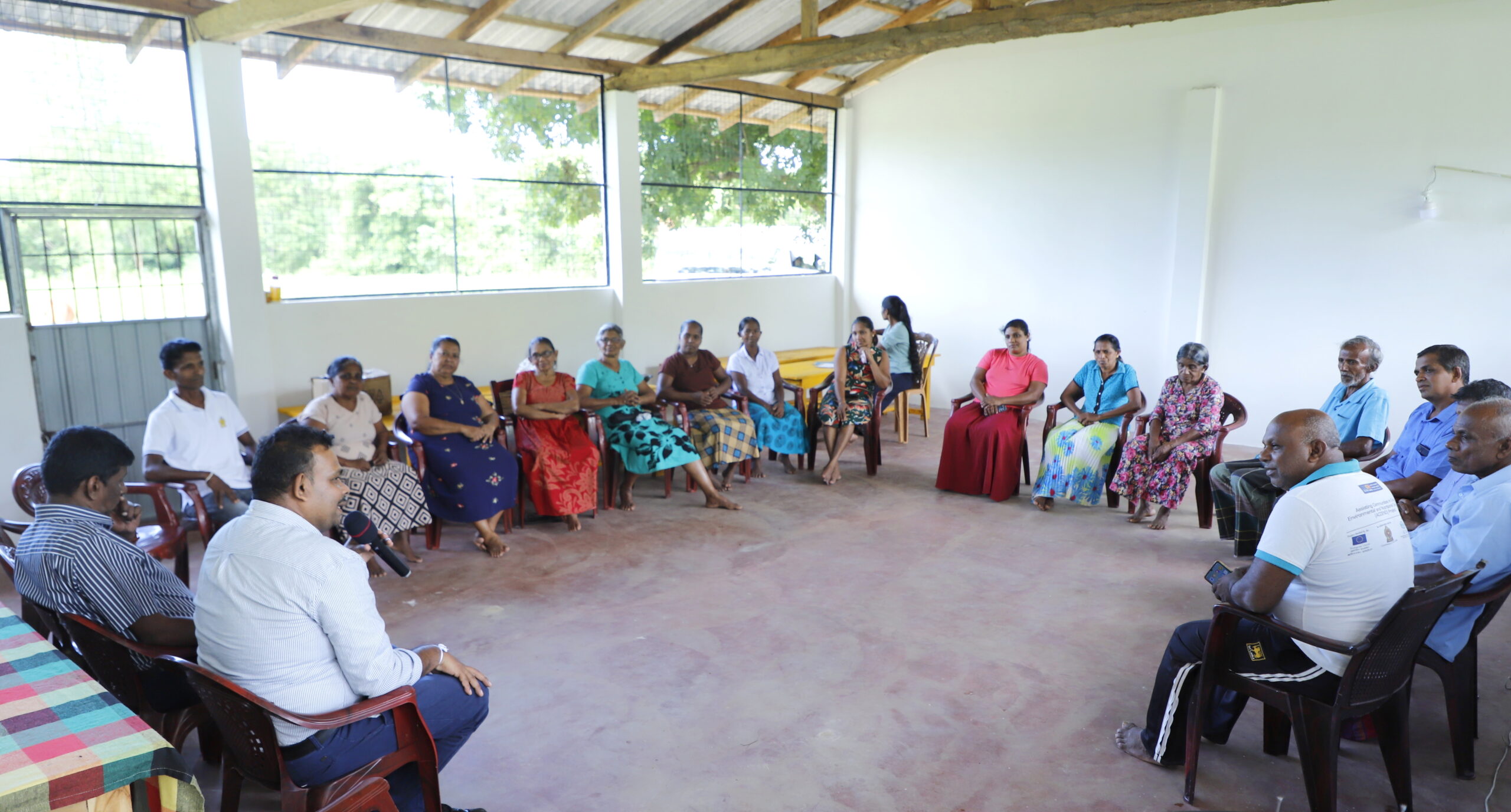
That reality became evident during a discussion with farmers from Konketiya in the Buttala area, organised by the National Movement for a Just Society. The discussion provided an opportunity to understand the numerous challenges and hardships these farming communities face in their daily lives.
Like many villages in Buttala, farming is the primary livelihood in Konketiya. Paddy cultivation during the Yala and Maha seasons, together with annual henna cultivation, forms the backbone of the local economy. However, farmers are struggling with multiple challenges, including water shortages, crop destruction caused by wild elephants and other animals, exploitation by traders and middlemen, and the rising cost of agricultural inputs.
During the discussion, attended by representatives of several farmers’ organisations, Mr. D.M. Sarath Nandasiri Bandara of the Valliammaragama Farmers’ Organisation highlighted the area’s most pressing concern.
“The biggest problem facing the people in this area is water. Farming depends on water from tanks and rainfall. An irrigation channel that once supplied water was blocked because of elephant movements, and as a result water can no longer be directed from the tank to the paddy fields. There is also a canal known as Raja Ela that was intended to bring water to the fields, but it has not been properly developed or made operational. If this canal is completed and improved, it would greatly benefit farmers.”
Another farmer from the same organisation, Mr. R.V.K. Fernando, proposed a longer-term solution.
“There is a tank called Valliammar located within the forest. If this tank is properly developed, the water problem in this area could be resolved. Water could also be diverted from it to three other tanks. Improving access roads to the tank and rehabilitating it could provide irrigation to nearly 400 acres of farmland. There are proposals to develop the tank, but so far they have not translated into practical solutions for farmers.“
The farmers pointed out that while large-scale tank rehabilitation projects are often announced at the national level, what they urgently need is a practical system that ensures water from local reservoirs reaches their fields.
They also noted that land preparation has become increasingly expensive. Given the high cost of fuel, several participants suggested a fuel subsidy for farmers, based on the number of acres cultivated, at least for one farming season.
Mrs. R.M. Chandralatha of the Women’s Farmers’ Organisation described the uncertainty facing farmers this season.
“We were advised to sow paddy early this year, and we did so about a month ago. But we still have not received sufficient rainfall. We cannot get adequate water from the tank either, so we are simply waiting for rain. If we do not receive enough rainfall soon, we will lose everything. There is nothing else we can do.”
She also spoke about the rising cost of seeds and the disappearance of traditional seed varieties.
According to farmers, most seeds now have to be purchased from commercial suppliers, often at high prices. Traditional varieties have become difficult to find, forcing farmers to buy imported or hybrid seeds each season.
Mr. A.H. Ratnapala highlighted the burden of purchasing seeds for maize cultivation.
“Maize is widely grown in this area, but the seeds are expensive. Farmers are compelled to buy new seeds every season, adding to the already high cost of cultivation.”
The farmers explained that problems begin long before harvesting. The costs of ploughing, land preparation, weeding, seed purchase, fertiliser and pesticides continue to rise, placing immense pressure on already struggling households.
The discussion soon turned to crop destruction caused by wild animals, particularly elephants. Participants described this as one of the most serious challenges facing the area. In addition to elephants, peacocks, porcupines, monkeys, wild boars and rabbits regularly damage crops.
Farmers emphasised that they do not seek conflict with wildlife. Instead, they want effective systems that protect both people and animals.
Mr. M.L.A. Sunil of the Valliammaragama Farmers’ Organisation stated:
“The elephant problem is one of our biggest concerns. This area lies along an elephant corridor. Although there is an electric fence, many of the posts are weak and collapse during the rainy season. If the fence is rebuilt with concrete posts and properly strengthened, it would provide a more effective solution.”
Mrs. Chandralatha spoke emotionally about her own experience.
“An elephant destroyed nearly a thousand coconut trees in my garden. We nurture those trees like children. We plant them, care for them and wait years for them to bear fruit. When elephants destroy them overnight, all we can do is cry in silence. We are not angry with the animals. They also have a right to live. But there must be a proper system that protects both wildlife and our livelihoods.”
Even after overcoming these difficulties and successfully harvesting their crops, farmers say their struggles do not end. Instead, they face exploitation when attempting to sell their produce.
After spending months battling drought, floods, wildlife and rising production costs, many farmers find themselves forced to sell their harvest to traders at prices that barely cover their expenses.
When the costs of seeds, fertiliser, pesticides, ploughing, harvesting and transportation are added up, most farmers say there is little or no profit remaining. Their labour, often stretching over several months, goes largely unrewarded.
Mrs. J.M. Muthumenika of the Udara Wewa Farmers’ Organisation explained:
“The price offered for paddy is extremely low. Mill owners offer only Rs. 90 per kilogram. The government says paddy should be purchased at Rs. 120, but in reality that does not happen. Everything required for cultivation is expensive. To cultivate and harvest one acre costs between Rs. 125,000 and Rs. 130,000, without even calculating the value of our own labour. If we have to sell paddy for Rs. 90, there is simply no profit.”
Ms. Sunita Chandramali shared a similar experience.
“I sold my paddy at Rs. 100 per kilogram. Some buyers offered only Rs. 90. Even when higher prices are promised, farmers are often told they must wait months to receive payment. Most of us cannot afford to wait that long, so we accept lower prices.”
She also pointed to the lack of marketing facilities in the area.
“We grow crops such as maize, green gram and peanuts. But there is no proper marketing centre in this region. We have to transport our harvest elsewhere. If a farmer sells produce for Rs. 300, transport and other costs can consume much of that income. Traders and middlemen make their profits, while the farmer bears all the risks and losses. This system is deeply unfair.”
These sentiments were echoed by many others who participated in the discussion.
The farmers of Konketiya are asking not for special treatment, but for fair policies and practical support. Measures such as fuel subsidies, improved irrigation facilities, stronger protection against crop damage by wildlife, and guaranteed purchasing mechanisms could significantly improve their livelihoods.
Establishing agricultural marketing centres across farming regions and ensuring fair, guaranteed prices for produce would help free farmers from dependence on middlemen and moneylenders.
The tears and struggles of farmers deserve far greater attention from policymakers. From preparing the land and sowing the seeds to harvesting and delivering produce to market, it is the farmer who carries the burden at every stage. Their labour sustains the nation. It is only just that this labour is recognised and rewarded with dignity, fairness and meaningful support.
(Translated from Sinhala with AI)