
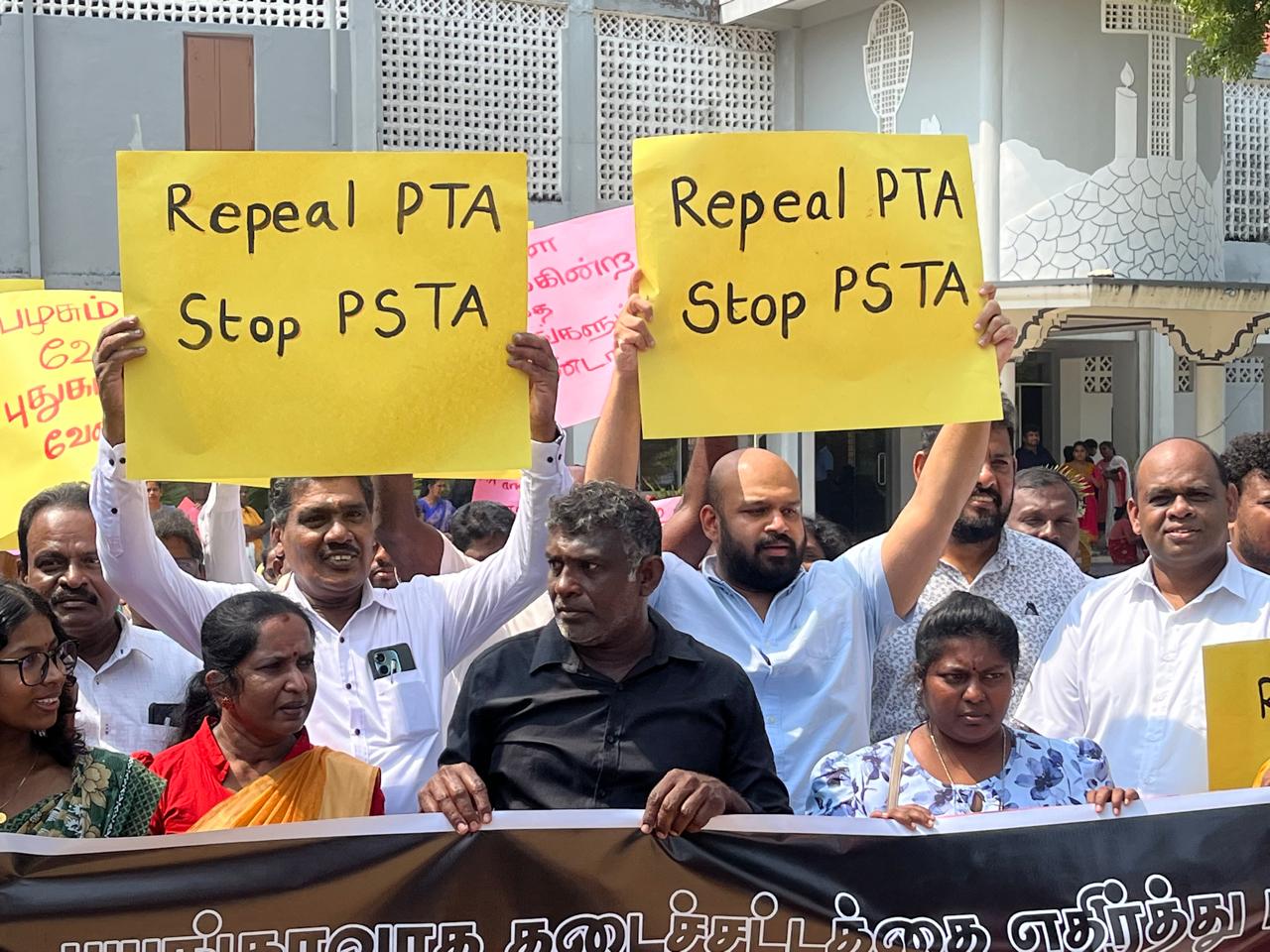

Colombo, 10 October 2026 – An Australian-based Sri Lankan advocacy organisation has called on all Members of Parliament to reject the proposed Protection of the State from Terrorism Bill, arguing that the legislation largely retains the controversial powers that made the Prevention of Terrorism Act (PTA) an instrument of abuse for nearly five decades.
In a statement issued on 9 October, the Australian Advocacy for Good Governance in Sri Lanka (AAGGSL) welcomed the Government’s pledge to repeal the PTA but warned that the new Bill fails to deliver the abolition of oppressive laws promised by the National People’s Power (NPP) government.
The organisation said that although the Bill formally repeals the PTA, it preserves key executive powers, including warrantless arrests, prolonged detention without effective judicial oversight, and broad definitions of terrorism that could potentially be used against legitimate political activity and dissent.
AAGGSL noted that the Government had previously assured both the Sri Lankan public and international partners that replacement legislation would comply with international human rights standards and focus solely on genuine acts of terrorism. However, the group argued that the Bill falls short of those commitments.
According to the statement, concerns raised by Amnesty International, United Nations special procedures and the Centre for Policy Alternatives centre on four major issues: a broad definition of terrorism that includes attempts to “unduly compel” a government, powers of arrest based on reasonable suspicion without a warrant, detention orders that can be authorised by the Defence Secretary for up to one year, and executive powers to proscribe organisations and designate prohibited places with limited judicial scrutiny.
The organisation argued that exemptions for protests, advocacy, trade union action, humanitarian activity and dissent do not adequately address what it described as the Bill’s fundamental flaw: continued executive control over detention decisions.
Legacy of Abuse
AAGGSL devoted much of its statement to recounting the long history of the PTA, which was introduced in 1979 as a temporary measure and subsequently made permanent in 1982.
It highlighted how successive governments had used the law against a wide range of individuals and groups, often beyond its original purpose. The statement noted that by 1990, approximately 6,700 suspected JVP members were being held under emergency and anti-terrorism laws. It also cited findings by the Human Rights Commission of Sri Lanka that more than half of PTA detainees had remained in custody between five and fifteen years without their cases being concluded.
The group further pointed to the arrests of more than 600 people under the PTA between 2019 and 2022 and referred to data released in 2024 showing high acquittal rates in PTA-related prosecutions.
Among the cases highlighted were journalist J. S. Tissainayagam, poet Ahnaf Jazeem, lawyer Hejaaz Hizbullah, student leader Wasantha Mudalige, and Vasanthi Raghupathy Sharma, all of whom, according to the organisation, experienced lengthy detention or prosecution before eventual release, acquittal or judicial intervention.
The statement argued that the PTA’s acceptance of confessions made to police created conditions conducive to torture, coercion and false accusations. It also criticised the absence of compensation or apologies for individuals later found innocent.
Government’s Own Experience
AAGGSL said the current administration’s own use of PTA powers demonstrates why legal safeguards must not depend on promises of restraint by those in office.
The organisation cited Human Rights Commission records indicating 46 PTA-related detentions in 2025 and 12 during the first quarter of 2026. It specifically referred to the detention of 22-year-old shop worker Mohamed Rusdi in March 2025 and Tamil hip-hop artist Sangeethan Ganeshkumar in June 2026, arguing that such cases illustrate the continuing risk of misuse.
The group also noted a March 2026 Supreme Court ruling which held that the PTA could not lawfully be used to deal with ordinary criminal offences, despite claims by some ministers that the legislation was being used to combat organised crime.
Call for Revisions
Describing the proposed law as a rebranded version of the PTA rather than its abolition, AAGGSL urged Parliament to halt its passage and undertake broader consultations with victims, affected communities, civil society organisations, lawyers and the Human Rights Commission.
The organisation called for a narrower definition of terrorism based on United Nations standards, full judicial control over detentions, the exclusion of police confessions as evidence, and the immediate repeal of the PTA once a revised law is enacted.
It also urged the Government to review outstanding PTA cases, release individuals held without charge or trial, and provide reparations and apologies to victims of past abuses.
“The Government has a mandate not merely to rename the PTA, but to end the system of unchecked power that made it abusive,” the statement said.
The appeal was signed by Lionel Bopage, President of the Australian Advocacy for Good Governance in Sri Lanka, based in Melbourne.