

On the sun-drenched plains of Mannar and in the cool highlands of Matale, a macabre geography lies hidden just beneath the topsoil. For a post-war traveller, Sri Lanka is a paradise of emerald tea estates and sapphire coasts.
Yet beneath the lush greenery and the smiles of the locals lies a gruesome history of enforced disappearances, torture and unmarked mass graves. Especially for the families of the disappeared, the land remains a vast, unmarked cemetery where the truth is buried under layers of political expediency, suppression and sometimes literal concrete.
Between 1992 and 2022, at least 32 mass grave sites have been uncovered across the island. Each discovery follows a hauntingly familiar script. Construction workers or farmers stumble upon human remains, a brief flurry of media interest ensues, a judicial inquiry is opened, and then, almost inevitably, the process stalls, the evidence is questioned, and the site is returned to the silence of the Earth.
In a nation still grappling with the ghosts of two insurrections and a three-decade-long Civil War, these mass graves continue to be open wounds in the collective Sri Lankan psyche – an unaddressed fundamental failure of the State to reconcile its violent past with its democratic present.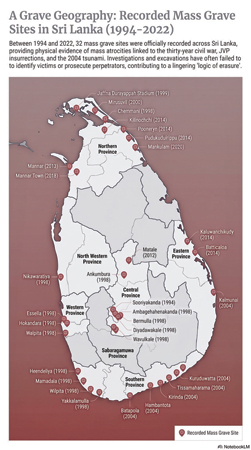
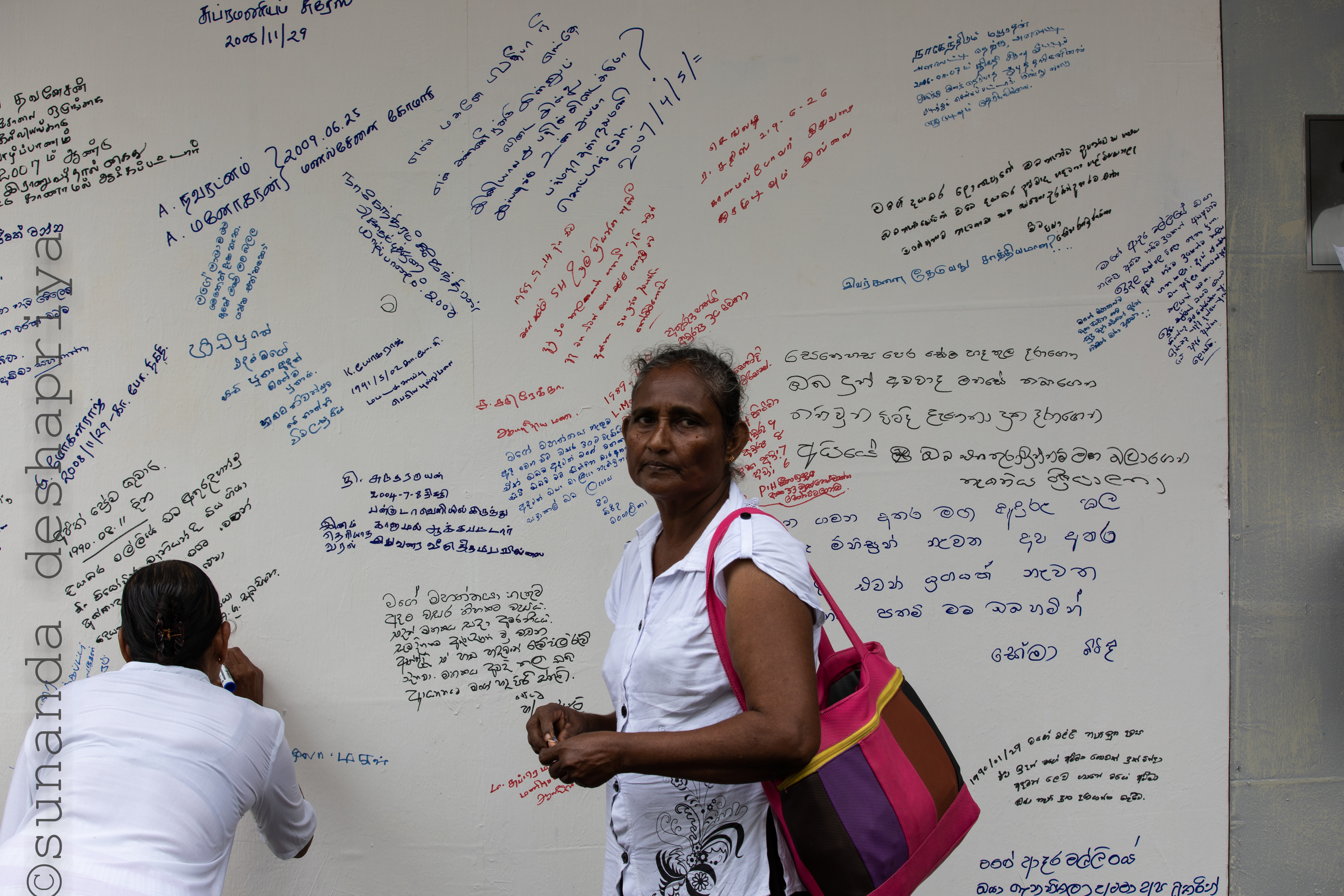
Last week in an attempt to resurrect the calls for justice for the disappeared and the victims found in a mass grave in the Matale District, a Satyagraha was organised by the Families of the Disappeared and loved ones of disappeared individuals in the late 80s, calling on the Matale Magistrate Court for a rehearing of B/18/10/12. On June 23, the group filed a motion of reconsideration, which was rejected by the Matale Magistrate Harshana Ratnayake, citing that a verdict has already been delivered by the Magistrate’s Court. However they were advised that they can file a complaint at the Criminal Investigation Department (CID) regarding the matter.
The Ghosts of 1989: The Matale ‘Slaughterhouse’
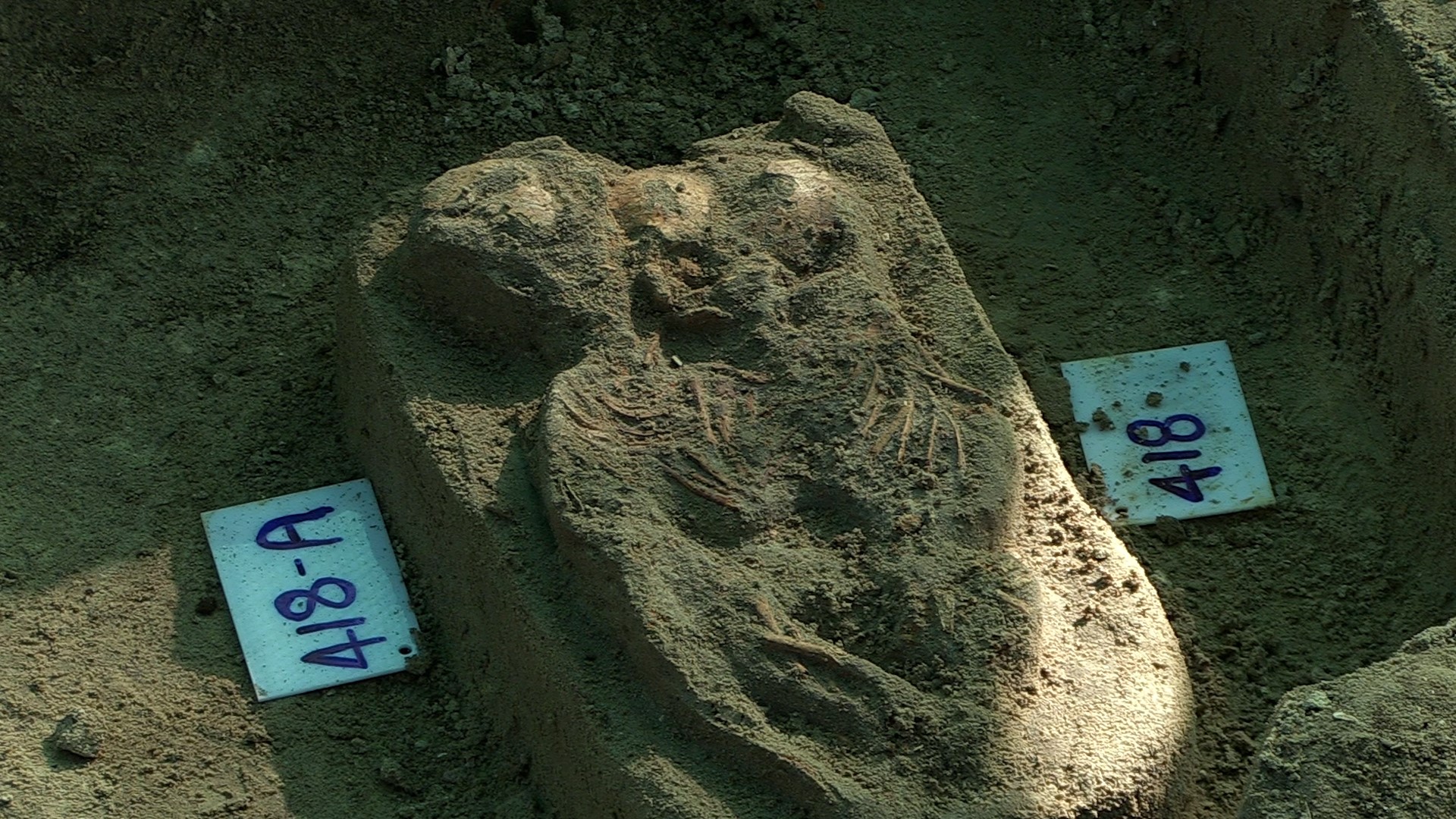
One of the most significant and controversial discoveries occurred in November 2012, during the construction of a bio-gas facility at Matale General Hospital. Workers uncovered skeletal remains that forensic archaeologist Prof. Raj Somadeva eventually identified as belonging to 154 individuals. Unlike a standard cemetery, these bodies were found in layers, which Prof. Somadeva says shows signs of decapitation, dismemberment and torture.
A report published by the International Truth and Justice Project (ITJP) stated that the Matale site is a portal to the “darkest age” of 1988 -1989, a period that claimed over 70,000 lives, a vast majority of whom were youth. State and Military sources indicate that during this time, the Matale District was under the command of the then-Army Colonel Gotabaya Rajapaksa, who served as the District Military Coordinating Officer between May 1989 and January 1990.
Investigations by various Presidential Commissions of Inquiry linked the Gajaba Regiment based at Vijaya College to systematic human rights violations. Survivors of the ‘Gunasena Hall’ at Vijaya College described it as a slaughterhouse where prisoners were hung by their feet and beheaded. One witness recalled seeing decapitated heads kicked into corners, while others were forced to inhale chilli fumes or watch their fellow inmates tortured to death.
Despite this gruesome evidence, the Matale investigation hit a literal dead end. In 2014, carbon dating results from a US laboratory claimed that the remains dated back to a period before 1950, possibly linked to a cholera outbreak. However, the findings were later contested over concerns regarding a broken chain of custody, violations of Standard Operating Procedures (SOPs), and possible tampering. The judicial inquiry was suspended in 2015, and the site gradually faded from public memory.
A pattern of erasure
Matale is not an anomaly. In Sooriyakanda (1994) more than 120 km further South of the island, an estimated 300 bodies were found, suspected to be victims from the late 80’s, during the unprecedented crackdown on suspected Left-leaning individuals. In Chemmani (1998), the testimony of a soldier convicted of the rape and murder of Krishanti Kumaraswamy led to the discovery of remains of Tamil civilians disappeared since 1996.
More recently, in 2018, the ‘Sathosa’ grave in Mannar revealed more than 300 skeletons, including those of 28 children.
In almost every case, the same obstacles arise. Researcher at the Social Scientists’ Association Dr. Chulani Kodikara conceptualises this as a successive Governmental discourse of erasure. Both physical, as the disappeared remain unaccounted for, and discursive, through the public denial of the magnitude of the crimes.
“Whenever a mass grave is found, officials are quick to suggest it is an old cemetery or the result of a natural disaster,” notes one human rights activist. This pattern creates a profound lack of trust. When the Mannar Sathosa excavation was halted in 2019 after Carbon dating suggested the bones were from the 15th century, families were sceptical, citing the modern artefacts found alongside the remains.
The legal labyrinth
Sri Lanka’s legal framework for managing these sites is a tapestry of colonial-era ordinances and modern acts that often fail in practice. Under the Code of Criminal Procedure, any person finding human remains has a legal duty to report it to the nearest Magistrate or police station.
Once reported, the Magistrate is required to hold an inquiry and post-mortem.
The establishment of the Office on Missing Persons (OMP) in 2016 was intended to centralise these efforts. The OMP Act empowers the Office to observe excavations and make recommendations on the handling of remains. However, since the change of Government in 2019, the OMP has faced severe budget cuts and a loss of credibility among victim communities.
A critical gap remains in the ‘chain of custody’. As seen in post-Matale investigations, without clear regulations on how evidence is collected, stored, and sent for analysis, the results risk being easily manipulated or dismissed.
International law, specifically the International Convention for the Protection of All Persons from Enforced Disappearance (CED), which Sri Lanka ratified in 2016, mandates that States must search for, exhume, and identify the dead. Yet, the domestic implementation of these duties remains lethargic. Furthermore, Sri Lanka is not a party to the International Criminal Court (ICC), meaning that unless a case is referred by the UN Security Council (an unlikely prospect) international prosecution for crimes against humanity remains out of reach for most victims.
The human cost: The right to mourn
Behind the legal jargon and forensic reports are the mothers and wives who have spent decades waiting. For groups like the Mothers’ Front, mass graves are a double-edged sword. While some families desperately want the remains exhumed to provide a proper religious burial, others are unwilling to accept that their missing loved ones are dead.
President of the Families of the Disappeared, Brito Fernando said that every discovered grave must be exhumed and identified. “It allows families to properly mourn,” he said. This sentiment was echoed in the February 2022 Vavuniya High Court decision, which set a landmark precedent by allowing families and their lawyers to observe the resumption of excavations at the Mannar mass grave.
Yet, even when identities are sought, the forensic section in transitional justice faces immense hurdles in the Global South. DNA identification requires extensive databases and laboratory resources that Sri Lanka often lacks. This disparity often means that forensic results are used more for State-driven narratives than for family closure.
Breaking the silence
As construction continues and the island’s infrastructure expands, more sites will undoubtedly be found. The question is whether the State will continue its policy of erasure or finally adopt the best practices suggested by international protocols. When the Minister of Justice Harshana Nanayakkara inspected the Chemmani Mass Grave in Jaffna last month, he reassured locals who are still on the search for their loved ones that he had made it a priority to expedite the excavations of the site and deliver justice at the earliest.
“If evidence is provided that military forces had committed crimes, then the Government will take all necessary legal action against the military,” said Minister Nanayakkara – a word of affirmation that many Sri Lankans get to witness rarely. Successive Governments have proven in the past that when the actual test of loyalty to the military arrives, it is difficult to confront that institution.
International conventions Sri Lanka has not just signed but also ratified, include the “do no harm” approach, ensuring the physical and emotional safety of the surrounding communities, and, most importantly, centering the agency of the victims’ families.
Commemoration should not just be about stone monuments that reinforce one-sided narratives; it should be about active, inclusive spaces that respect the spiritual, legal, and political dimensions of the sites.
The “statute of limitations” should not apply to the truth. The 1989 atrocities in Matale and the ethnic conflict massacres in the North and the East are linked by a common thread of impunity. Many of the officers named in 1989 commissions rose to the top of the military hierarchy, untouched by the allegations against them.
Many of the families of the disappeared say that until the State provides an independent, impartial, and transparent investigative process, the mass graves of Sri Lanka will remain what they are today: silent, subterranean witnesses to a history that many would prefer to forget, but which the soil refuses to hide.
Families do not just seek bones; they seek an acknowledgement of their loss and answers to questions that many mothers and fathers died without knowing.
Decades later, the Earth is finally attempting to answer, if only we are brave enough to listen.
By Buwanaka S. Perera/ Sunday Observer
19 July 2026