
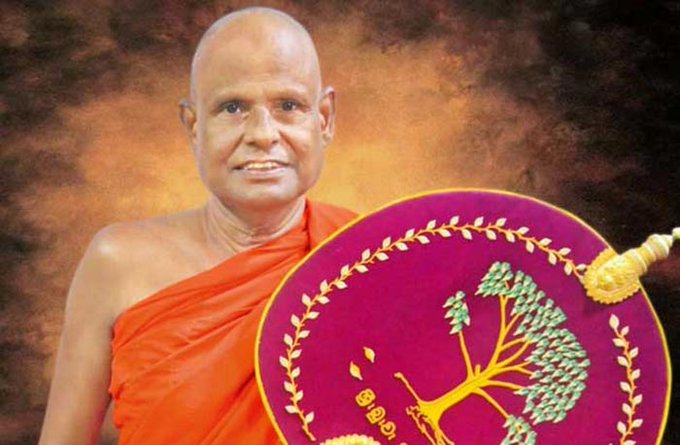

The case involving allegations of grave sexual abuse of a minor by Atamasthanadhipathi Venerable Pallegama Hemarathana Thero, currently before the Anuradhapura Chief Magistrate’s Court (Case No. 22424/2026 B), is raising serious procedural and victim protection concerns. Even in these early stages, Sri Lanka’s legal and institutional framework is demonstrating an inability to stand firm, neutral, and deploy measures that secure the best interest of the child when power and vulnerability collide.
As legal proceedings are ongoing, the Law & Society Trust does not comment on the facts in the case or the guilt or innocence of any party. We only draw attention to structural and institutional gaps of the state response mechanism that must be addressed to ensure that all parties are treated and protected equally before the law.
Strict Adherence to Legal Standards Protects against the Extraordinary Power Imbalance of Parties
The accused is the Chief Prelate of the Atamasthana, among the most senior religious positions in Sri Lanka, who was reportedly represented by over thirty lawyers in court. The victim is a fifteen-year-old girl who was allegedly first abused at approximately eleven years of age. Her mother has been arrested and remanded in the same case. The girl has no functioning guardian, and the question of who listens, takes instruction and ensures that her rights are protected is unclear. These dynamics strike at the heart of what equal protection under the law means in practice. Article 12(1) of the Constitution guarantees equality before the law. Article 27(13) obliges the state to protect children from exploitation. Section 260 of the Code of Criminal Procedure entitles every aggrieved party to legal representation. These are not aspirations; they are binding legal obligations.
The Challenges
Challenges in implementing court orders and the suspect not having been presented to the court are concerning. Despite an order issued on 9 May directing the accused’s transfer to the Colombo National Hospital from the private hospital that he was at, a second order was required on 13 May before the transfer was effected on 14 May -five days later. From the perspective of citizens and society, institutional arrangements have bent to accommodate a powerful clergyman.
The girl was placed under state protection following a complaint lodged with the Nittambuwa Police on 6 March 2026. The state holds custodial responsibility for her. A lawyer may only act on a client’s instructions or those of a legal guardian her mother, her natural guardian, is remanded as a co-accused. The question of who is acting in the interest of the child, who speaks for the child, and who is ensuring that the child is protected in court remains, as yet, unanswered.
We acknowledge that the NCPA has played an active role in bringing this case to court. We invite the NCPA to publicly clarify what legal representation and protection measures have been taken on behalf of the child, and what obstacles it faces in doing so.
Our Demands
- The Law & Society Trust calls on the state to act urgently on the following:
- Ensure the independent, transparent, and timely investigation and prosecution of this case
- Ensure the child victim’s rights and interests are protected in the prosecution of this case and that she has immediate and full access to protection and support that secures her mental and physical well-being
- Ensure that no special treatment is meted out to suspects based on their status or affiliations
- Operationalise the National Women’s Commission without further delay.
Every society is judged by how it treats its most vulnerable. This case is another test of whether Sri Lanka’s legal system delivers equal protection in practice, and not merely in principle.
The Law & Society Trust