
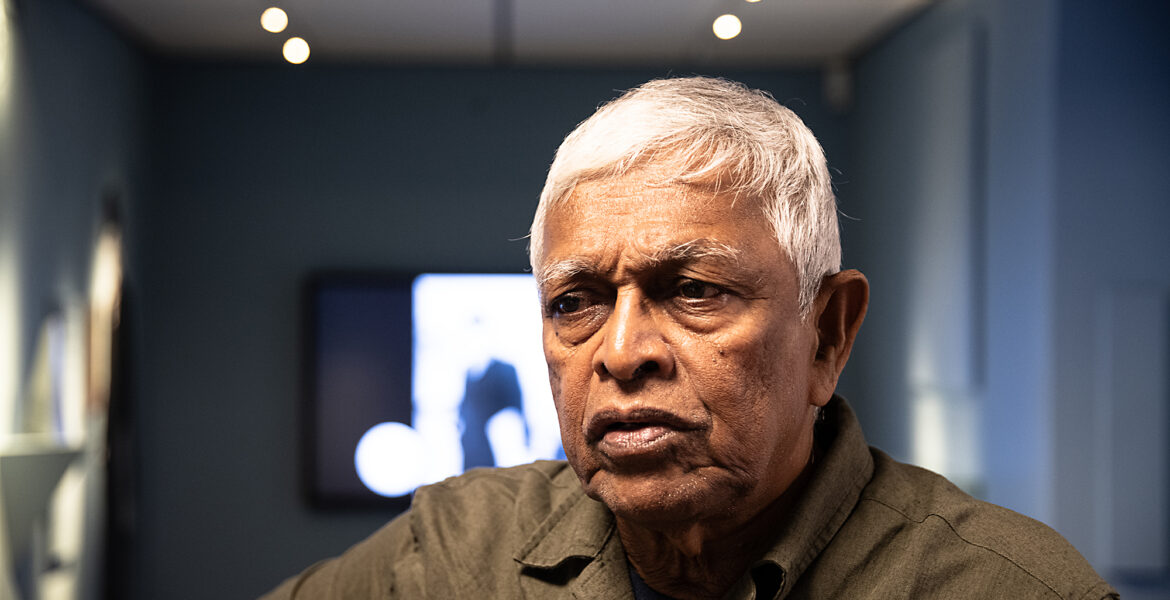

Image: Human rights defender Brito Fernando, who leads the organization Families of the Disappeared in Sri Lanka, will be awarded the Per Anger Prize in 2026. Photo Credit: Johan Mikaelsson
“I think this important award above all reminds our government that the international community still cares and is interested in the enforced disappearances in Sri Lanka,” says Brito Fernando.
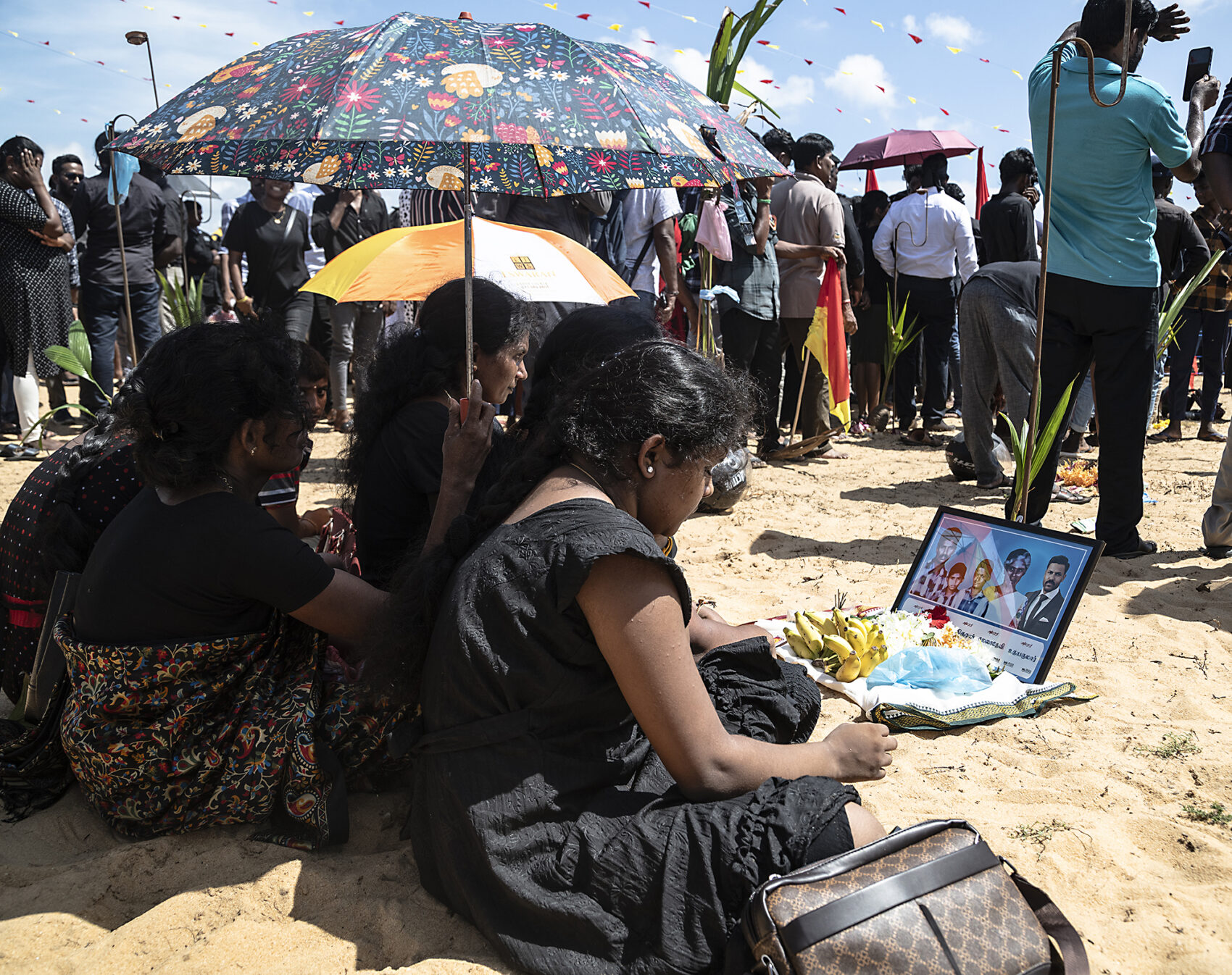
The day we meet, May 18, marks the anniversary of the “Mullivaikal Massacre,” when thousands of Tamils were killed and disappeared during the final days of the civil war alone.
– Regardless of what is done in the UN Human Rights Council, including the resolution that the Swedish government supports, they are now openly saying that they support the work to get to the bottom of the issue of disappearances in Sri Lanka. In this way, it can have a strong effect on our government.
But many years have passed, and not much has happened.
– Yes, we cannot expect much from this government. For now, we are concentrating on the temporary payment that it has promised. It has to pay, but is unwilling to do so. The families have pinned a lot of hope on this government, as many in the JVP were involved in the 1971 and 1989 uprisings. Therefore, we have to push.
– The government says it will not participate in any international investigations, but accepts the UN program for payment of compensation and truth-seeking. There must be some form of accountability. Those who are guilty must be punished so that others do not do the same in the future.
At what level can action be taken – is it against military decision-makers, responsible politicians, or even against individual soldiers?
– The people supported this government in the election, so it just needs to go out and talk to people in affected areas and ask them. There must be demands for compensation and truth.
Are there any cases where you have reached the desired outcome and received justice?
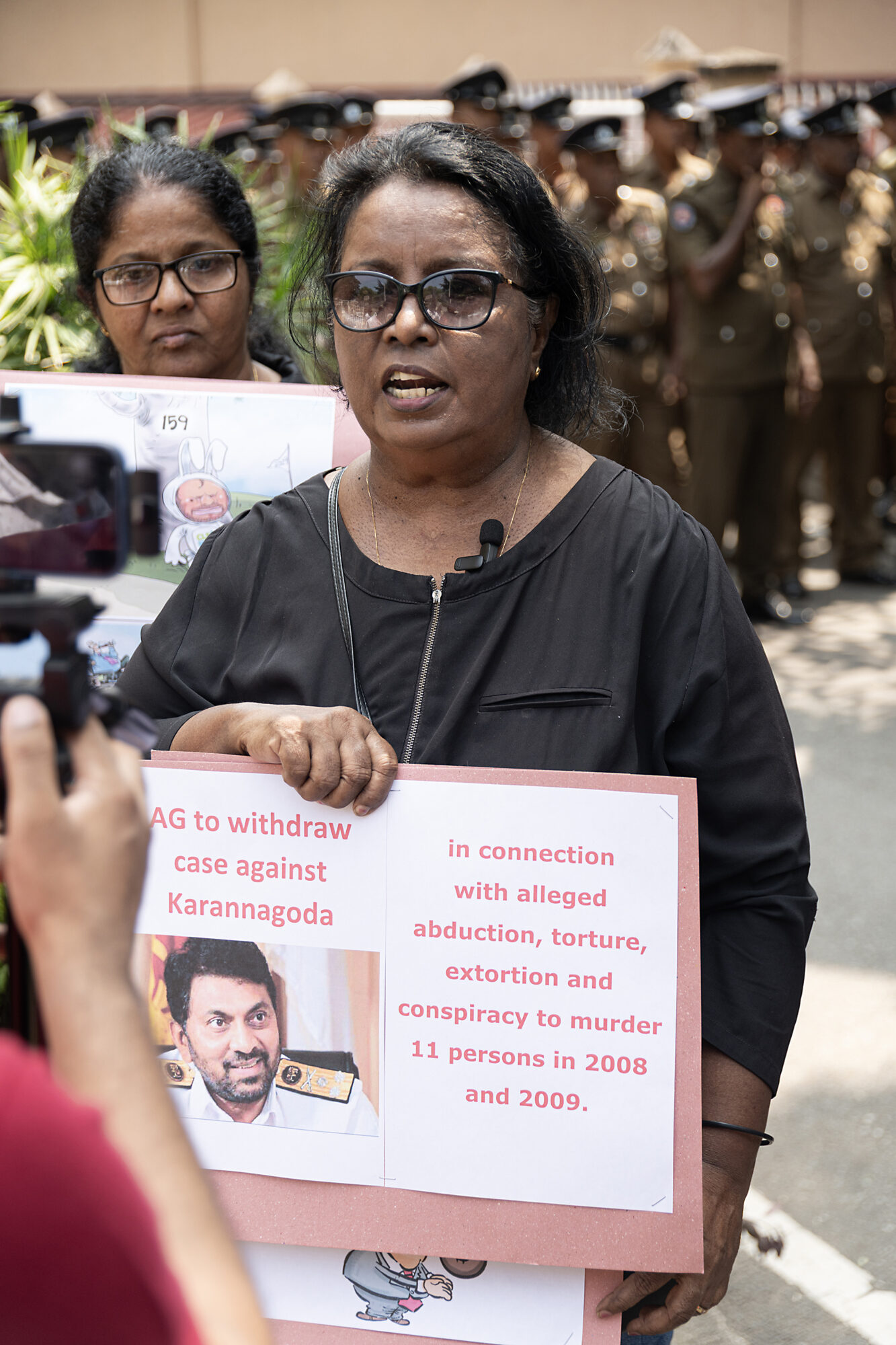
– No, no. If we take the famous case of Prageeth Eknaligoda [the satirist who disappeared in Colombo in January 2010, editor’s note]. They are still working on that case in court. So that’s something. Then we have the case involving the kidnapping of eleven young people, which was carried out by the Sri Lanka Navy, in 2008. Recently, the Attorney General removed the name of the then commander. The families of the victims appealed against the decision and the Supreme Court then decided that he should be included among the accused. That’s something.
– But I worry about the legal cases, because then it has to be proven “beyond reasonable doubt”. We have experience of this, when workers were shot dead in 2012, when they protested for clean drinking water. All the suspects were released. That is why I am worried; if we do not manage to achieve a strong opinion, we will not achieve results. Politics always get involved.
When it became known that you would receive the award, what was the reaction in Sri Lanka?
– Nothing has come officially from the government. The Prime Minister congratulated me when I met her, but I don’t know if it’s from the heart. In other circles there have been positive reactions.
– We will arrange something when 300-400 mothers receive me at the memorial for the disappeared and the award is presented there. The campaign can be strengthened by the fact that the Swedish government still cares about Sri Lanka.
– Other human rights organizations and the Human Rights Commission (HRC) have been positive. The HRC has also made reports on disappearances. But the government does not accept their recommendations. We need to work with the HRC on this so that this is recognized, so that pressure is built. Their recommendations must be implemented.
What more can be done concretely at this point, in 2026?
– The investigation into the mass grave in Matara must be reopened. Excavations have been carried out and 157 skeletons were found at that time. DNA samples sent to the US showed that the dates were not correct. But the bones were sent to the US during Gotabaya Rajapaksa’s time as head of the Ministry of Defense [2005-2015, ed. note]. We do not believe that result, but are certain that bodies were buried there when Gotabaya Rajapaksa [former military commander, head of the Ministry of Defense and president, ed. note] was the commander in charge and 1,100 people were reported missing in that district.
– The legal case can be reopened. Anyone who wants to can contact the police to file a report. We will do that.
– Another thing we are going to do is to organize cultural events on the streets – music and exhibitions. We have experience from that from 2015, when we carried out campaigns. That way we can get attention and impact.
– We also need to reach the third generation of the affected families. Otherwise we cannot continue. Otherwise this will disappear. The older ones are participating, but at the same time they are a little afraid that the younger ones will participate, if something happens in the future. But the fight must continue.
– The government knows that the issue will die out in the future. They want to show internationally that they are doing something, even if they are doing nothing at all. The government says they want to work with the UN, but not involve any international forces in demanding accountability. They are not interested. They are afraid that the military, who were the worst perpetrators in the north, east and south. The military has close cooperation with the government, which must take this seriously.
Will you go to the places where disappearances have taken place?
– We visit about ten places regularly. Many people don’t use a phone or computer, so they need to know what’s going on. At least twice a year. We also have some monthly meetings to keep in touch.
— That’s why we think it’s important now to get these temporary payments of 200,000 rupees that the government has promised. It will be an encouragement, that they will at least get something. This government is not paying anything, even though it has set aside money for payments to 5,000 families. So far they have not paid anything at all.
– The previous government under Ranil Wickremesinghe, who himself was involved in torture camps and other things [as a politician during the wave of disappearances in the late 1980s, ed. note], paid compensation to 4,000 families. This government must do what it promised. But at the promised rate, it would take ten years to pay all the families that are registered. Not all of them have even been registered yet.
Is the fight for Tamils who disappeared during the civil war now being fought separately?
– From 2012, we worked together. It happened after talks and an agreement with the bishop in Mannar. We worked with about sixty groups. After 2015, when a new UN resolution was released, we held a joint march in the east and organized ourselves there.
– Recently, they say that unfortunately, they have no confidence in the Sinhalese government and are demanding international justice. This is justifiable because the establishment of the Office for Missing Persons [OMP, the office for missing people, ed.], and the Office for Reparations [the office for compensation, ed.], has not yielded any results.
– No truth has come out. The government is not saying anything. They say some are dead and others have remarried.
– The OMP is also not working because they do not have enough staff. They have had 29 employees and would now get another 60, but they would need 250. They say they are following the international resolutions, but nothing is happening. And when Gotabaya Rajapaksa came to power in 2019, support for the resolution was withdrawn.
– This government did not reconnect, but is silent. They say that no international mechanism is needed, but they will work with the UN. I do not know what that means. That is how it is going.
– We must show the international community that this government has no political will to achieve a concrete solution to this issue. No government has had it. This government should have it, because their party comrades disappeared in 1971 and 1989. There was so much hope that they would do more.
– Now we see that previous governments have actually done more than this one. So we have to wait and see. The campaign must continue to put pressure.
It takes both hard work and strategic thinking to get ahead, right?
– With 35 years in this field, we have achieved something. It is not easy. We are happy to have achieved something. But it still feels like it is not achieving anything, that nothing is happening. The families of the victims must feel that it is achieving something. Payment of money would mean something. It would be an interim goal, then more is needed.
Can you gain momentum through the price?
– We have to create it ourselves. It doesn’t happen by itself. Family members were happy when the award was announced. It can encourage them, so that together we can put pressure on the government. We are grateful to the Swedish government and those who nominated us to receive this award. Now we have to use it.
Are parts of society and perhaps some within the government more interested?
– We hope to involve civil society organizations. There is no common network in Sri Lanka that works comprehensively to achieve results, but it happens on specific issues. The victims are there, but more people need to understand that something similar can happen to them too.
So that it doesn’t happen again.
– Yes. In a case involving an MP who was killed in the 2022 protests, the family was compensated with ten million rupees. In another case, the family of a slain politician received 5.1 million. The families of the disappeared are not treated in the same way. The government says it is coming out with strong action packages, but it is not happening.
Disappearances have become a common occurrence in Sri Lanka, how come?
– After 1983, and the ethnic riots when 3,000 to 4,000 were killed and property was destroyed, the LTTE became stronger. The government then began to retaliate through disappearances. We do not have an exact figure on how many people are involved.
– People have no trust, as they have filled out so many forms over the years, to the UN and others. If they know it is real, they will register. Now they don’t. I think the government wants to close the OMP and introduce a deadline for registration.
Bureaucracy surrounds the issue – does that make it harder to move forward?
– Partly that and the fact that those who now hold positions in the army were involved in 1989. Action is being taken around the investigation into the Easter attacks [April 21, 2019, when more than 270 people were killed in Islamist terrorist attacks targeting churches and foreign tourists, ed.] and that is good. But some of the government appointees have connections to 1989, so we suspect that is why they are reluctant to take action against the forces.
Is it the same with missing Tamils?
– Yes, and that is why the Tamil people say that there must be an international investigation. And they are right about that. If nothing happens, then it must be so. The government takes no responsibility and, for example, does not release any lists with the names of those who surrendered in the final stages of the war. So why should they believe in this system? International influence is needed. At the same time, we know that neither India nor China will help us. We could act together again, [Tamils and Sinhalese, ed. note].
The core is the same, right?
– Yes, people have surrendered to the government and then disappeared. Then the government must take responsibility. Even if there are differences, we should try to find ways to fight together.
It’s hard work and mentally it must be stressful to constantly think about these questions?
– After all, we are lucky to be able to work on something that we really want to work on. Most people can’t. And we have achieved some results. But the victims must feel that they are getting something out of it. The truth must come out. Compensation must be given. Then people can continue to have a certain amount of trust in this government.
Is there a risk that money that has been set aside will instead be used for other purposes due to the economic crisis?
– Yes, they can argue for it. But money has been allocated for many different things. This must be prioritized. We have had a meeting with the Prime Minister and asked what they intend to do, if they can tell us about their plan and the time frame for its implementation. But nothing is happening.
Even at the UN level, it is a fact that very little is happening.
– But fortunately, the issue remains on the UN agenda. Other countries can take action. But the government can still say they do not support this.
(Excerpts of the English version of an article published in Swedish in SYDASIEN Online Magazine, written by Johan Mikaelsson.)
(Caption by SLB and all photos are from the SYDASIEN)