
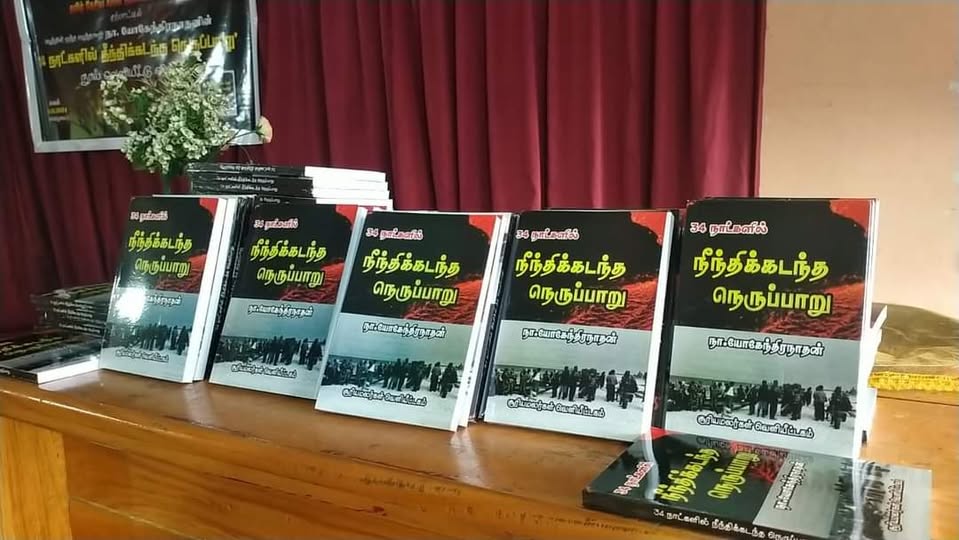

Some books written and published in the Tamil language by Teepachelvan are currently being held by Customs. I haven’t read the books, and I can’t comment on their content, but I don’t think anyone involved in this absurd decision has read even a paragraph of them. Even if they have read the books, who are they to decide whether an author has violated a criminal law serious enough to suspend the circulation of his books?
There are three perspectives to this issue: the reasonableness of the administrative decision; the breach of Fundamental Rights, and criminal liability.
All public administrative authorities, including the Office of the Customs and the Ministry of Cultural Affairs, are required to follow administrative law principles, including reasonableness and the principles of natural justice. I can’t see how they will justify their actions at a writ hearing before the Court of Appeal.
Of course, freedom of expression can be limited by certain factors, but I don’t see how these decisions of public authorities can survive a fundamental rights application in the Supreme Court.
Unfortunately, our old colonial criminal law and more recent draconian inventions such as the PTA and the ICCPR Act provide inroads for the police, at least for a short time. Under the pretext of further investigations, the police can drag the matter on for months, if not years, while keeping the books in custody. They may attempt to rely on the following laws, though this is not an exhaustive list.
(1) Prohibition of publication under the PTA (e.g. sec 2 – causing communal disharmony; sec 14 – prohibition of publication, though this has been significantly amended; without relevant regulations this section confers no powers on the authorities).
(2) Offences under the ICCPR Act (e.g. sec 3 – advocating racial or religious hatred).
(3) Provisions relating to publications containing anything in the nature of hate speech (e.g. Penal Code sec 291A – uttering words with deliberate intent to wound religious feelings; sec 291B – malicious acts intended to outrage religious feelings; sec 484 – intentional insult likely to cause a breach of the peace) and the draconian sedition law (Penal Code sec 120 – exciting disaffection against the President of the Republic).
It is this last provision (sec 120 of the Penal Code) that has been cited by Customs to hold the publications. In theory, the use of any of these criminal laws against writers can be challenged even in the lower courts; however, in practice this could go very badly because judges and lawyers may have to wait until Sinhala or English translations are commissioned by the court, followed by legal scrutiny.
These preposterous Penal Code provisions were originally introduced by British colonial rulers to protect the Queen from challenges by the natives. It is time we force lawmakers to discard these archaic and absurd laws, as well as more recent legislation introduced by previous regimes which were original introduced to protect their own political interests.
I think our friends in government should take a deep breath and withdraw their official directives, so that Customs can release the books to the author. Then our friends should take a break from their rat race and do a comprehensive stocktake of what was on their to‑do list, and consider whether they are in fact ticking off the boxes on their original list.