
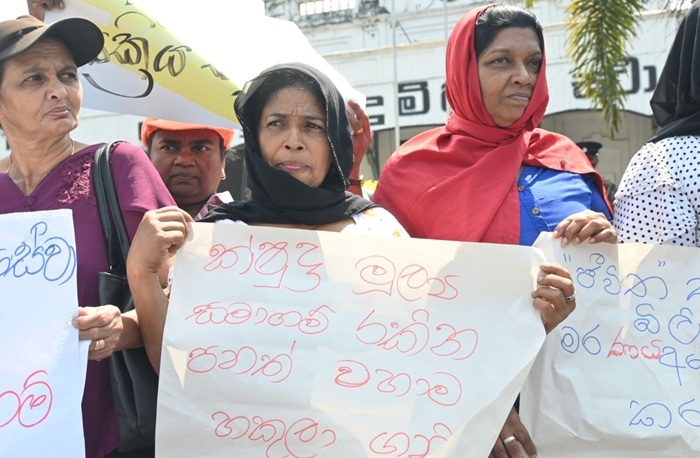

Parliament passed the Microfinance and Credit Regulatory Authority Bill into law on 4 March, establishing a new regulatory framework for Sri Lanka’s microfinance and moneylending sector. Deputy Minister of Finance and Planning Dr. Anil Jayantha said the main objective of the Act is to create an Authority empowered to license and supervise what he described as an under‑regulated sector, with the stated aim of protecting borrowers from exploitation and ensuring financial stability.
However, the Yukthi Collective has expressed sadness and disappointment over the passage of the legislation, stating that the law contradicts commitments made by the current government prior to coming into office. The group pointed to the National People’s Power (NPP) manifesto pledge to take measures to alleviate the burden of predatory microfinance loans with high interest rates on women, arguing that the new Act instead adds to the pressure faced by already indebted women borrowers.
In a statement, the Yukthi Collective described the legislation as a continuation of policies inherited from the previous administration, characterising it as a legacy of the Ranil Wickremesinghe government. According to the group, the law fails to address the root causes of the microfinance debt trap and ignores demands for debt justice for women. It further argued that the Act does not recognise the links between household debt and public debt, and that the country’s cycle of national indebtedness is sustained by weak economic growth driven in part by poor access to affordable credit.
The group also criticised the composition of the newly established Authority, noting that the Act does not make equal representation of women mandatory. It questioned how the regulatory body could adequately understand the lived experiences of women borrowers or make decisions that recognise women’s paid and unpaid contributions to sustaining households and communities if representatives of women borrowers and their self‑run organisations are excluded.
Referring to the promise of “system change” made during the election campaign, the Yukthi Collective said millions of indebted households voted for the NPP with expectations of fundamental reform. Instead, it said, those voters have been let down during the law‑making process, both in terms of the focus and the substance of the new Act. The group described it as appalling that NPP parliamentarians, including women members, appeared not to have read or fully understood the bill they enacted, and failed to consult rural credit community providers within their electorates.
According to the statement, predatory lending exists in both the formal and informal sectors, yet the Act fails to clearly identify, define, or prohibit predatory lending and debt recovery practices. The Yukthi Collective alleged that the legislation serves to cover up the Central Bank’s failure to properly regulate Licensed Finance Companies in the interests of citizens.
The group further claimed that the largest offenders in predatory lending are major finance companies, some of which include parliamentarians among their deposit‑holders. It argued that this creates a conflict of interest, allowing certain lawmakers to benefit from excess profits generated through exploitative practices at the expense of poor, predominantly rural women.
The statement warned that while law reform should discipline abusive actors in credit delivery, the new Act risks eliminating community‑based and community‑managed lenders through excessive regulation. These include death donation societies, farmer associations, and urban and rural women’s collectives, which the group described as lifelines for vulnerable working‑class women and a defence against harmful recovery practices.
Addressing the broader policy context, the Yukthi Collective argued that the driving force behind the new law is not the needs of borrowers but market‑ and capital‑friendly structural reforms demanded by international financial institutions. It traced this trajectory from the Microfinance Act of 2016 through amendments under the previous administration, noting the role of the Asian Development Bank (ADB) in promoting such reforms through loan conditionalities.
According to the group, the 2026 Act incorporates some changes suggested by the Supreme Court in 2024 but largely ignores demands raised by affected communities. It stated that the NPP government advanced the legislation in line with ADB loan requirements, continuing a policy approach that deregulates banking, finance, trade, and investment while over‑regulating the savings and credit institutions of the poor. This, the statement said, reflects a bias towards big capital that the NPP had criticised while in opposition.
Concluding its statement, the Yukthi Collective outlined the reforms it believes are necessary, calling for financial and banking policies that make credit from state banks and public funds accessible and affordable to women producers in agriculture and micro‑ and small‑scale businesses. It said such reforms should be accompanied by decent wages and social protection for workers, with the aim of improving household opportunities for dignified livelihoods and decent lives.Yukthi Collective Slams New Microfinance Act, Says Law Favours Big Finance Over Indebted Women