

As social‑media campaigns intensify calls for the removal of the Attorney General, Sri Lanka is once again grappling with questions about political pressure on its prosecutorial and judicial institutions. At the same time, concerns long pushed to the margins—delays in high‑profile cases, conflicts of interest within the Attorney General’s Department, and the proposal for an independent prosecutorial authority—have surged back into public debate.
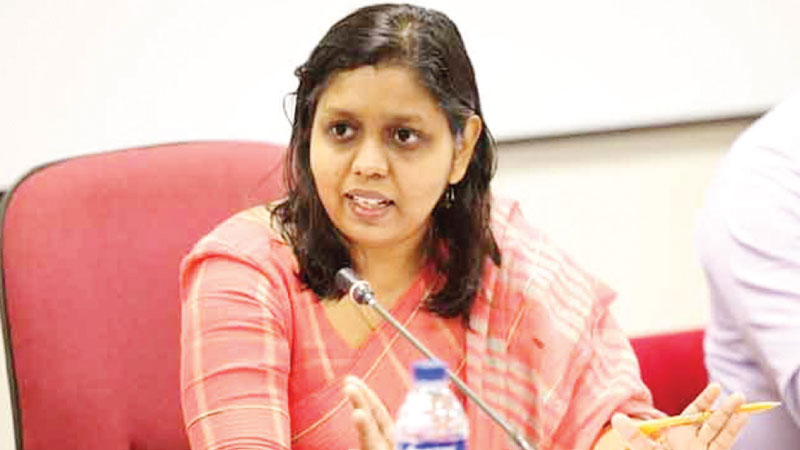
In an interview with the Sunday Observer, National People’s Power (NPP) MP Lakmali Hemachandra addressed the mounting criticism and outlined the Government’s position on institutional independence and reform.
Hemachandra stressed that the Attorney General’s Department, like all public offices, is open to scrutiny and that the Government recognises the public’s right to protest. She dismissed allegations that the demonstrations calling for the Attorney General’s impeachment were orchestrated or encouraged by the Government, insisting the Department continues to operate independently and that the administration maintains a constructive working relationship with it. If wrongdoing were ever established, she added, the Government has constitutional avenues for removal and has no incentive to rely on “below‑the‑belt tactics.”
Although impeachment rhetoric continues to circulate online, Hemachandra reiterated that the Government has not considered such action. Criticism of public offices, she noted, is not new and peaceful protests fall well within democratic freedoms. For that reason, she argued, there is no basis for the Government to condemn demonstrators who have not violated democratic norms, even as it remains committed to safeguarding the Attorney General’s independence.
Addressing concerns about structural conflicts of interest, Hemachandra acknowledged that the Attorney General’s dual advisory and prosecutorial roles have raised questions for decades. The NPP’s own policy platform includes the establishment of an Independent Prosecutor’s Office—an idea driven by historical allegations of political bias, stalled investigations, and impunity in high‑profile cases. Such an office, she argued, would create the necessary distance from the State when handling sensitive or politically charged prosecutions. A Cabinet committee is now reviewing the proposal.
Responding to warnings issued jointly by the Bar Association and the Judicial Service Association, which cautioned against social‑media‑driven interference in ongoing cases, Hemachandra said the Government does not view current protests as extraordinary. Many activist networks, she said, operate independently of the Government and have frequently been critical of it. Public scrutiny of institutions—including the Executive, Legislature, Judiciary and law‑enforcement arms—is, in her view, an unavoidable feature of democratic life.
On the question of guaranteeing independence in a future Director of Public Prosecutions model, Hemachandra noted that international structures vary widely. While Sri Lanka relies on presidential appointments, other countries elect their prosecutors. She suggested that the committee studying the proposal could consider democratising prosecutorial appointments, with wider stakeholder and public input.
Discussing judicial oversight of prosecutorial decisions, Hemachandra said that while the Attorney General’s Department is afforded certain protections to ensure justice officials can perform their duties without fear, courts have, in several instances, reviewed and overturned its decisions under Fundamental Rights jurisdiction. The challenge, she argued, is balancing public expectations of justice with institutional safeguards for those who administer it.
Amid concerns that Sri Lanka’s justice institutions are being systematically undermined, Hemachandra pointed to continuity in senior appointments as evidence of non‑interference. Judicial promotions, she said, have been based on seniority and merit, and the Government resisted an Opposition attempt to form a Parliamentary Select Committee on the Judicial Service Commission—an intervention she described as a threat to judicial independence.
On the persistent delays in prosecutions, Hemachandra acknowledged deep frustration rooted in decades of unresolved cases: enforced disappearances from the late 1980s and the war years, attacks on journalists and activists, and stalled investigations into politically sensitive crimes. Many of these failures, she conceded, have contributed to public distrust. Reforms such as the Proceeds of Crime Act and the proposed Independent Prosecutor’s Office, together with investments in court infrastructure, digitalisation and technology, aim to strengthen institutional capacity and reduce delays.
Hemachandra expressed confidence that as reforms take shape, public trust will gradually rebuild—and pressure on institutions such as the Attorney General’s Department will diminish.