
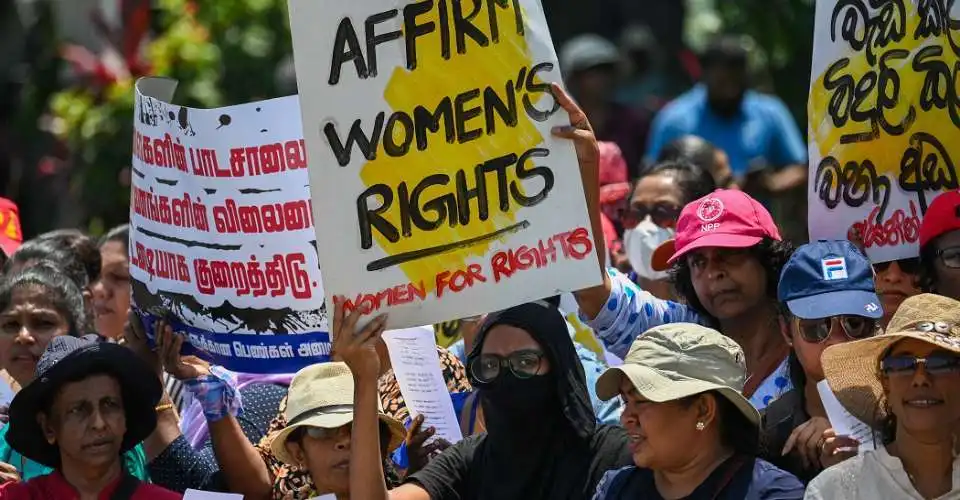

Over the past few decades, Sri Lanka has seen notable progress in strengthening women’s dignity; political, economic and social participation; rights; and legal and cultural protections against violence and discrimination. These gains are the result of sustained struggles, initiatives and advocacy by manywomen—and some men—who have invested their knowledge, skills, resources, time and, in some cases, even their lives in this cause.
A significant milestone in this journey is the Women’s Empowerment Act No. 37 of 2024. This legislation seeks to ensure women’s rights and promote equality and empowerment. It aims to reduce discrimination against women and increase women’s participation in decision-making processes.
Key features of the Act include:
• Ensuring the protection of women’s rights
• Enabling women to make decisions that shape their lives and enjoy equal rights within families and society
• Affirming rights related to voting, employment, property ownership, equal pay, protection from sexual violence and access to education
• Establishing a Women’s Commission to implement laws and policies, promote gender equality and support the empowerment of women
• Addressing societal barriers through awareness‑raising initiatives aimed at reducing discrimination against women, including working women
The National Independent Women’s Commission created under this Act is a comparatively strong institution empowered to implement relevant laws and policies and to remove barriers affecting women. The Commission was established last year, with members selected and a Chairperson elected. Notably, the Commission includes multi‑sectoral experts and reflects ethnic, religious, linguistic and regional diversity.
A particularly commendable appointment was that of Dr Ramani Jayasundara as Chairperson. Dr Jayasundara is widely recognised in Sri Lanka for active advocacy on human rights, strong defence of women’s rights and dignity, and legal work focusing on the protection of women and human rights more broadly.
Section 5 of the Act outlines the powers of the Commission, which include receiving, examining and investigating complaints regarding violations or potential violations of women’s rights; intervening in court proceedings with the court’s permission; collecting evidence, including requesting information and reports; and issuing recommendations. The Commission is required to investigate a complaint within one month of receiving it, and where necessary, to initiate legal proceedings with the appropriate authority.
Dr Jayasundara’s impartiality, commitment to justice, independence from authority and ability to approach social issues through an intersectional lens created strong expectations among social activists that this new Independent Women’s Commission would become a model institution for other independent bodies. Consequently, many—including myself—had been closely observing the Commission’s early work over recent months.
However, significant challenges soon emerged. Last September, after only five months in office, Dr Jayasundara and other Commission members encountered substantial obstacles that restricted their ability to function independently and effectively. In particular, the Presidential Secretariat appeared to disregard the activities of the Commission rather than facilitate them.
No response from the President
The failure to provide the Commission with an independent office, staff or funding for approximately five months has raised serious concerns. Dr Jayasundara has repeatedly written to the President on these matters, yet—as of last Monday—there has been no response. Such neglect undermines the dignity and credibility of a Commission created specifically to uphold women’s self‑respect and advance women’s leadership and decision‑making.
Women already face considerable challenges in meeting social expectations, engaging in economic activity and participating in public life. Persistent institutional indifference creates additional burdens, leading to psychological distress and discouragement for women willing to take on socially responsible roles while managing personal responsibilities. After being unable to fulfil the duties of Chairperson for five months due to these constraints, Dr Jayasundara has submitted a letter of resignation to the President. The letter was sent only to the President, so its contents are not publicly known.
It is a misconception that appointing a woman as Prime Minister or electing women ministers alone signifies genuine progress in women’s rights. What truly matters is a government’s political commitment to advancing these rights through consistent policy and effective implementation. Independent institutions must be strengthened and provided with timely financial, human and physical resources to serve the public meaningfully.
Patriarchal structures—often unconsciously—do not prioritise women’s needs. Although the government may be managing other pressing issues, such as Cyclone Ditva, challenges in education reform and economic planning, this does not justify neglecting the Women’s Commission.
If the government wishes to demonstrate a genuine commitment to women’s rights, reject patriarchal norms and affirm that women’s needs are a priority, it must act decisively. This includes declining to accept Dr Jayasundara’s resignation, ensuring the Commission’s independence and impartiality, and immediately providing a dedicated office, staff and funding so that Dr Jayasundara may continue serving effectively as Chairperson.
( Adopted and translated form a FB post by Weere Weerasingham)