
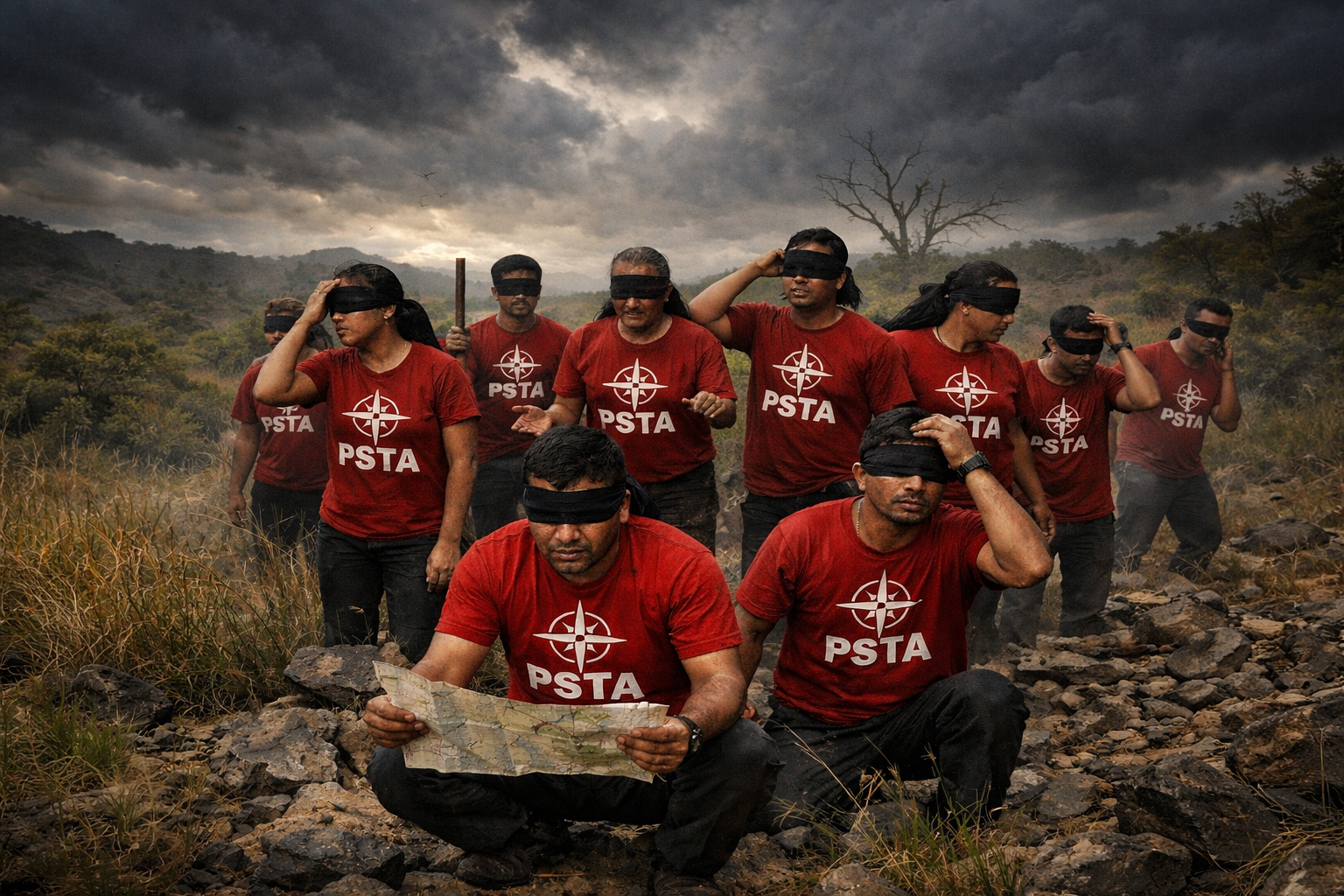

Image: Has the NPP Lost Its Way?
Repressive government actions that restrict citizen behaviour undermine political legitimacy and fuel anti-government sentiment, as history has repeatedly demonstrated, the Soviet Union being a case in point. Rather than quelling dissent, repression often invigorates social movements and political participation. For democracy to succeed and sustainable governance to take root, governments must involve citizens in reforms, foster consensus through public engagement, and prioritise dynamic interactions over outdated repressive measures. Public consensus and accountability provide stability, while coercive measures against populations generate instability.
Pledged to abolish the draconian PTA
During the 2024 Presidential and Parliamentary Elections, the National People’s Power (NPP) pledged to abolish the draconian Prevention of Terrorism Act (PTA of 1979). Page 129 of the English version of the NPP’s manifesto, A Thriving Nation, A Beautiful Life, explicitly states: “Abolition of all oppressive acts including the PTA and ensuring civil rights of people in all parts of the country.” However, this specific commitment cannot be found in the Sinhala version—a discrepancy the NPP and its legal team must clarify. Both versions, however, refer to abolishing the Executive Presidential System.
For 45 years, the PTA has devastated the lives of many Sri Lankans, especially minority communities, treating public opposition, political disruption, and threats to political power as acts of undeclared terrorism. Even without the PTA, previous governments resorted to such repressive activities. Civil society organizations, human rights defenders, and even the International Monetary Fund have called for its repeal, recognizing that broad counter-terrorism rules restrict civil society scrutiny and enable official corruption.
The Janatha Vimukthi Peramuna (JVP), in Article 14 of its original Policy Declaration under “The Structure of the State,” pledged to completely abolish repressive legislation. Successive governments have faced domestic and international pressure to repeal this repugnant law. The people’s expectation was simple: repeal these dangerous laws that have been repeatedly misused against citizens. It is the only way a progressive government can rebuild the country while addressing the legacy of war and armed conflict.
Backtracking on Promises
The NPP government now faces a critical test of its electoral integrity. Implementation of economic pledges the NPP made, has met obstacles. It is due to factors such as, legislation enacted by the previous regime binding future governments to an IMF austerity framework, (despite the NPP government negotiating its way through to provide certain concessions to the people facing extreme economic hardship). It has shifted priorities on certain pledges based on diverse political aspirations, and the devastation both ante-facto and post-facto caused by the impact of Cyclone Ditwah. Due to this context, or not, certain important matters requiring neither long wait times nor huge resources appear to remain unaddressed.
Dr. Harini Amarasuriya and Promises
As Prime Minister Dr. Harini Amarasuriya stated while in opposition, there’s no justification to keep or replace the PTA. Has the NPP found something new after been in opposition, to keep the PTA in some other form, as an ongoing tool of state repression? However, this wasn’t the election pledge. The understanding during the campaign was clear: abolish the PTA. Those advocating for abolition were convinced that the PTA, instead of addressing terror attacks, contributed to worsening the situation through massive escalation of state terror against those seeking redress for socio-economic or national grievances.
NPP regime backtracking
For whatever reason, the NPP regime appears to be backtracking, following the footsteps of all previous regimes it once condemned. Instead of abolition, the government appointed a committee to propose a legal framework to replace the PTA—supposedly to address global terrorist threats while adhering to international human rights standards. With the support the government had received and with the backing of the international and national human rights defenders including at the United Nations, the government should have repealed it.
International Context
Internationally, anti-terror laws supposedly implemented to protect fundamental rights from terrorism have often worked in the opposite direction, violating and undermining those very rights. The Israeli occupation and genocide in Gaza provide the best contemporary example. Those advocating for Palestinian liberation are treated as terrorists—assaulted, arrested, detained—while supporters of Netanyahu’s terror campaigns face no consequences. In Australia, after the Bondi Beach attack on Jewish celebrants during Hanukkah, the government, led by pressure exerted by the opposition and dark Zionist forces, appears ready to further curtail democratic freedoms of those who criticize Zionism and Netanyahu’s terror regime.
Creating conducive environments that favour consultation and dialogue over repressive measures is widely considered a cornerstone of peaceful conflict resolution, fostering sustainable stability and addressing root socio-economic and political issues. Enactment and implementation of repressive laws have created the need for even harsher legislation, ultimately leading to explosive situations like what happened in South Africa, Ireland, and Sri Lanka. This is because such legislation is always formulated with the intention of repression, abuse, and misuse. Addressing societal burdens, healing wounds, and building bridges has always been the better alternative for progressive societies.
The Protection of the State from Terrorism Act (PSTA)
It is in this context, we need to consider the Protection of the State from Terrorism Act (PSTA), the new anti-terrorism bill tabled to replace the PTA. Currently under review and open for public input, the PSTA is presented as an improved version that will protect human rights. However, it retains the most concerning aspects of the PTA and provisions previous governments wanted to introduce under the Counter-Terrorism Act (CTA) gazetted in 2018 and the Anti-Terrorism Act (ATA) gazetted in March and September 2023. Both the CTA and ATA faced wide criticism and were not enacted. The new draft bill does not reflect what the NPP pledged to the people.
Broad Definition
The PSTA defines a terrorist offense as an act committed intentionally or knowingly to create a terrorist situation, intimidate the public, compel the Sri Lankan government or any other government to act or refrain from acting, or propagate war or violate territorial integrity or sovereignty. As before, this definition remains dangerously broad. Any government, including the current one, could use it to label legitimate public, civil society, and trade union actions as terrorism. The intention to “compel the Government” is designated a terrorist offense. Despite an exclusion clause stating that protests and trade union actions are not categorised as terrorism, the risk remains that this or any future government may brand public protests as terrorist acts.
Extended Detention Without Trial
The Inspector General of Police (IGP) can detain anyone by obtaining a detention order from the Secretary to the Ministry of Defence—initially for two months, extendable to one year from arrest. This raises serious concerns about judicial oversight. When such an order is in place, a Magistrate cannot grant bail or release a suspect. The bill also grants military personnel powers to stop, search, and arrest individuals on “reasonable suspicion” and seize materials. Had this existed during the 1971 and 1988-89 periods, one can only imagine the consequences.
Certain provisions such as judicial supervision, humane detention conditions, visits by judicial officers and human rights commissions, respect for privacy, and rights to family and lawyer visits appear to ensure safeguards. Yet in reality, these safeguards are difficult to obtain. Recourse to the Supreme Court to review abuse of power is neither easy nor inexpensive.
Executive Presidential Powers
The President will be empowered to issue Proscription Orders and Curfew Orders through gazette notifications without the necessity to declare an emergency. The Secretary of the Ministry of Defence can designate any place as a “Prohibited Place,” where even taking photographs or video becomes an offense punishable by three years in prison. The provisions under “Deferment of Prosecution” allowing the government to “rehabilitate” someone without prosecution are deeply concerning, reintroducing repression in subtle form. If the Attorney General can make a suspect confess, the AG can agree not to prosecute but refer them to a “rehabilitation” program.
Harsh Penalties and Surveillance
For associating with a “terrorist organization” as the regime defines it, or “Dissemination of Terrorist Publications” as the government interprets it, a person could face twenty years to life imprisonment and fines up to fifteen million rupees after a High Court trial. Distributing, selling, or possessing any publication with direct or indirect intent to encourage terrorism becomes an offense, including “recklessly” distributing a statement.
This poses significant threats to digital freedoms and privacy. Though Section 11 provides exceptions, considering how police ignore such exceptions when making arrests, one can imagine how this will be enforced in practice. The bill grants extensive surveillance powers. Any communication—including encrypted electronic communications—can be intercepted and decrypted. Knowing the debilitated nature of the Human Rights Commission of Sri Lanka, how informing it of an arrest within 24 hours will safeguard against abuse of power remains a valid question.
Criminalising Civic Activity
Any of the April or November “heroes” currently commemorated by the JVP and the NPP would have remained imprisoned or detained had an NPP government been in power then under these provisions. A key concern is that broad definitions could inadvertently criminalize legitimate civic activity, journalism, and public discourse. Posting a photo of people protesting could label someone a terrorist under the new bill. Section 78 is a very broad and vague definition, where “confidential information” could mean any ordinary activity carried out by journalists, social activists, and civil society members. Those activities could be interpreted as serious crimes.
Mandatory Reporting and Extraterritorial Reach
Section 15 of the Bill mandates reporting of information related to terrorism, with violations resulting in up to seven years imprisonment. Will these provisions be implemented harshly against those who seek justice, particularly non-majoritarian communities? Even recipients of information may be coerced into becoming state informants. Furthermore, this law transcends Sri Lankan boundaries. Section 2(c) makes clear the new law also applies to all Sri Lankan citizens living outside Sri Lanka, including dual citizens. The PSTA could be weaponized against diaspora communities documenting events in their home country. Commenting on Sri Lankan events on social media becomes illegal, even from abroad.
Conclusion
A Framework to Protect the State, Not the People
The PSTA retains the issues and shortcomings of the PTA, CTA, and ATA by failing to narrowly define terrorism and terrorism-related offenses to prevent abuse. Exclusionary provisions conflict with other definitional aspects (such as coercion by the state) and risk being undermined in practical implementation.
The title of the Bill reveals its intent. It’s intent is to protect the state and thereby the government in power. It lacks a people-centred framework focusing on violence against civilians and protection of human life and security. Several provisions undermine these objectives and appear inconsistent with fundamental rights guaranteed under the Constitution and international human rights instruments, including the right to fair trial and freedom from arbitrary detention.
Like the PTA, the PSTA grants President, the police, and the military extensive authority to detain individuals without evidence, criminalise vaguely defined speech, and arbitrarily prohibit gatherings and organisations without meaningful judicial oversight. It broadens terrorism’s definition to encompass crimes like property damage, restricts rights to freedom of assembly and speech, and permits police and military to stop, question, search, and arrest anyone without a warrant. It allows the Attorney General to impose “voluntary” custodial “rehabilitation” on individuals convicted of no crime.
By introducing this terrorism bill, the NPP government has either broken its promise to repeal the PTA or has lost its way. The new bill can suppress civil activists, journalists, and trade unions just as the PTA did.
The question remains: Has the NPP found something new after being in opposition that justifies keeping the PTA in another form as an ongoing tool of state repression? With the electoral support they received and backing from international and national human rights organizations including the United Nations, the government should have simply repealed the PTA—not appointed a committee to find ways of reforming it.
The people expected swift reforms. Time is running out. The NPP’s commitment to fulfilling election pledges is being tested. The answer to whether they have lost their way will be determined by what they do next.
20 December 2025