
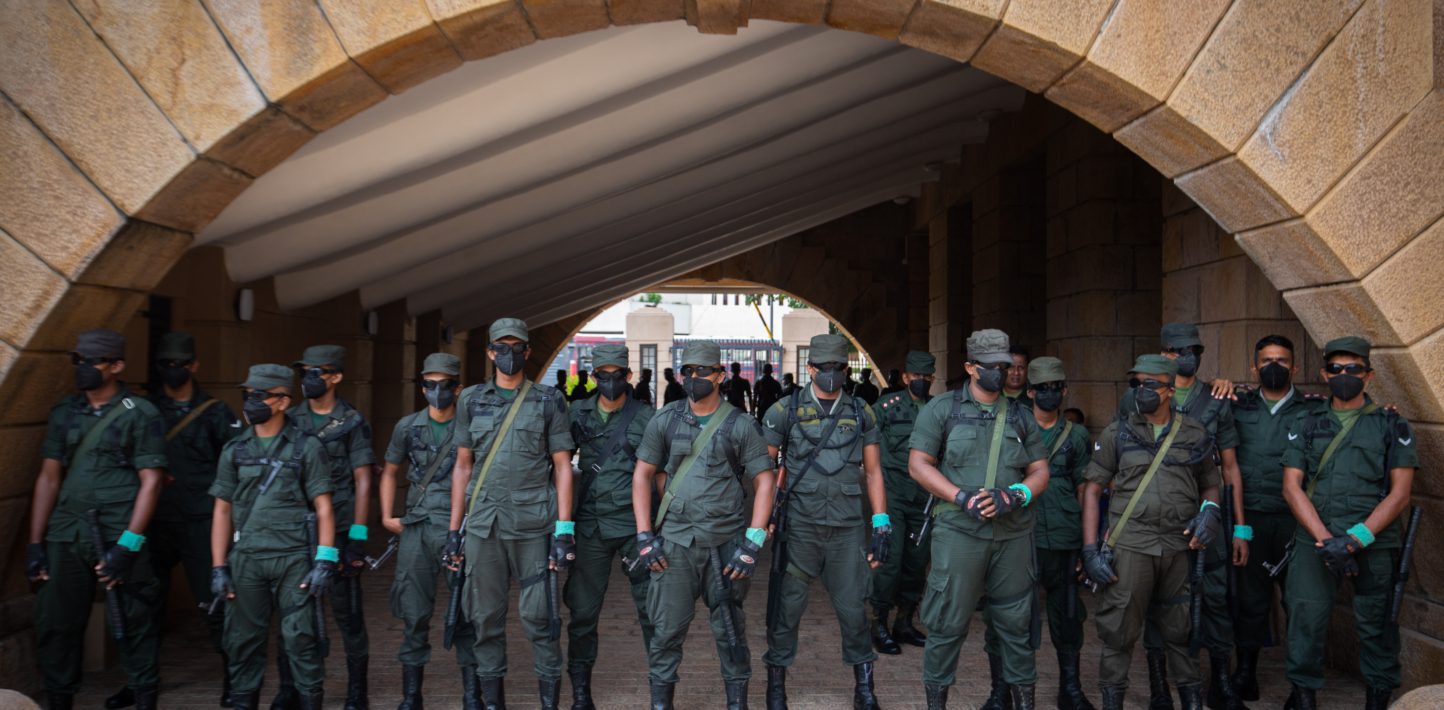

The Human Rights Commission of Sri Lanka recently addressed a letter to the President following the introduction of the Emergency (Miscellaneous Provisions and Powers) Regulations, No. 1 of 2025, which were enacted in response to the devastation caused by Cyclone Ditwah. The Commission expressed its condolences for the loss and hardship experienced by the people of Sri Lanka and emphasised the importance of ensuring that the recovery process upholds the fundamental rights of all citizens.
The Commission observed that the said Regulations appear to draw from a template set of regulations used on several previous occasions by previous governments. It was observed that several provisions of the said Regulations are incompatible with the fundamental rights chapter of the Constitution of Sri Lanka and relevant international human rights norms and standards.
In its letter, the Commission outlined several concerns regarding the compatibility of the new regulations with both the Constitution of Sri Lanka and international human rights standards. The Commission’s mandate, as established under the Human Rights Commission of Sri Lanka Act, empowers it to advise the government on aligning national laws and administrative practices with global human rights norms.
One of the primary issues raised was the broad authority granted to requisition any building, including residential premises, for disaster relief. The Commission argued that such powers could disproportionately impact the right to shelter and recommended that the regulation be amended to exclude residential properties or, at the very least, guarantee alternative accommodation for those affected.
The Commission also criticised the regulation that allows the president or authorised officers to require any person to perform work or render personal service in connection with national security or essential services. It warned that the vague language could lead to forced labour, which is a violation of constitutional rights, and called for the complete repeal of this provision.
Another significant concern was the mandatory forfeiture of property for offences related to essential services. The Commission noted that the scope of these offences is overly broad and could encompass legitimate trade union activities, thereby infringing on constitutional protections. It recommended that courts be given discretion in sentencing and the imposition of penalties, rather than enforcing blanket forfeiture.
The regulations also permit police and military personnel to detain or arrest individuals without a warrant for a wide range of offences, including consensual sexual acts between adults, which the Commission deemed irrelevant to public emergencies. Furthermore, the Commission highlighted the absence of a requirement to notify the Human Rights Commission of arrests and the imposition of mandatory death sentences under certain circumstances. It urged the government to remove references to consensual sexual acts, ensure timely notification of arrests to the Commission, and eliminate the death penalty from these regulations.
Freedom of expression was another area of concern. The Commission objected to the criminalisation of causing ‘disaffection’ among public officers, arguing that the term is overly broad and could suppress legitimate criticism and political speech. It stressed the importance of tolerating criticism of public officials, even during emergencies, and recommended the removal of this term from the regulations.
The prohibition on distributing posters, handbills, or leaflets deemed prejudicial to public security or order was also criticised for being subjective and potentially stifling free speech. The Commission called for the repeal of this regulation, as well as the one that criminalises the dissemination of rumours or false statements likely to cause public alarm or disorder. It argued that such provisions are ambiguous and risk imposing unreasonable restrictions on speech, especially during times of crisis when truth and falsehoods can be difficult to ascertain. The Commission suggested that only false information inciting imminent violence should be subject to criminal sanctions, as already provided for under existing law.
Expansive investigative powers granted to police and military officers were also flagged as problematic, particularly given the lack of adequate checks and balances. The Commission expressed concern about the risk of abuse and recommended that ordinary criminal procedures be applied, alongside the implementation of guidelines to prevent custodial deaths.
Finally, the Commission took issue with the regulation concerning the admissibility of statements, which excludes safeguards against confessions obtained by police officers. It warned that this could lead to violations of the constitutional guarantee against torture and called for the repeal of the regulation in favour of ordinary legal protections.
In conclusion, the Human Rights Commission urged the President to repeal or amend the highlighted provisions to ensure that the emergency regulations are fully compliant with the Constitution and international human rights standards. The Commission also recommended a comprehensive review and overhaul of the template regulations used during public emergencies, with input from relevant experts, to safeguard the rights and freedoms of all Sri Lankans in future crises.
Read the statement in full: HRCSL-Letter-to-the-HE-President-on-05_12_2025-compressed