

This question haunts every survivor, every family member who lost a loved one, every rescue worker who arrived too late. The uncomfortable truth emerging from post-disaster analyses is clear: while the storm itself was tracked and forecasted, Sri Lanka’s warning and response systems failed catastrophically, contributing to a death toll exceeding 470 people and leaving over 1.4 million affected.
This was not an act of God that arrived without warning. This was a preventable tragedy. It was made worse by systemic failures in communication, discrimination in information dissemination, and delayed official responses that left vulnerable communities defenceless against nature’s fury.
However, we need to keep in mind that no meteorological agency will issue warning two weeks beforehand; it is because such events are highly uncertain and unpredictable. They issue warnings perhaps seven days prior. But they do so with a high level of uncertainty. Only three days advance is generally the accepted accuracy. It is the same in Australia.
The Storm Was Forecast, But Who Was Listening?
Between November 18 and 24, meteorological agencies detected and tracked the cyclogenesis of what would become Cyclone Ditwah. The Indian Meteorological Department (IMD) monitored the developing low-pressure system with increasing concern. Warnings were available up to two weeks before the storm made landfall on November 28. The raw meteorological data existed. Regional tracking was operational.
Yet somehow, this wealth of information failed to translate into effective action. The disconnect between what was known scientifically and what reached ordinary citizens represents one of the most damaging institutional failures in the country’s disaster management history.
The Sri Lanka Meteorology Department from November 24 issued general rain and flood alerts but lacked the urgency and specificity needed. While international agencies like the IMD were issuing specific “cyclone” and “deep depression” warnings and crucial overnight updates, in Sri Lanka those were either delayed or entirely omitted. The difference between a “heavy rain warning” and a “cyclone warning” is crucial as it determines whether people take shelter or go about their daily lives.
A Tale of Two Languages: Discrimination in Disaster
Perhaps the most damning aspect of the forecast failure was the stark language discrimination in warning dissemination. In a country where communication in multiple languages can literally mean the difference between life and death, crucial warnings were often issued only in Sinhala and sometimes English. Tamil-speaking communities, particularly in the North and East, faced an unconscionable information gap.
Crucial, urgent warnings were often issued only in Sinhala (and sometimes English) and were either delayed for hours or entirely absent in Tamil, denying life-threatening information to Tamil-speaking communities, particularly in the North and East. This was not a technical glitch. It was a systematic failure that denied life-threatening information to a significant portion of the population based on the language they speak.
When a cyclone approaches, minutes and hours matter. The delay or absence of warnings in Tamil language, created an information asymmetry that had deadly consequences. Some of the population received urgent alerts and others were caught completely unaware.
This represents not just an operational failure but a fundamental violation of the principle that all citizens deserve equal protection and equal access to life-saving information, regardless of the language they speak.
The Government Response: Too Little, Too Late
The Disaster Management Centre (DMC) and related authorities moved with inexplicable slowness as the crisis unfolded. Some residents reported receiving no official warnings whatsoever. In several areas, everything happened so fast that they had no forewarning of rapid flooding. This is damning as it reveals that even in areas close to the capital, official evacuation orders never reached vulnerable populations.
A state of emergency was declared on November 29, after the storm had already wreaked immense damage across the country. If warnings were available two weeks in advance and the storm’s track was being monitored regionally, why did official emergency declarations come only after the devastation was already underway? Was the delay due to either a lack of coordination between meteorological agencies and disaster management authorities, or a dangerous underestimation of the threat, or both?
Underestimating the Real Threat
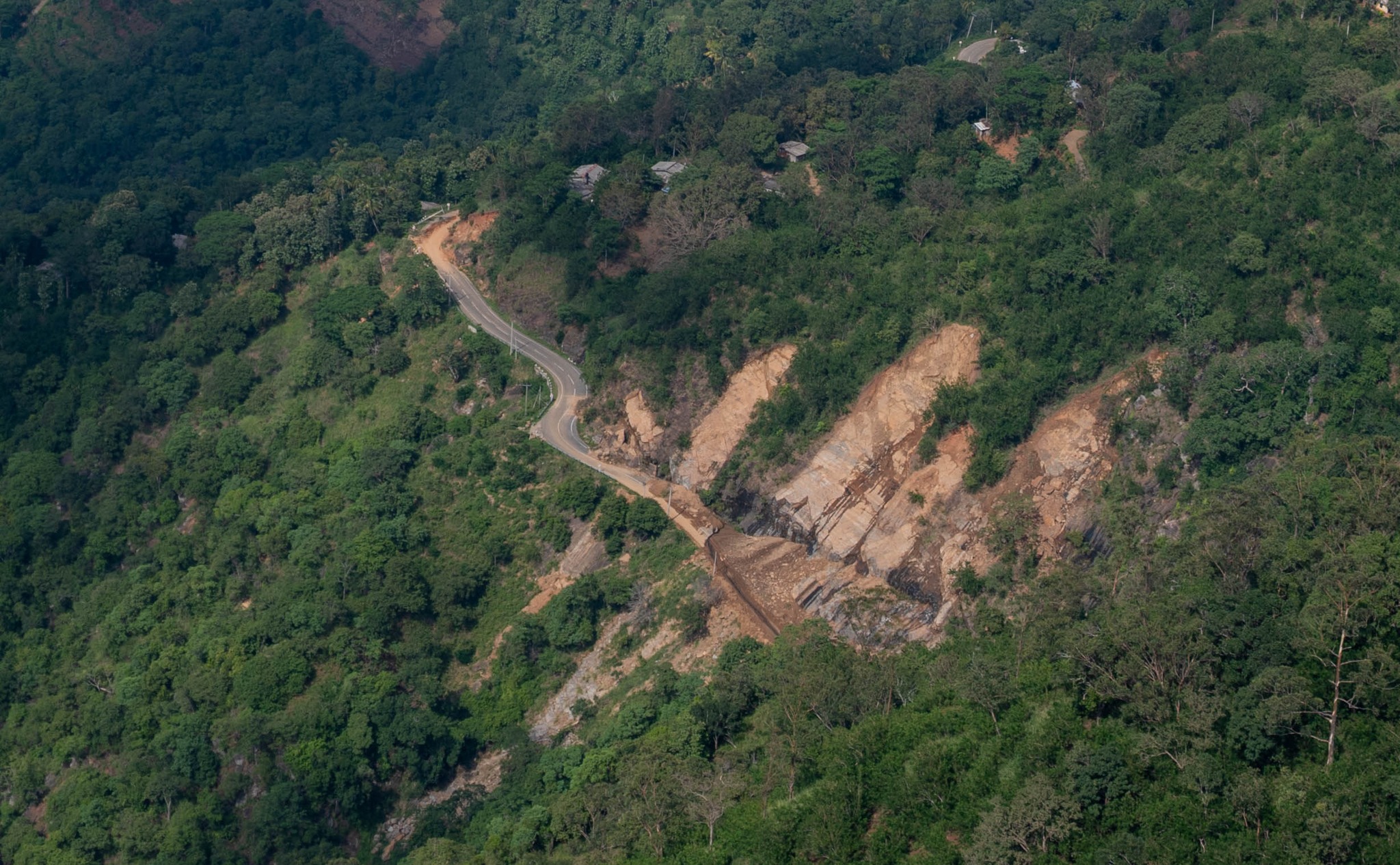
Another critical factor in the forecast failure was an apparent misunderstanding of the primary threat. While the IMD tracked the low-pressure system as a developing cyclone, the main impact in Sri Lanka came from extraordinary rainfall and subsequent landslides rather than cyclonic winds. The unprecedented rainfall overwhelmed rivers and drainage systems with shocking speed. Landslides buried entire communities. Yet initial local communications appear to have underestimated this flooding and landslide risk, focusing instead on more general storm warnings.
This suggests a gap in translating meteorological forecasts into localised risk assessments. Understanding that a cyclone is approaching is one thing; understanding that it will dump record rainfall on already saturated highlands prone to landslides is another. The latter requires not just meteorology but geology, hydrology, and intimate knowledge of local vulnerabilities. The rapid escalation from heavy rain to catastrophic flooding caught many by surprise. Rivers that had existed for centuries suddenly became torrents carrying away homes, bridges, and lives. Communities on hillsides that had stood for generations were buried under tons of earth.
Systemic Failures and Systemic Solutions
The failure to adequately forecast and warn about Cyclone Ditwah reveals deep systemic problems in Sri Lanka’s disaster preparedness infrastructure. Nevertheless, weather forecasting itself is full of technical challenges. While cyclone tracks can be monitored, predicting precisely where the worst impacts will occur, especially from rainfall and landslides, remains complex. Sri Lanka needs enhanced modelling capabilities that integrate meteorological forecasts with geological vulnerability assessments.
Regarding the communication infrastructure, warning systems must be multilingual by default, not as an afterthought. Information must flow through multiple channels—television, radio, mobile alerts, community networks, religious institutions—simultaneously and in all languages. The necessary technology exists; what’s needed is the institutional will and operational framework to deploy it equitably.
Then comes the coordination between agencies. Meteorological department, disaster management centre, local government authorities, and communication networks must operate as an integrated system with clear protocols for escalating alerts and triggering emergency responses.
Finally, perhaps crucially, there must be a cultural shift in how warnings are treated. Too often, disaster warnings are seen as routine. Building a culture of preparedness requires consistent, clear, and credible communication over time, so that when a genuine emergency arises, people trust and act on the information they receive.
The Cost of Failure
470 plus confirmed deaths, and over 1.4 million people affected are the heavy costs the country is paying for this failure. Entire villages submerged or buried. Infrastructure has been destroyed. Lives have been shattered. These are not just statistics; they are fathers and mothers, sons and daughters, entire communities whose loss could have been mitigated.
The government has rightly faced criticism for failing to anticipate the scale of the disaster. Though uncomfortable, positive, and constructive criticism is essential as it is how societies learn, how systems improve, how future tragedies are prevented. The raw meteorological data was available regionally. The storm was tracked. The threat was real and known. However, the effective forecasting, clear communication of escalating risks, and timely warning to all citizens of Sri Lanka – these failed.
The Hysterical Hypocrisy of the Opposition
After listening to the opposition’s hysterical response, one could be under the impression that previously, the country was well-governed, accountable, and not corrupt. Naturally, this does not make any sense at all. It is important to remember that Sri Lanka has had enough bad experiences with how previous governments, i.e., now the opposition, have handled disasters. It’s important to point out the problems with the current government, but the conditions for a disaster like this have been building up in all 25 districts for at least 25 years.
Local geologists and disaster specialists have for years discussed the central highlands’ vulnerability. Deforestation, poor agricultural and construction practices, changing environmental factors, and soil composition all contribute to increased risk in vulnerable areas. In the last few decades, experts have issued repeated warnings (the most recent one in late November) pointing out dangerous slopes and urging swift evacuation. The government was indeed slow to act. Nevertheless, it is important to remember that the opposition had decades to address the issue while in power, but they chose not to do so.
Moving Forward
Cyclone Ditwah should not be viewed in isolation. It represents part of a broader global climate pattern. The events of recent weeks, from China to Tamil Nadu, sweeping through Vietnam, Thailand, Indonesia, and Sri Lanka, serve as a stark warning about the scale of climate disasters we must prepare for in the years ahead.
The opposition’s hypocritical hysteria should not take our attention away from the important tasks at hand. As Sri Lanka rebuilds, the lessons of Cyclone Ditwah must be learned and embedded into every level of disaster preparedness. Future cyclones will come. Climate change promises more extreme weather, more intense rainfall, and more frequent disasters. The question is not whether Sri Lanka will face another Ditwah. The question is whether, when that occurs, the warnings will reach everyone in our plural society on time; whether government agencies will act on available forecasts with the speed and decisiveness that will save lives.
The forecast failure of Cyclone Ditwah was not inevitable. This was the consequence of specific, identifiable systemic weaknesses that the previous administration neglected for decades. Those weaknesses can be addressed. They must be addressed. The lives lost demand nothing less.
Rather than engaging in political disputes and blame games, political parties, government officials, media organisations, and civil society groups need to focus on what truly matters. Those matters are extracting lessons from this catastrophe and building greater disaster preparedness for future crises. The time for finger-pointing has passed. Now is the time for collective action and enhanced readiness.
5 December 2025