
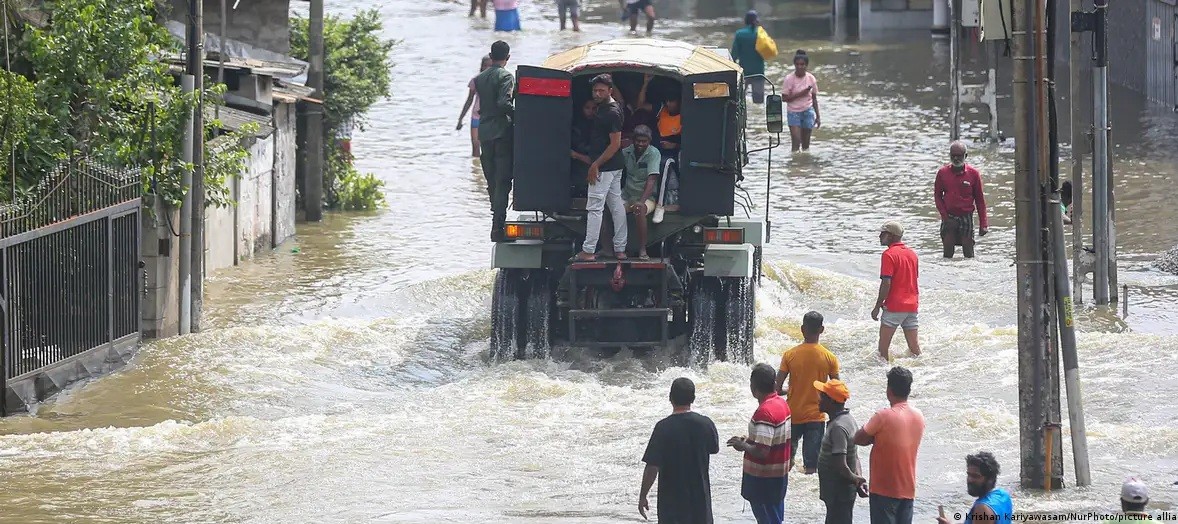

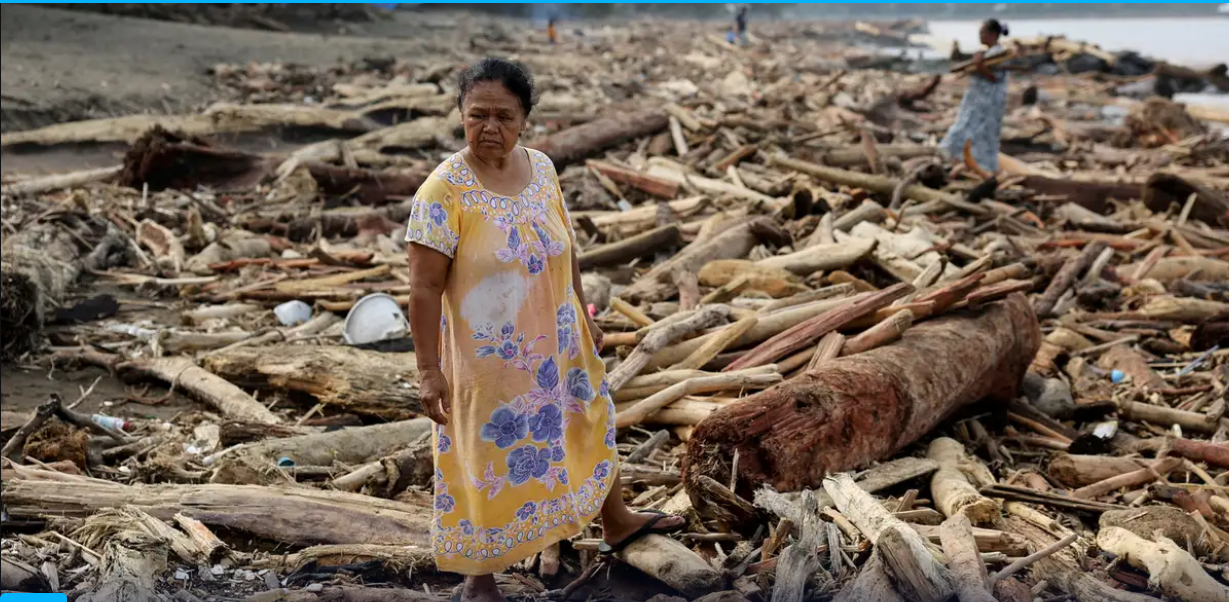
According to the government’s Disaster Management Center, the official death toll stands at 410, with 336 people still missing. More than 64,000 people from 407,000 affected families are sheltering in nearly 1,450 government-run safety centers across the country.
Thousands trapped, isolated
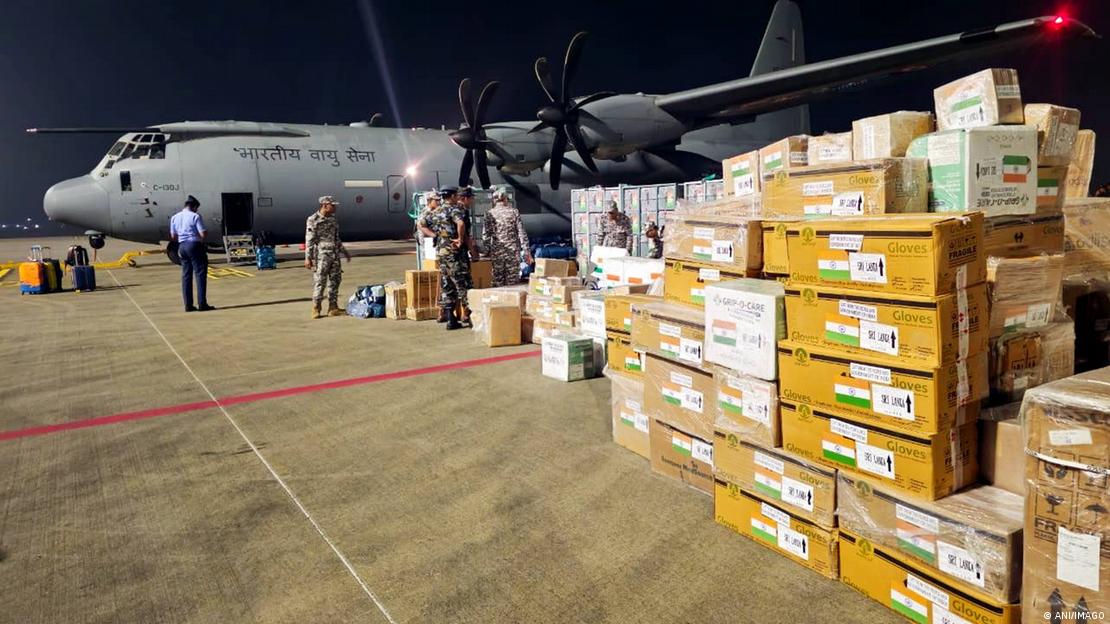
Multiple countries have responded to Sri Lanka’s appeal for assistance with India leading the charge, followed by pledges from the UK, China, Australia, and Nepal. Sri Lankan President Anura Kumara Dissanayake has also declared a state of emergency to deal with the aftermath of the cyclone.
Despite his declaration and the promise of international aid, however, the Sri Lankan public seems increasingly frustrated with the state’s response. Authorities appear to be overwhelmed with rescue demands and are struggling to communicate in a timely manner as critics point out the absence of a unified relief-and-rescue system.
Paikiasothy Saravanamuttu, executive director of the Colombo-based Centre for Policy Alternatives, accuses the Sri Lankan government of failing to heed warning signals and allowing the calamity to spiral beyond human control.
“The government has not come off well in its handling of the crisis and should have called Parliament to convene urgently to review and strengthen disaster management policies,” Saravanamuttu told DW.
According to Saravanamuttu, “this disaster reveals significant gaps in preparedness and response mechanisms” and the existing frameworks need to be evaluated to “prevent future failures.”
Early warnings wasted
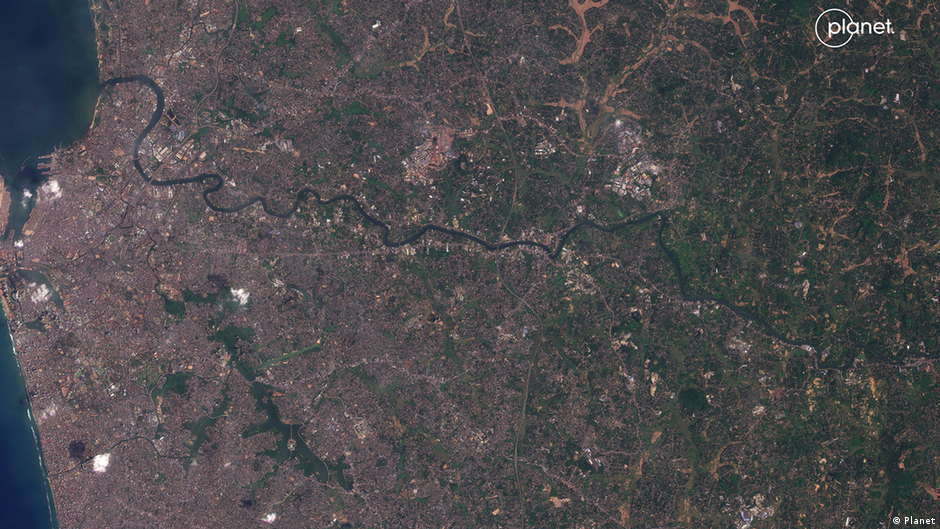
While Ditwah made landfall in Sri Lanka on November 28, some voices point out that warning signals were present as early as two weeks before. Experts say that the loss of life was exacerbated by the government’s failure to act in a timely manner.
“Apparently, that did not happen, and an official response has mostly been reactive when Cyclone Ditwah was imminent or after it made landfall,” added Gunawardene.
“The entire disaster management structure – from policymakers to state officials – should be held accountable for cascading failures that made a bad disaster much worse.”
She told DW that the governments should have “the ability and the competence to take critical decisions” in times of emergency.
“Sentimental outpouring by politicians lauding the people for ‘coming together’ in times of crisis does not substitute for that duty,” she added.
Rescue teams stretched ‘beyond capacity’
Sivanathan Navindra, a former Liberation Tigers of Tamil Eelam (LTTE) member, who has been involved in political activities post-conflict, said the cyclone has damaged roads and communication lines in northern Sri Lanka.
“The situation in northern Mannar, Mullaitivu, Vavuniya, and Kilinochchi districts is extremely severe. Mullaitivu has experienced a total power outage with telecommunication towers down, leaving residents without phone or internet access,” Navindra told DW from Jaffna.
“Road closures have effectively cut off the northern province, with travel between Vavuniya, Mullaitivu, Kilinochchi and Jaffna impossible,” he said.
Chathuranga Abeysinghe, deputy minister of Industry and Entrepreneurship Development, warned that rising water levels will make evacuation “extremely difficult.” He urged residents along the Kelaniya River and flood-prone areas to leave.
“There have been immense hardships caused by Cyclone Ditwah, but the president has constituted task forces to study the impact and organize relief. It will take a while for rebuilding,” Abeysinghe told DW.
“We had initial difficulty in predicting the cyclone’s course” Abeysinghe said, noting that significant rainfall expected was many different areas which “stretched rescue teams beyond capacity to reach everyone in need.”
Abeysinghe also pointed out that the government was working on a war-footing to reach vulnerable populations that had been cut off.
Opposition blames government for loss of life
Government critics, however, remain unconvinced by the official narrative. Opposition party Samagi Jana Balawegaya (SJB) recently pledged to launch legal action against the government.
SJB lawmaker and spokesperson S M Marikkar compared the severity of the disaster to the Easter Sunday suicide attacks which killed nearly 270 people in 2019, and the more recent economic collapse under the powerful Rajapaksa family.
Southeast Asia battles flood recovery as death toll rises
“Similar to the criminal case filed against the Rajapaksas for bankrupting the nation, we will file a case against the current government, as they are responsible for every citizen that died in the disaster,” Marikkar told the media on Monday.
Too few alerts in Tamil language
Despite some relief materials being delivered and emergency teams arriving to certain affected locations, many communities still lack clarity on when full help will arrive and when normalcy can be restored. A notable communication obstacle, according to Colombo-based disinformation expert and analyst Sanjana Hattotuwa, is the choice of languages officials use for disaster communications.
The nation recognizes both the majority language of Sinhala and the smaller Tamil language as official, with English — a remnant of the British colonial period — also spoken to varying degrees by nearly a quarter of its population.
“My research showed key updates were in Sinhala only, and sometimes mirrored in English, but rarely, if ever in Tamil. State television and radio did not communicate the risks, and threats, mirroring what was evident on social media,” Hattotuwa told DW.
“This contributed to [an] information vacuum in critical hours, impacting preparedness and community responses,” he said. “If information was available in a more effective and timely manner, lives now lost may have been saved.”
Edited by: Darko Janjevic