
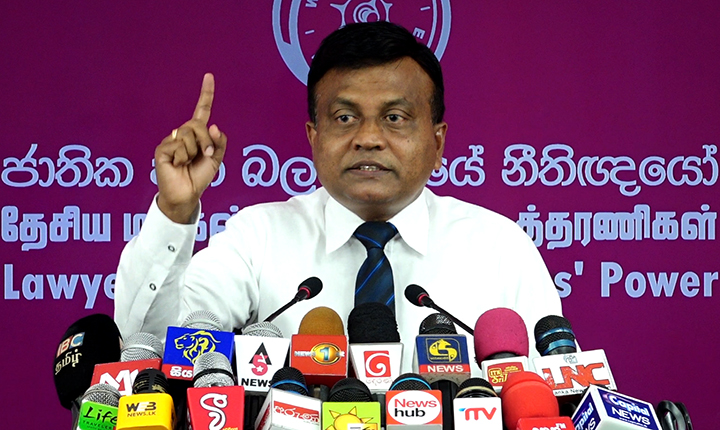

(Sri Lanka Brief/03 December 2025) Deputy Minister Sunil Watagala has instructed the police to enforce emergency regulations against individuals conducting defamatory social media campaigns targeting the President and several government Ministers.
Speaking at a meeting with senior police officers, the Deputy Minister highlighted that “extremely malicious attacks” are circulating online against the President and selected government figures, many originating from overseas. He warned that continued dissemination of such content falls under Section 5 of the Public Security Act, which empowers authorities during a declared state of emergency.
“If this persists for another day or two, the orders issued by the President and the emergency regulations clearly cover this situation,” he said. “No one is permitted to spread false information, distort facts, or engage in propaganda that undermines stability through online platforms or AI technology.”
Violations could result in imprisonment of more than five years, with certain offences carrying sentences of up to ten years.
State of Emergency & Freedom of Expression
Under the Public Security Act (Sri Lanka), during a state of emergency, the President may issue regulations that:
- Restrict publication or transmission of information deemed prejudicial to public security or public order.
- Prohibit statements or acts that incite hostility or unrest, including online content.
- Control or suspend media operations, including social media platforms, if considered necessary for national security.
- Authorize censorship of publications that could “cause public alarm” or “undermine the administration of justice.”
These provisions give broad powers to limit speech, but they must be balanced against constitutional guarantees of Freedom of Expression under Article 14(1)(a) of the Sri Lankan Constitution.
President’s Assurance
President Anura Kumara has pledged that these emergency powers will not be misused to silence legitimate criticism or dissent. He emphasised that the regulations are intended solely to maintain stability during disasters and prevent harmful misinformation.
Freedom of Expression During Disasters
While emergency measures aim to protect public safety, Freedom of Expression remains a cornerstone of democracy. Constructive criticism and accurate reporting help authorities respond effectively and maintain public trust. Citizens are urged to exercise this right responsibly, avoiding false or inflammatory content that could worsen crises.