

(Sri Lanka Brief/ 02 December 2025)
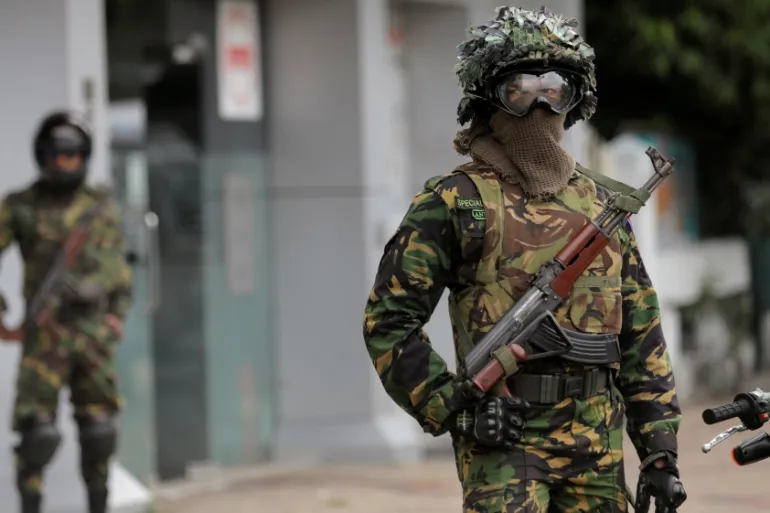
Sri Lanka is grappling with its worst natural disaster in decades as Cyclone Ditwah leaves a trail of destruction across the island. While the humanitarian crisis deepens, the government’s decision to declare a nationwide state of emergency has sparked intense debate over governance, legality, and civil liberties.
The Centre for Policy Alternatives (CPA) has raised alarm over President Anura Kumara Dissanayake’s move to invoke sweeping emergency powers on 28 November, followed by the gazetting of broad Emergency Regulations. CPA argues that these measures risk undermining democratic norms and bypassing existing disaster management frameworks.
Cyclone Ditwah: Scale of Devastation
Cyclone Ditwah struck Sri Lanka on 27 November, unleashing torrential rains and gale-force winds that triggered catastrophic floods and landslides. The official death toll has surged past 355, with over 366 people missing and more than 500,000 displaced into temporary shelters. Nearly 1.4 million people have been affected across all 25 districts, according to the Disaster Management Centre (DMC).
The hardest-hit areas include Kandy, Badulla, Nuwara Eliya, Matale, Batticaloa, and Ampara, where entire villages have been buried under mudslides. In Elkaduwa, Matale District, residents describe scenes of devastation: roads obliterated, homes fractured, and communities cut off for days. “It is like a massacre,” said one villager, as helicopters dropped food parcels to stranded families.
Infrastructure damage is staggering: over 15,000 homes destroyed, hundreds of roads and bridges washed away, and power and communication networks crippled. Overflowing rivers such as the Kelani have inundated low-lying areas around Colombo, forcing mass evacuations. Relief agencies warn of looming public health crises, with risks of dengue, leptospirosis, and diarrhoeal diseases rising due to contaminated water.
As the scale of the disaster became clear, Sri Lanka appealed for global assistance. India was the first responder, launching Operation Sagar Bandhu, which deployed aircraft and naval ships carrying tonnes of relief supplies, medical teams, and rescue personnel. Indian Air Force helicopters have evacuated stranded civilians, including foreign nationals, from landslide-hit regions.
The United States has contributed emergency materials through the World Food Programme, including 20,000 polysacks to reinforce embankments, generators, tents, and water bins. Australia, Japan, China, and Nepal have pledged millions in aid, while the UAE delivered food and essential supplies via military aircraft. The United Nations and the International Organization for Migration (IOM) are coordinating relief and recovery efforts on the ground.
Despite these efforts, thousands remain unreachable in remote hill country villages, where landslides have severed access routes. UNICEF estimates that 275,000 children are among those affected, warning of severe emotional distress and heightened disease risks.
Emergency Powers vs Disaster Management Law
CPA’s statement underscores a critical concern: Sri Lanka already has a robust legal framework for disaster response — the Disaster Management Act, No. 13 of 2005, enacted after the 2004 tsunami. This Act empowers the Disaster Management Centre (DMC) and the National Council for Disaster Management (NCDM) to coordinate relief, rehabilitation, and recovery.
“The Disaster Management Act is the most appropriate law to deal with the circumstances Sri Lanka faces today,” CPA asserts, warning that bypassing this framework in favour of emergency powers risks undermining democratic norms.
Under the Public Security Ordinance (PSO), the President can override existing laws, impose curfews, and grant sweeping powers to the Executive — measures intended for situations where ordinary laws are manifestly insufficient. CPA argues that such extraordinary powers must be necessary, proportionate, and time-bound, not a default response.
Concerns Over Overbroad Regulations
The newly gazetted Emergency Regulations have amplified fears. Among their provisions are offences such as:
- Causing disaffection among public officers.
- Distributing posters or leaflets prejudicial to public security.
- Sharing information — including via digital platforms or AI systems — deemed likely to cause public alarm.
These clauses, CPA warns, echo past emergency regulations criticised for curtailing freedom of expression, assembly, and due process. “Several offences bear striking similarities to previous regulations, raising questions about relevance to disaster relief,” the statement notes.
A Pattern of Executive Overreach?
Sri Lanka’s history with emergency laws is fraught. CPA recalls multiple declarations in 2018, 2019, 2021, and three instances in 2022, often accompanied by regulations granting powers beyond what was necessary. The organisation fears a return to this cycle, especially under a government elected on promises of systemic change.
“The people of Sri Lanka, already traumatised by successive crises, deserve a departure from the pattern of concentrated Executive Power,” CPA emphasises.
While acknowledging the gravity of the disaster, CPA calls on the government to:
- Limit emergency regulations to essential disaster-response needs.
- Ensure transparency, oversight, and protection of fundamental rights.
- Fully implement the Disaster Management Act.
- Rescind any provisions unrelated to relief and recovery.
The statement concludes with a stark warning: “Sri Lanka must not return to a cycle where states of emergency become the default response to crisis — whether economic, political, or natural.”
President Dissanayake, in a 30 November address, assured that emergency powers will be used solely for disaster management. Yet, with the humanitarian crisis deepening and questions mounting over governance, the coming weeks will test whether Sri Lanka can balance urgent relief with democratic accountability.
CPA has promised a detailed commentary on the Emergency Regulations in the days ahead, signalling that this debate is far from over.