
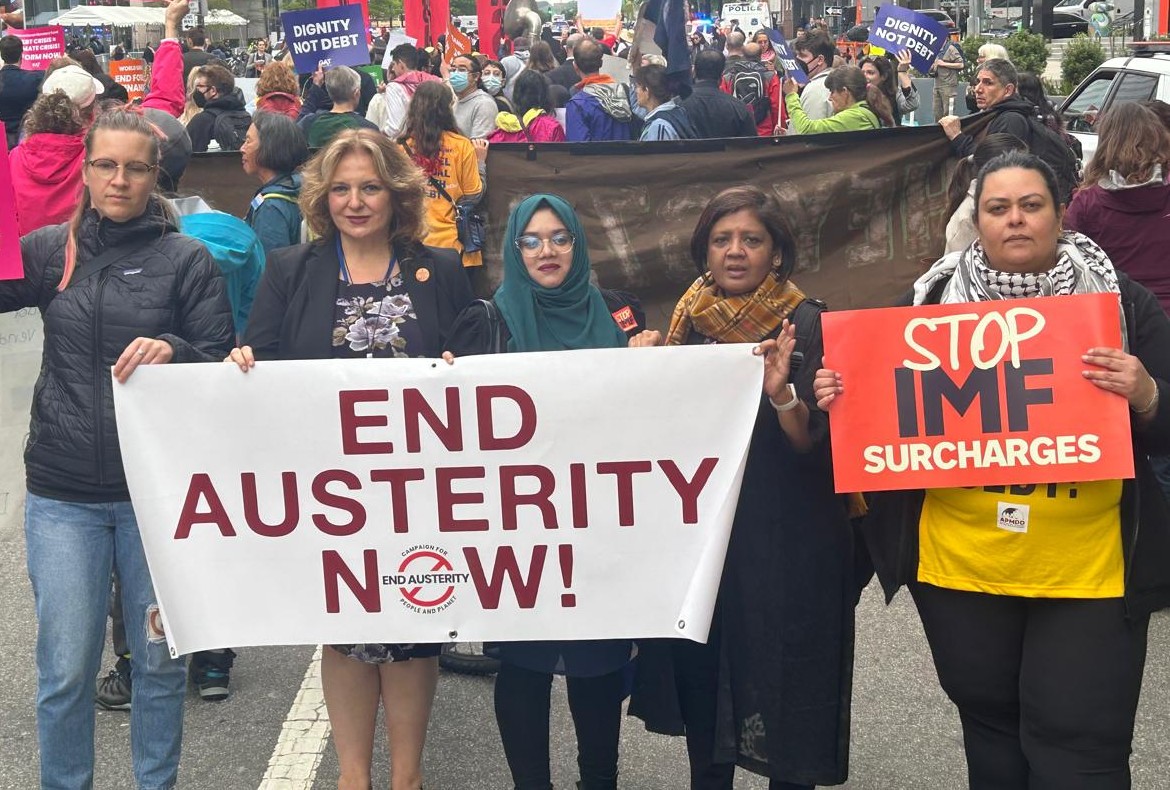

The Government has said it is unable to allocate additional funding for welfare and social security programmes due to constraints tied to the International Monetary Fund (IMF)-backed reform programme, even as the World Bank warns that nearly one in four Sri Lankans remains below the poverty line.
The Rural Development, Social Security and Community Empowerment Ministry acknowledged rising economic pressures and an increasing need for support among vulnerable groups. However, it stressed that existing IMF programme conditions—particularly those requiring fiscal discipline and limits on public expenditure—have restricted the Government’s ability to release further funds from the General Treasury.
Such constraints reflect a broader pattern seen in other countries operating under IMF-supported programmes. In Argentina, for example, IMF-backed reforms have centred on strict fiscal consolidation measures, including reducing public spending, cutting subsidies, and limiting expansion of social programmes in order to achieve deficit targets and restore macroeconomic stability. Policymakers there have also committed to “tighter expenditure controls” and reductions in energy subsidies, alongside reforms to pensions and social transfers. Analysts and civil society groups note that such austerity-driven approaches often constrain governments’ ability to expand welfare spending, particularly during periods of high inflation and economic hardship.
Similarly, research on IMF-supported adjustment programmes highlights that fiscal tightening—while aimed at stabilising economies—can reduce policy space for social protection unless explicitly offset by targeted safeguards. These experiences have fuelled debate globally over how to balance macroeconomic stabilisation with the protection of vulnerable populations.
Against this backdrop, the Ministry maintained that domestic poverty levels are declining due to ongoing State-backed livelihood and employment initiatives, and confirmed that discussions are under way with the IMF to secure greater concessions for low-income groups.
When contacted yesterday (03), Deputy Minister Wasantha Piyathissa said that despite the World Bank’s recent warning of rising poverty, the Ministry’s own data suggests that conditions are improving as a result of Government programmes aimed at supporting the poor.
Responding to questions about whether rising living costs would necessitate expanded social protection—particularly in light of World Bank estimates that roughly 24.5% to 25% of the population lives below the poverty line—he said that current IMF conditions prevent additional allocations.
“Under the present IMF framework, it is not possible for the Government to make further financial commitments to expand social welfare,” he said. “However, we are continuing discussions with the IMF to obtain greater flexibility and concessions for vulnerable groups.”
He added that the Government had already incurred significant expenditure responding to recent emergencies, including cyclone-related relief efforts, further constraining fiscal space.
At the same time, he pointed to ongoing rural development initiatives, promotion of self-employment, and job creation programmes as key drivers of poverty reduction.
“In rural areas, self-reliance is being encouraged and employment opportunities are being created for the unemployed. Through these efforts, we have improved the living standards of low-income groups. Therefore, poverty is declining,” he claimed.
However, international institutions remain cautious. The World Bank has repeatedly indicated that a substantial share of the population continues to face economic hardship, underscoring the challenge of balancing fiscal consolidation under IMF programmes with the need for expanded social protection.
(SLB)